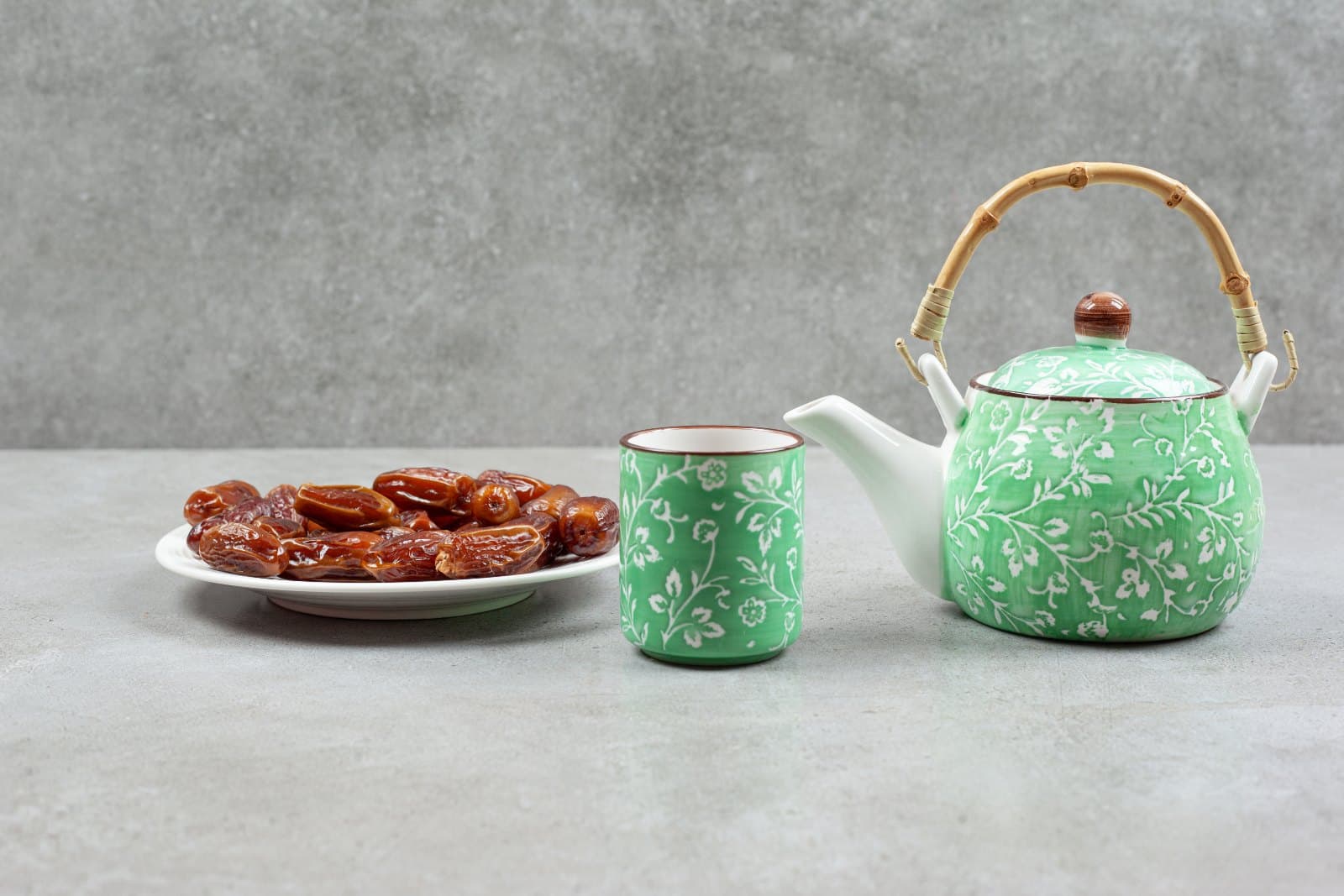
Green tea belongs to the Green zone of the Nidam al-Tayyibat, with a precise condition: it is drunk without milk. The system presented by the Egyptian physician Diaa Al-Awadi makes it an everyday drink, in the same way as water or coffee, unlike black tea, which is excluded. This page details its place, its conditions of use and frequently asked questions.
Green tea in the Nidam al-Tayyibat: a Green zone drink
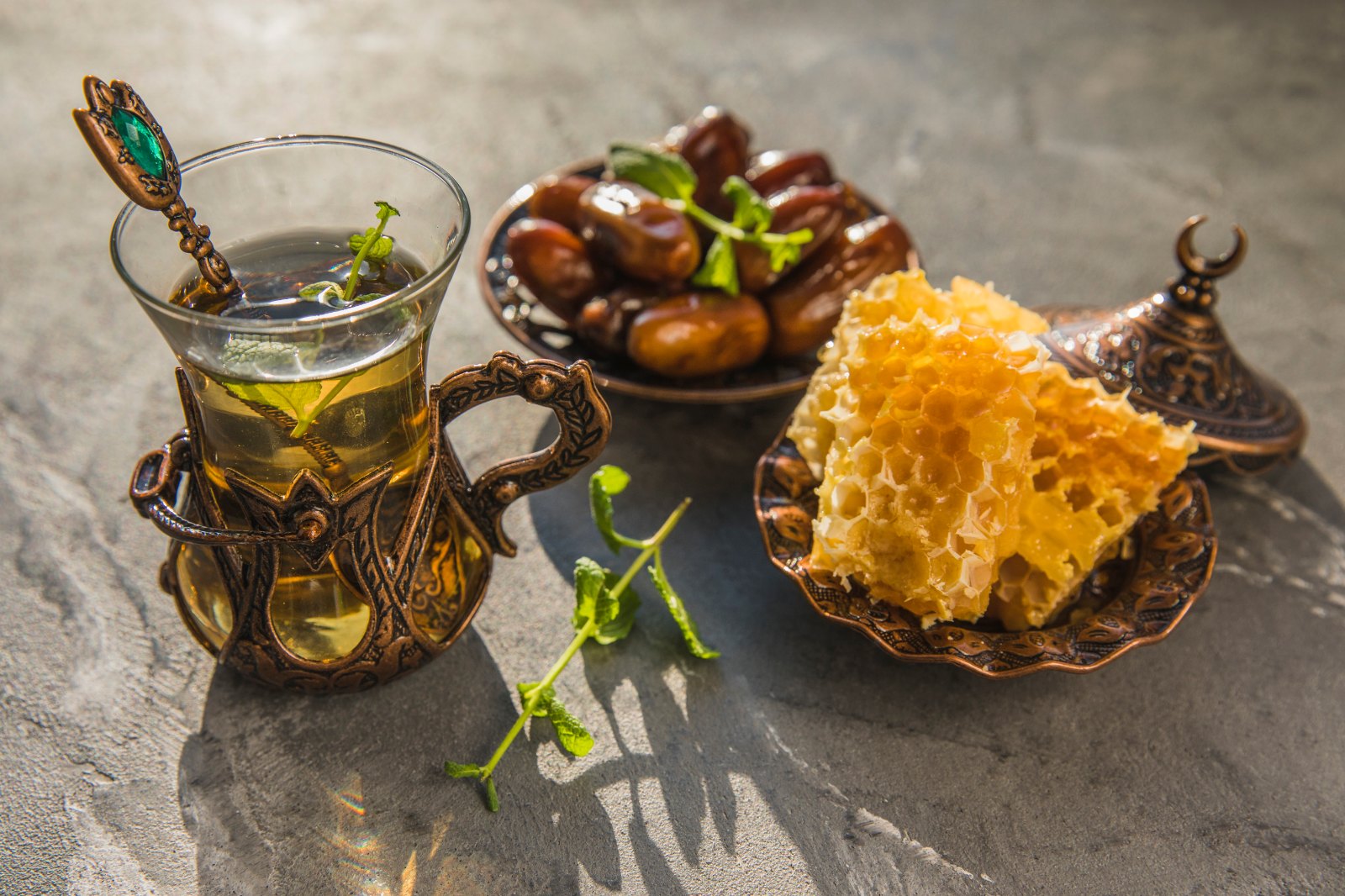
Green tea (Green) — condition: Without milk — occupies the Green zone of the Nidam al-Tayyibat system, presented by the Egyptian physician Diaa Al-Awadi. According to the system, this zone groups together the foods and drinks that can be consumed daily. Green tea appears there alongside Water (Green) and Coffee (Green) — condition: Without milk or whitener.
The classification is not based on a list of quantified results. The system lays down simple frequency rules and conditions. For green tea, the condition comes down to two words: without milk. This means that the infused leaf is permitted, but not the milky drink. The distinction is important for understanding the rest of the table.
Why is green tea classified in the Green zone?
According to the system, green tea is an infused plant drink, without a dairy mixture, and it falls into the category of simple hot drinks. Classification in the Green zone does not mean that the system promises a particular effect. It only indicates that the drink may be consumed every day, subject to a condition.
Conventional nutrition points out that green tea is a low-calorie drink and is rich in antioxidant compounds, but it does not set such a strict frequency rule. The Nidam al-Tayyibat, for its part, is concerned with the place of the food in the meal as a whole, not with an isolated molecule.
There is no figure in grammes or infusion time imposed by the system in the documents published by the site. The durations that appear below come from the team's cooking, not from the doctor.
The five zones around green tea
To understand the place of green tea, it is useful to recall the five zones of the system. Green tea (Green) is daily. Cinnamon (Yellow) — condition: in small quantities, in desserts and tea — is daily with vigilance. Aubergine (Orange) — condition: Cooked only — is subject to cooking and a moderate frequency. Mloukhia (jute mallow) (Purple) — condition: once a month — is consumed very rarely. Black tea / Red tea (Red) is excluded.
This reminder shows that green tea is not isolated: it is part of a set of drinks and foods classified according to the same logic. The Green zone is not an absolute health label, but a frequency of use.
Can green tea be drunk every day?
The question often comes up. According to the system, the Green zone corresponds to daily frequency. Green tea (Green) can therefore be drunk every day, provided it is drunk without milk. This frequency is not a medical prescription: it is a classification rule.
It is sensible to vary drinks. The system also permits the following drinks:
- Green tea (Green) — condition: Without milk
- Coffee (Green) — condition: Without milk or whitener
- Hot infusions (cinnamon, anise, herbal teas) (Green) — condition: Without milk
- Mint tea (Green)
Alternating these drinks does not change their zone. It can simply avoid monotony.
Should green tea be drunk without milk? Why is milk excluded?
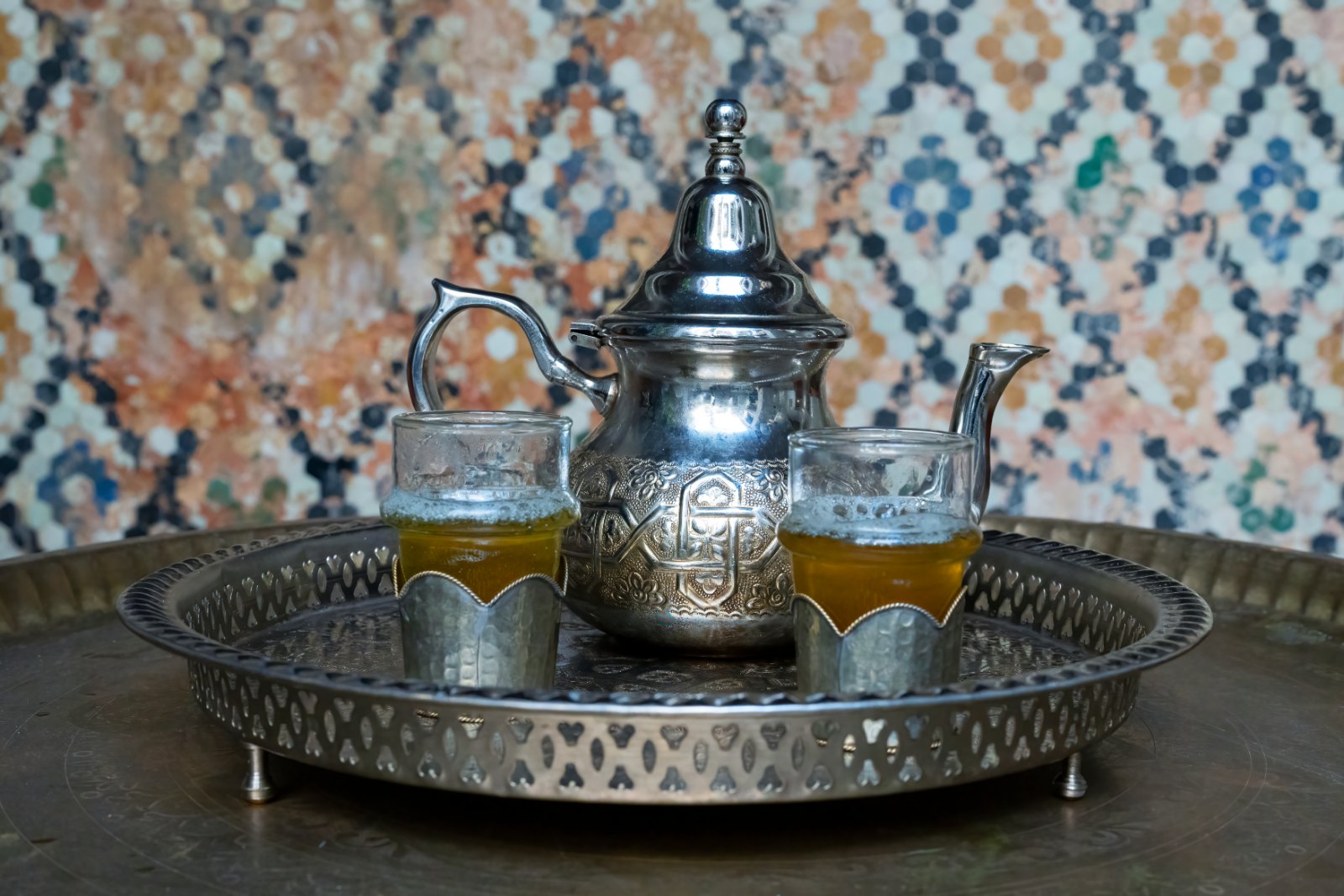
Yes, according to the system, green tea is prepared and drunk without milk. The factsheet for Green tea (Green) mentions this condition explicitly. The system excludes Cow's milk (Red), as well as Plant milks (almond, oat, soya, coconut) (Red), even in small quantities.
This rule may be surprising, because conventional nutrition does not forbid milk in tea. The viewpoint of the Nidam al-Tayyibat is not a shared scientific truth: it is a classification choice specific to the system. The site does not provide a quantified demonstration to explain this removal.
The important point, in order to follow the system, is not to add milk, cream, plant milk or whitener. Green tea then remains in the Green zone. As soon as a milky liquid is added, the drink no longer corresponds to the factsheet.
Can green tea replace coffee in the system?
Both drinks are classified in the Green zone. Coffee (Green) — condition: Without milk or whitener — can be consumed daily, just like Green tea (Green). According to the system, nothing requires choosing one or the other.
The following table summarises the main hot drinks and their classification.
| Drink | Zone | Condition |
|---|---|---|
| Green tea | Green | Without milk |
| Coffee | Green | Without milk or whitener |
| Hot infusions (cinnamon, anise, herbal teas) | Green | Without milk |
| Mint tea | Green | — |
| Black tea / Red tea | Red | Excluded |
This table shows a simple logic: infused drinks without milk are permitted, black tea is excluded. The system does not detail, in the available documents, the reason for this distinction. It presents it as a rule.
How to prepare a green tea that conforms to the system
The recipe below is offered by the site team, not by Diaa Al-Awadi. It complies with the without-milk condition.
- Bring water to a simmer, without letting it reach a rolling boil.
- Place a teaspoon of Green tea (Green) leaves in a teapot or a cup.
- Pour the simmering water over the leaves.
- Leave to infuse for a few minutes, then remove the leaves or strain.
- Serve plain, possibly with a small amount of Natural honey (Green) or White sugar (Green) — condition: five to fifteen tablespoons per day according to the system.
- Do not add milk, cream or plant milk.
Natural honey (Green) and White sugar (Green) remain in the Green zone, but the amount of sugar is regulated by the system. For white sugar, the condition indicates a daily range expressed in tablespoons, not in grammes. There is no calorie figure associated with green tea on the site.
Green tea and mint tea: what are the differences?
Mint tea (Green) is also in the Green zone. It is traditionally prepared with green tea and fresh mint, but the site's factsheet treats it as a Green drink in its own right. The system does not associate an explicit additional condition with it.
The main difference from Green tea (Green) lies in the composition: mint is added, and the taste is fresher. For the rest, the two drinks share the same possible daily frequency. Mint tea, which is often sweetened, must follow the same rules on sugar.
Black tea, on the other hand, is excluded. Black tea / Red tea (Red) is not among the permitted drinks, even without milk. This opposition, Green versus Red, is a good example of the logic of the classification.
Frequently asked questions
Is green tea allowed every day in the Nidam al-Tayyibat?
Yes, according to the system. Green tea (Green) belongs to the Green zone, which corresponds to a possible daily consumption. The only condition indicated is to drink it without milk.
Can green tea be sweetened with honey?
Natural honey (Green) is permitted in the Green zone. It can therefore be used in green tea, in moderation. The system does not provide a quantified amount for honey; it simply recommends not turning the drink into a very sweet preparation.
Is green tea in tea bags affected by the without-milk condition?
The Green tea (Green) factsheet does not distinguish loose tea from tea bags. The without-milk condition applies to the drink, whatever the form of the leaves. However, the system does not provide details on the flavourings added in some tea bags; it is better to check the ingredients.
Why is black tea excluded while green tea is permitted?
According to the system, Black tea / Red tea (Red) is classified in the Red zone, without the site publishing a quantified explanation. Green tea remains in the Green zone provided it is drunk without milk. The distinction rests on the system's classification, not on a scientific demonstration relayed by the site.
Can green tea be drunk cold?
The site does not specifically document iced green tea. The factsheet mentions an infused drink, generally consumed hot. If you prepare a cooled green tea, the without-milk condition remains. In case of doubt, the best approach is to keep to classic infused green tea.
Can ginger be added to green tea?
Ginger (Green) is classified in the Green zone. Adding it to green tea does not change the tea's zone as long as the drink remains without milk. The site does not specify a maximum amount; the usual practice is a small amount of fresh or dried root.
Further reading
- Tayebat diet (al tayebat, taibat, tayabat): what it is
- Tayyibat dinner: ten ideas for the evening, in under an hour
- Spices allowed in the Tayyibat: the complete list
Sources
- Food factsheet for Green tea (Green) on Nidam Tayebat.
- System presentation page: Tayebat diet (al tayebat, taibat, tayabat): what it is.
- The competing page is not reproduced; it has only been used to identify the questions asked.
Disclaimer
This article does not replace medical advice. The information presented here describes the classification of the Nidam al-Tayyibat and the team's kitchen uses. It does not constitute a treatment recommendation. If you are pregnant, breastfeeding, taking medication, suffering from a chronic illness, anaemia, digestive disorders or sleep disorders, seek advice from a doctor or pharmacist before changing your consumption of green tea or other foods. Do not stop ongoing treatment without medical advice.