Magnesium is a mineral whose deficiency can go unnoticed while disrupting daily functioning. According to the Nidam al-Tayyibat system, described by the Egyptian physician Diaa Al-Awadi, the diet it proposes can meet magnesium needs provided that permitted foods are favoured, without resorting to supplements.
Why does magnesium deficiency often go unnoticed?

Magnesium is involved in a great many reactions in the body. Its deficiency does not always manifest as an isolated sign, but rather as a set of diffuse disturbances that can be attributed to other causes. According to the system, an unbalanced diet or one made up of excluded foods can contribute to an insufficient intake, without the person being aware of it.
Conventional nutrition also recognises that magnesium deficiency is common, but it emphasises blood testing and medical assessment. Nidam al-Tayyibat does not propose a test or a numerical threshold; instead, it invites you to look at the diet as a whole.
How can possible signs of magnesium deficiency be recognised?
The system does not establish a diagnostic list. However, certain signs mentioned in the sources consulted on the subject, such as fatigue, cramps or irritability, can prompt reflection on magnesium intake. According to the system, these manifestations should not be interpreted in isolation: they can have multiple origins.
The approach proposed by Nidam al-Tayyibat consists first of reviewing the composition of meals. Here, for information, are signs often associated with insufficient magnesium intake in the general literature:
- unusual fatigue or a drop in energy;
- muscle cramps, especially at night;
- twitching eyelids or involuntary contractions;
- irritability or difficulty concentrating;
- unrefreshing sleep.
These signs do not constitute a diagnosis. If any of them persists, a health professional should be consulted.
Which foods does Nidam al-Tayyibat propose for magnesium?

According to the system, many permitted foods in the Green or Yellow zone provide the body with magnesium. Here is a selection of foods cited in the site’s database, with their zone and, where applicable, their condition of use:
| Aliment | Zone | Condition |
|---|---|---|
| Roasted pumpkin seeds | Green | eat roasted |
| Almonds | Yellow | in moderation, plain and unsalted |
| Walnuts | Yellow | in moderation, plain and unsalted |
| Cashew nuts | Yellow | in moderation, plain |
| Pistachios | Yellow | in moderation |
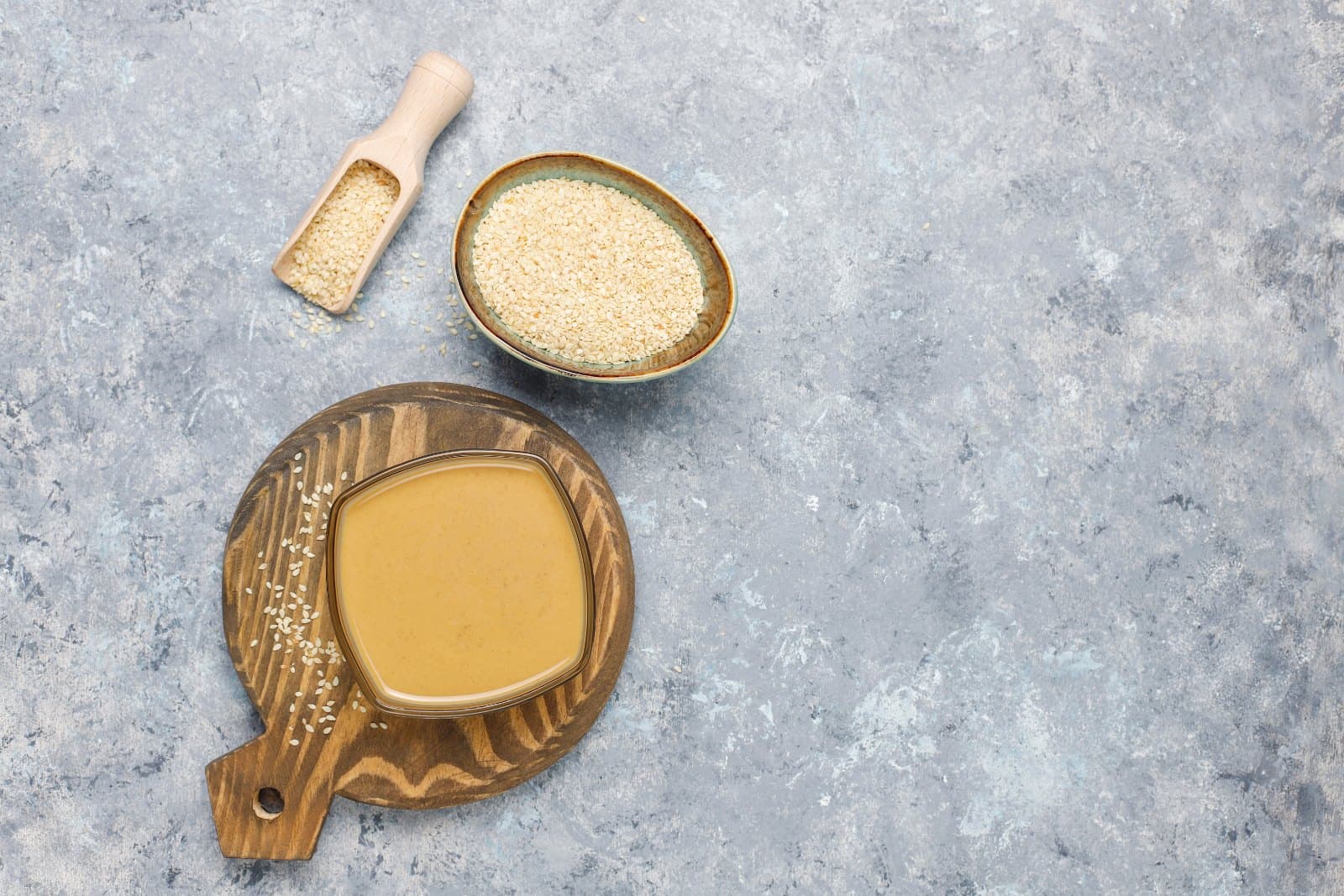
| Tahini (sesame cream) | Green | no particular condition |
| Sesame halva | Green | no particular condition |
| Bulgur | Green | no particular condition |
| Frik (roasted green wheat) | Green | no particular condition |
| Dates | Green | one to six per day according to the system |
| Banana | Green | no particular condition |
| Apricot | Green | no particular condition |
According to the system, these foods can be distributed throughout the day, with no precise quantity being imposed. The emphasis is on regularity and on variety among permitted foods.
Which magnesium-rich foods does the system exclude or limit?
Some foods recognised by conventional nutrition as rich in magnesium are excluded or very limited by Nidam al-Tayyibat. For example, the system excludes Spinach (Red), although it is often cited as a source of magnesium in conventional recommendations. It also excludes Legumes (broad beans, dried beans, peas, lentils, chickpeas) (Red), as well as Oats (flakes, bread, pasta) (Red).
According to the system, these foods do not fit its zone logic, regardless of their mineral content. Conventional nutrition, by contrast, often considers these foods valuable for magnesium intake. This divergence is not settled by the site; it is simply presented.
Some dried fruits, such as Raisins (Orange), are permitted in the Orange zone, with the condition of choosing them without coating oil or sulphites and in small quantities. The system therefore invites you not to focus solely on magnesium richness, but to respect the zone of each food.
How to compose a magnesium-rich day according to the system?

Without imposing a quantified menu, Nidam al-Tayyibat makes it possible to compose meals that combine several sources of magnesium. Here is a suggestion from the team, based on permitted foods:
- At breakfast, a hot drink without milk such as Green tea (Green) or Hot infusions (cinnamon, aniseed, herbal teas) (Green), accompanied by Bran bread (wholemeal toast) (Green) with Tahini (sesame cream) (Green) and a few Dates (Green).
- At lunch, a plate of Rice (basmati, white) (Green) or Bulgur (Green) with cooked vegetables such as Squash / pumpkin (Green), and a portion of Sea fish (preferably grilled) (Green).
- As a snack, a measured handful of Almonds (Yellow) or Cashew nuts (Yellow), plain and unsalted.
- In the evening, a Potato (Green) soup with a drizzle of Olive oil (Green), then a fruit such as Banana (Green) or Apricot (Green).
This suggestion does not constitute a protocol of the system; it simply illustrates how the team combines permitted foods. According to the system, the regularity of this type of composition matters more than calculating a precise intake.
Frequently asked questions
Is magnesium enough to explain fatigue according to Nidam al-Tayyibat?
According to the system, fatigue can have many causes, and magnesium is not presented as a single answer. Nidam al-Tayyibat invites you to look at the whole diet and to consult a professional if the fatigue persists. It does not propose self-diagnosis based on a single mineral.
Should you take a magnesium supplement when following Nidam al-Tayyibat?
The system does not mention a food supplement for magnesium. According to it, intake should come from permitted foods. Conventional nutrition, for its part, may recommend a supplement in certain specific cases; this decision is a matter for a doctor or a pharmacist, not for the site.
Which Green foods contain magnesium in the system?
Among Green foods, the following may be cited: Roasted pumpkin seeds (Green), Tahini (sesame cream) (Green), Bulgur (Green), Frik (roasted green wheat) (Green), Banana (Green) and Apricot (Green). According to the system, these foods can be eaten daily.
Why does the system exclude spinach when it contains magnesium?
Nidam al-Tayyibat classifies Spinach (Red) and excludes it from its diet, without linking this decision to their magnesium content. According to the system, the Red zone corresponds to foods it does not recommend, even if conventional nutrition sometimes considers them beneficial.
Is magnesium deficiency measurable in Nidam al-Tayyibat?
The system does not propose a test, a threshold or a numerical value for magnesium. According to it, attention focuses on the quality of foods and their zone. Any biological measurement is a matter for a health professional.
Further reading
- Green tea and Nidam al-Tayyibat: place, zone and use
- Bone broth and feet: benefits according to Nidam al-Tayyibat
- Sea fish: benefits and place in the system
- Olive oil: Green zone according to Nidam al-Tayyibat
Sources
- Arabic source page on magnesium: Magnesium — the mineral you are missing without knowing it
- Food and zone database: Nidam Tayebat
Disclaimer
This article does not replace medical advice. Unexplained fatigue, cramps, sleep disturbances or any other persistent symptom require consulting a health professional. Pregnant women, people receiving treatment, children and people with a chronic illness must seek medical advice before changing their diet. Nidam al-Tayyibat does not provide diagnosis or treatment.