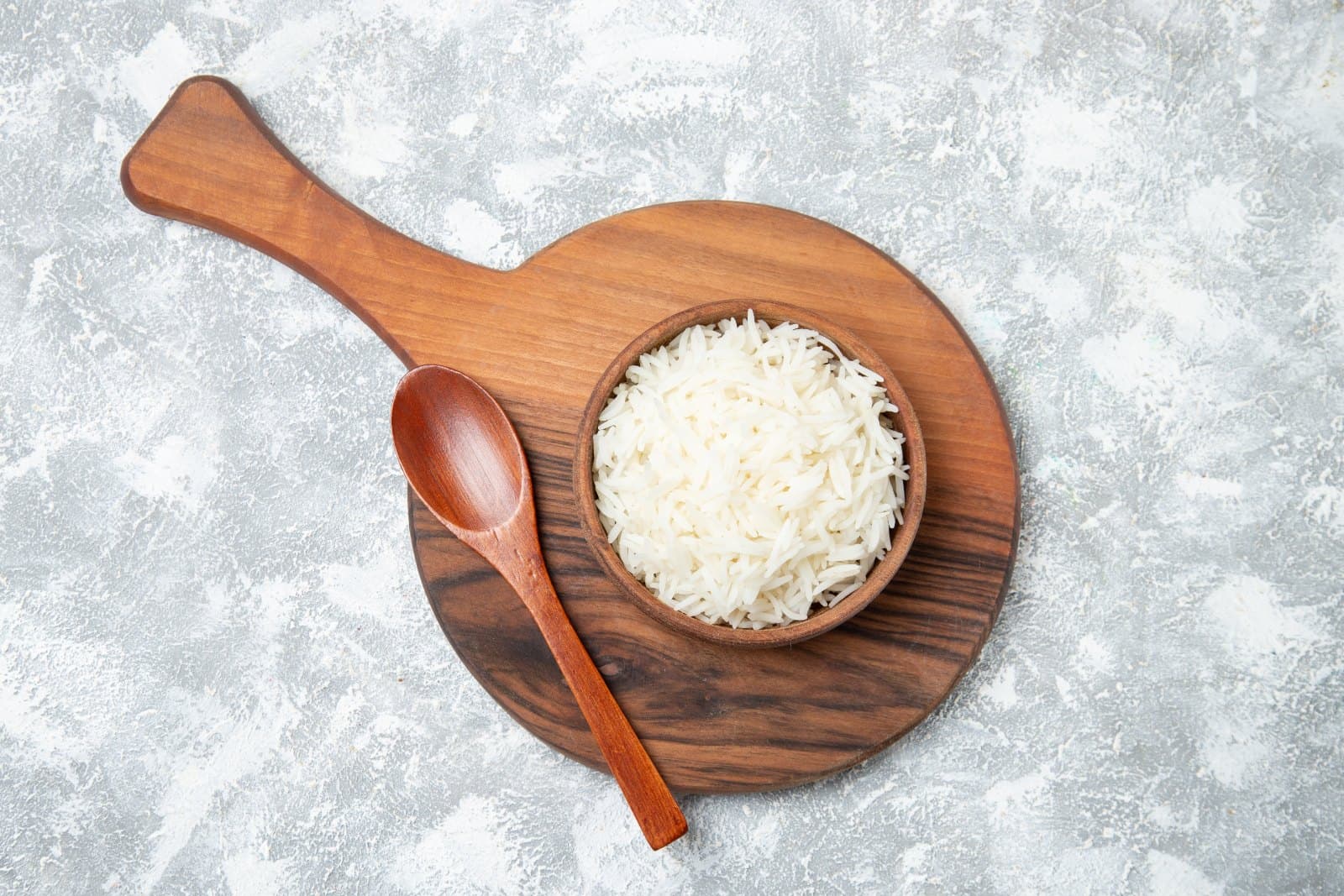
The Nidam al-Tayyibat is a whitelist-based food system: only the foods on its list are eaten, and everything else is excluded by default. It was formulated by Dr Diaa Al-Awadi and assigns each food to a zone, from Green to Red, according to the frequency at which it is allowed.
The spellings “al tayebat”, “taibat”, “tayabat”, “tayyibat” or “الطيّبات” all refer to the same method. They are different transcriptions of the same Arabic word, and none is more official than another. If this point interests you, see which name is correct.
Everything that follows is taken from the site’s food database, where each entry gives the zone, the preparation condition and, when it differs, the position of conventional nutrition.
What is a whitelist, fundamentally?
Most diets work as a blacklist: you eat normally, removing a few foods. The Nidam al-Tayyibat does the opposite. Nothing is allowed unless it appears on the list.
This reversal explains most of the surprises. Garlic (Red) and onion (Red) are excluded, even though they are the basis of almost all Maghrebi and Levantine cooking. Pulses (Red) are excluded too, including chickpeas and lentils.
Practical consequence: you do not remove three ingredients from your habits; you rebuild your dishes from a short list.
The zones, and what they mean
The system does not answer with “allowed” or “forbidden” but with a frequency. Five zones, from the most open to the most closed.
| Zone | What the system says about it | Example |
|---|---|---|
| Green | without frequency restriction | Rice (Green) |
| Yellow | allowed, with moderation | Courgette (Yellow) |
| Orange | allowed under a condition, or in a limited amount | Tomato (Orange) |
| Purple | allowed very rarely, special cases | Green beans (Purple) |
| Red | excluded | Melon (Red) |
Of the 197 published entries, 69 are in the Green zone, 17 in Yellow, 26 in Orange, 4 in Purple and 81 in Red. In other words: just under half of common foods are excluded.
The system classifies by family, not by calories. A food is not Red because it is fatty or sweet, but because it belongs to a group that the list excludes: that is why white sugar and broccoli are found side by side in it. This logic is the main reading difficulty for anyone arriving from conventional dietetics, where the criterion is nutritional.
The three rules that hold everything else together

The system boils down to three actions, repeated at every meal.
- Start from the list, not from the recipe. First choose what is allowed, then decide what to do with it. According to the system, it is the reverse order that makes people fail.
- Cook rather than eat raw. Raw leafy greens (Red) are excluded, and several Orange foods are only allowed cooked. The system considers cooking decisive, not incidental.
- Respect the frequency, not just the list. A Yellow food eaten every day falls outside the framework, even if it is on the list.
What is kept
The Green list is broader than one might think, especially for starchy foods and fruit.
- Starchy foods: rice (Green), potato (Green), sweet potato (Green), bulgur (Green), freekeh (Green), corn on the cob (Green).
- Fruits: apple (Green), pear (Green), banana (Green), dates (Green), grapes (Green), pomegranate (Green), prickly pear (Green).
- Seasoning: salt (Green), cumin (Green), black pepper (Green), tahini (Green), cinnamon (Yellow).
Bread only exists in one form: bran toast (Green). It is the only presentation of bread that the list retains.
What is excluded, and what surprises
Three families are almost entirely removed, and these are the ones that make the beginning difficult.
- Basic aromatics: garlic (Red), onion (Red), hot chilli and harissa (Red).
- Raw green vegetables and cruciferous vegetables: lettuce (Red), spinach (Red), broccoli (Red), cabbage (Red), raw cucumber (Red).
- Citrus fruits and melons: fresh lemon (Red), orange (Red), melon (Red), watermelon (Red).
On vegetables, the allowed list is very short: mushrooms (Green), squash (Green), ginger (Green), taro (Green) and courgette (Yellow). Tomato (Orange) and aubergine (Orange) remain possible under conditions.
On aubergine, the system’s sources do not agree: one excludes it plain, the others allow it cooked or stuffed. The entry says this rather than deciding.
By contrast, conventional nutrition recommends daily consumption of green vegetables and pulses, and regards citrus fruits as a useful source of vitamin C. The system departs from this on this point; we note it without arbitrating.
What the system does not settle
A whitelist framework necessarily leaves grey areas, and it is more honest to name them than to smooth them over.
- Disagreements between sources. Several foods are classified differently depending on the list consulted. Aubergine (Orange) is the clearest example; mango (Yellow) is another: some lists only allow it as juice.
- False friends in vocabulary. The same word does not designate the same fruit from one country to another: battikh means watermelon in Egypt and melon in Morocco. The melon (Red) entry points this out, because the confusion changes the answer.
- Quantities. The system asks you to respect a frequency, but does not publish amounts in grammes. We do not invent them.
What does a day look like?
A typical day is built around a Green starchy food, an allowed protein and a cooked vegetable.
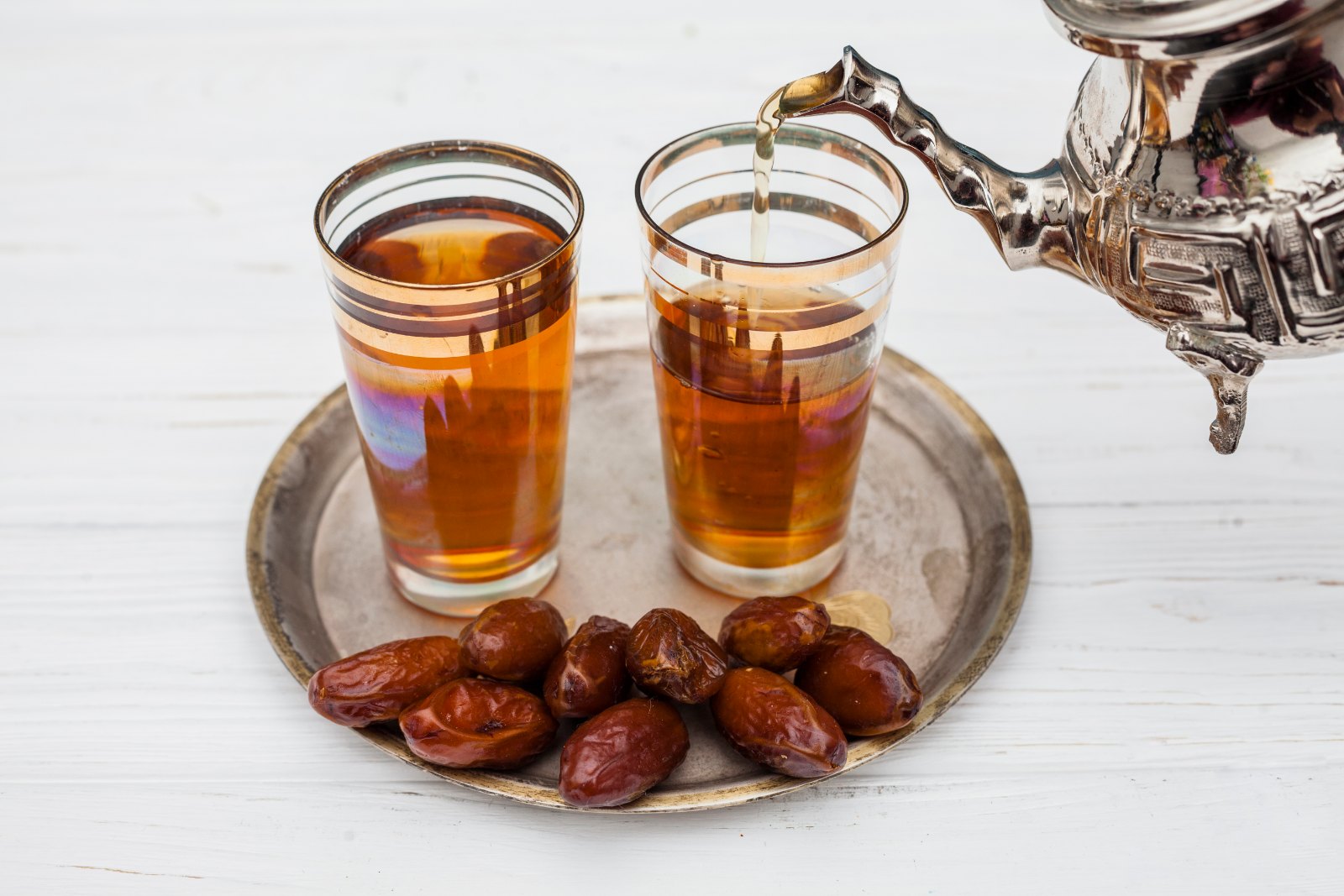
- Morning: bran toast, ripened cheese, dates, tea.
- Midday: rice or bulgur, allowed fish or meat, cooked courgette or squash.
- Evening: light, on the same basis; ten ideas are gathered in our dinners page.
The recipes published here are from the team. None is attributed to Dr Diaa Al-Awadi, who described a framework, not a cookbook.
Where to begin without getting it all wrong?
The most effective approach is not to change everything on a Monday morning, but to make the cupboard compliant. The system regards the contents of the cupboard as the real constraint: what is not bought is not eaten.
- Do the shopping from the short list before looking for recipes.
- Replace bread and aromatics first, as they return at every meal.
- Only deal with the Orange zones once the Green zones are in place.
The thirty-product starter basket covers exactly this first week.
Frequently asked questions
Does the Tayebat diet make you lose weight?
The system has not published measured results, and we do not invent any. What can be said without extrapolating: it removes added sugar, industrial sauces and most processed products. Any observed weight loss remains unproven by the system itself.
Why are garlic and onion excluded?
The list classifies them as Red without making it a question of taste. According to the system, they belong to the category excluded on principle. This is one of the points on which it departs most from regional cooking and conventional nutrition.
Can this diet be followed if you are diabetic?
This is not decided from an article. The system is not a treatment and does not replace medical follow-up. If you are taking medication, the frequency of Green starchy foods is precisely the kind of point to review with your doctor before changing anything.
“Taibat”, “tayabat”, “tayyibat”: is there a difference?
No. They are transcriptions of the same Arabic word, and all refer to the same system. Search engines treat them as variants, which explains why the method is found under several spellings.
Do you need to buy anything to start?
No. The list of foods and their zones can be consulted freely on the food database. The paid guide does not add any foods: it turns the framework into a programme.
Further reading
- The food database — each entry gives the zone, the condition and any divergence.
- Shopping list: the first 30 products.
- What is the real name of the system?
- About the author: who is the doctor people refer to.
The zones, conditions and divergences cited in this article come from the site’s food database, itself built from the system’s published lists. The zone distribution figures are those in the database as at 2 November 2026.
Disclaimer
This article describes a food system; it does not provide medical advice and does not replace medical advice. The Nidam al-Tayyibat is not a treatment and has not undergone clinical validation. If you are pregnant, diabetic, receiving treatment, or if you follow a diet for a medical reason, talk to a healthcare professional before changing your diet.