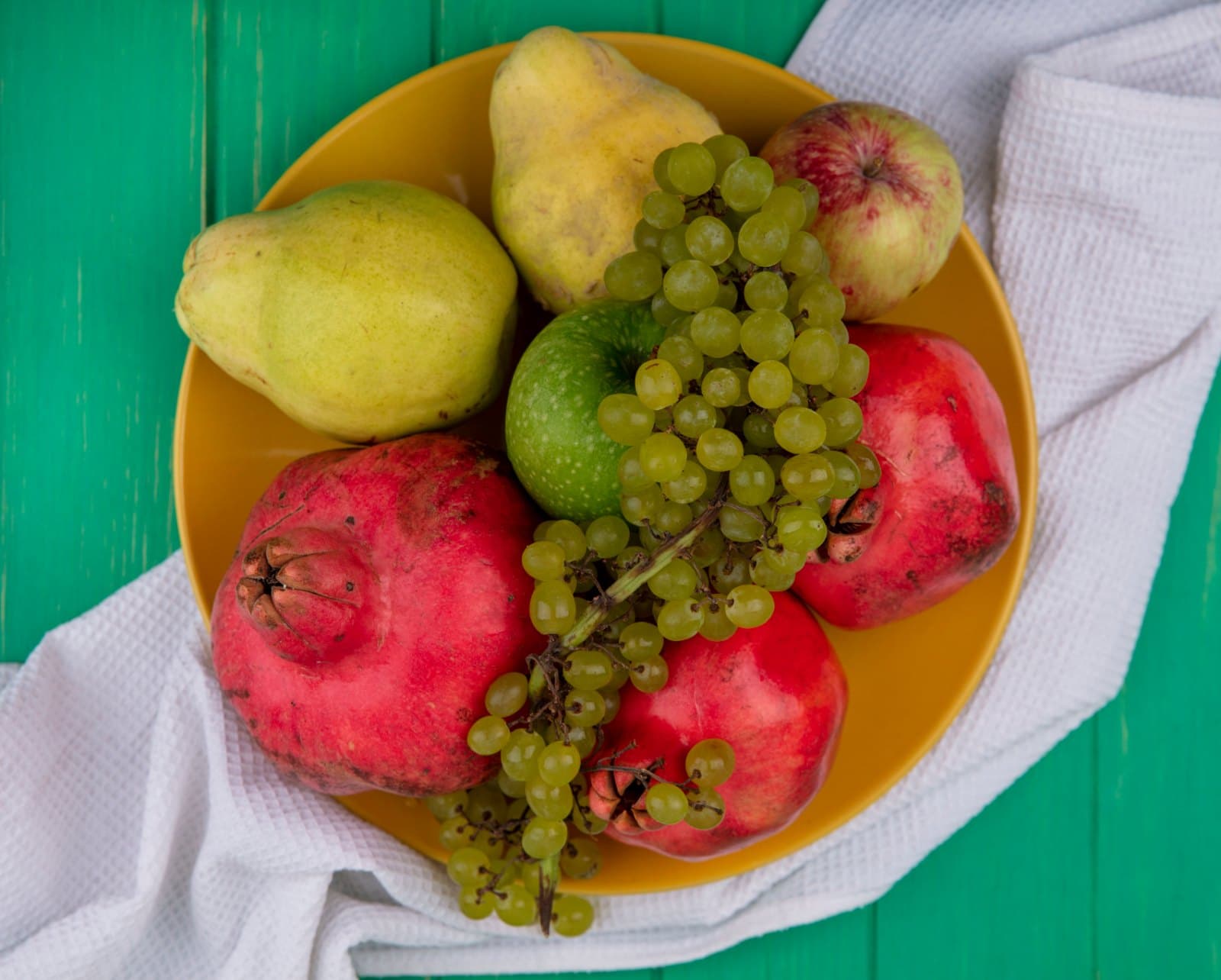
The Nidam al-Tayyibat allows fifteen fruits without restriction, mango in moderation and fresh fig under a condition. Ten common fruits are excluded, and they have one thing in common: all citrus fruits and all melons are among them.
This is the family where the list is most surprising, because it excludes precisely the fruits that conventional dietetics highlights. The zones below are those of the site’s food database.
The fifteen fruits in the Green zone
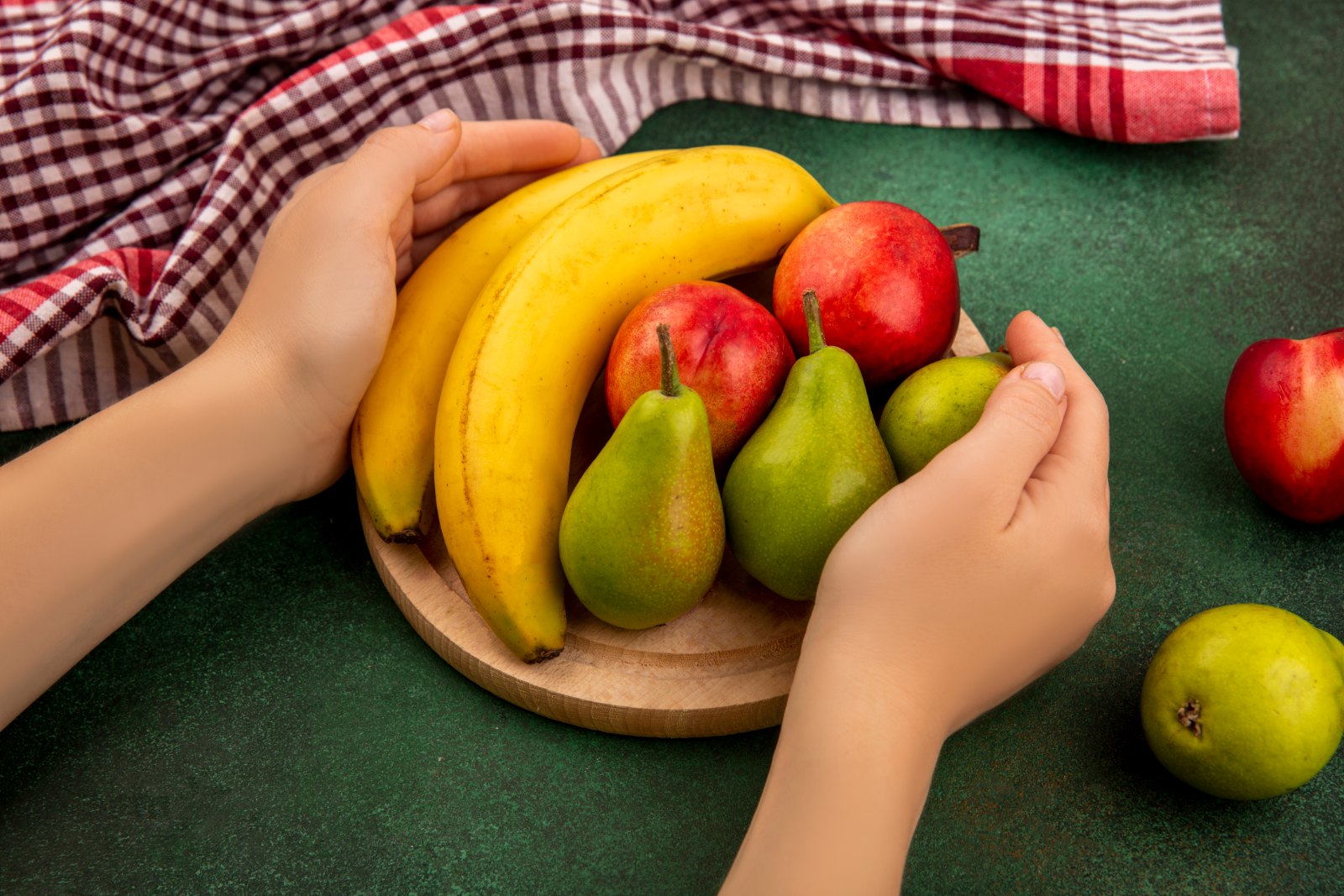
The Green zone means: allowed without restriction on frequency.
| Fruit | Zone |
|---|---|
| Apple | Green |
| Pear | Green |
| Banana | Green |
| Grapes | Green |
| Dates | Green |
| Pomegranate | Green |
| Prickly pear | Green |
| Apricot | Green |
| Peach | Green |
| Cherries | Green |
| Strawberry | Green |
| Guava | Green |
| Persimmon | Green |
| Coconut | Green |
| Dried fruits | Green |
They are seasonal, orchard and market fruits. According to the system, none of them requires any particular preparation condition.
The two conditional cases
Two fruits are neither outright allowed nor excluded.
- Mango (Yellow) — allowed in moderation, and the sources do not agree: some lists only include it as juice, others allow it whole. The entry signals the conditional exception rather than choosing.
- Fresh fig (Orange) — allowed in a limited portion. Not to be confused with prickly pear (Green), which is a different fruit and does not have the same zone.
This distinction between two “figs” is exactly the kind of detail where a quick reading takes you outside the framework.
The ten excluded fruits
| Fruit | Zone |
|---|---|
| Orange | Red |
| Mandarin / clementine | Red |
| Grapefruit | Red |
| Fresh lemon | Red |
| Lime | Red |
| Melon | Red |
| Watermelon | Red |
| Pineapple | Red |
| Kiwi | Red |
| Avocado | Red |
Two entire families are excluded: all citrus fruits and all melons. Pineapple, kiwi and avocado are added to them.
The system therefore excludes the fruits most associated with vitamin C in mainstream nutritional culture. Conventional nutrition, by contrast, recommends citrus fruits and kiwi for this intake, and avocado for its unsaturated fats. We report this divergence without arbitrating it.
Why citrus fruits and melons?
The system classifies by family, not by nutrient or sugar content. This explains why banana (Green) and dates (Green) — two very sweet fruits — are in the Green zone, while grapefruit (Red), low in sugar, is excluded.
Reading this list with a calorie or glycaemic grid therefore makes no sense: it was not built that way. According to the system, belonging to the family comes before any consideration of dose.
What the list provides, season by season
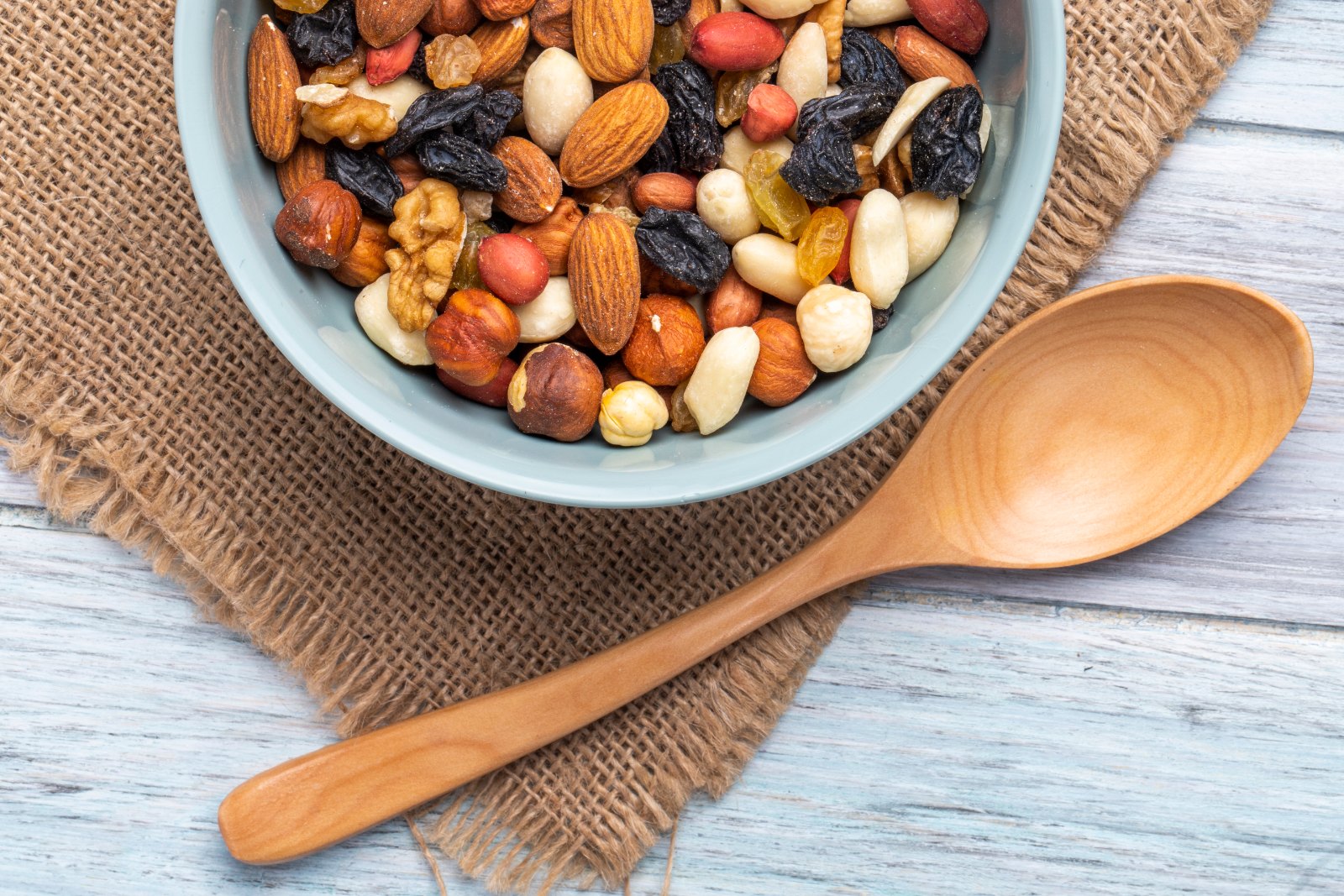
The practical advantage of this family is that it remains well supplied all year round, unlike vegetables, where the allowed list is very short.
In spring and early summer, strawberry (Green), cherries (Green), apricot (Green) and peach (Green) cover the season without condition. This is the most comfortable period of the system for fruit.
In high summer, the list narrows noticeably, because it is the season for melons and watermelons — both excluded. What remain are grapes, late peaches and prickly pear. This is the time of year when the common eating reflex and the list diverge most.
In autumn and winter, apple (Green), pear (Green), pomegranate (Green) and persimmon (Green) take over, along with dates (Green) and dried fruits (Green), which are available all year. The winter difficulty is not shortage but the absence of citrus fruits, which normally occupy that place.
How to read this list without getting it wrong
Three reading errors recur systematically, and each one takes you outside the framework.
- Confusing two fruits that have almost the same name. Fresh fig is in Orange, prickly pear in Green: they are two distinct entries.
- Inferring a zone by analogy. The fact that apple is in Green says nothing about kiwi. The system does not reason by similarity of texture or sugar, and each entry must be read on its own terms.
- Treating juice as the fruit by default. This is true for Green fruits, but mango is precisely the case where the sources distinguish the two.
A vocabulary trap that changes the answer
The word battikh does not designate the same fruit from one country to another: watermelon in Egypt, melon in Morocco. Both are in Red, which makes the mistake harmless here — but the same ambiguity exists elsewhere in the list and can change an answer.
The melon (Red) entry gives this warning explicitly. It is dealt with in detail on our page on summer fruits.
How to put together your fruit over a week
Three simple reference points are enough to stay within the list.
- Use orchard fruits as the base: apple, pear, peach, apricot, grapes, cherries. All are in Green and available most of the year.
- Count dates and dried fruits as full fruits, not as confectionery: the system classifies them in Green, but they remain dense.
- Do not try to replace the morning orange with another citrus fruit: the whole family is excluded, so there is no internal substitute.
For summer fruits in particular, the melon-watermelon reflex is the one that most often takes you outside the framework, since both are in Red.
Frequently asked questions
Is fruit juice treated like the fruit?
Not always. For mango (Yellow), the sources diverge precisely on this point: whole for some, juice only for others. For Green-zone fruits, the database does not distinguish the fruit from its juice.
Is lemon really excluded?
Yes, fresh lemon and lime are both in Red. Preserved lemon is treated separately, in Orange, meaning it is allowed under a condition — it is not the same preparation or the same zone.
Why is banana allowed when it is sweet?
Because the classification does not depend on sugar content. The system judges by family, and banana belongs to a retained family. The same logic excludes grapefruit, although it is low in sugar.
Are nuts in this list?
No, they form a separate family in the database. The dried fruits (Green) on this page are dehydrated fruits, not almonds or walnuts.
How many fruits per day does the system allow?
The list gives zones, not weights in grams. The system asks you to respect a frequency per zone without publishing quantified amounts, and we do not invent any.
Further reading
- The food database — each entry gives the zone and the condition.
- What is the Tayebat diet?
- Shopping list: the first 30 products
- Is melon a tayyib?
The zones, conditions and divergences cited come from the site’s food database, built from the published lists of the system described by Dr Diaa Al-Awadi. The fruit count by zone is that of the database as at 2 November 2026.
Disclaimer
This article describes a food system; it does not provide medical advice and does not replace medical advice. Excluding all citrus fruits reduces a usual source of vitamin C. If you are pregnant, diabetic, on medication or being monitored for a deficiency, speak to a health professional before changing your diet.