Gaining weight with the Nidam al-Tayyibat, according to the system, does not consist of eating more excluded foods, but of making meals denser around foods from the Green and Yellow zones, of organising a fourth intake according to hunger, and of combining physical work so that the surplus is not solely fat. This approach remains practical; it does not replace medical advice.
Why weight gain with the Nidam al-Tayyibat is not based on “eating more of everything”
The system presented by Dr Diaa Al-Awadi classifies foods into frequency zones: Green daily, Yellow daily with vigilance, Orange in restricted frequency, Purple very rarely, Red never. According to the system, trying to gain weight does not involve adding Red foods, but achieving better density with the foods already permitted.
This distinction changes practice. A denser meal can be based on Rice (basmati, white) (Green), Potato (Green) or Bulgur (Green), accompanied by permitted fats such as Natural butter (Green) or Smen / ghee (clarified butter) (Green). The aim, according to the system, is to increase what is permitted without introducing what the system excludes.
How to expand appetite without forcing yourself?
According to the system, appetite expands gradually, without constraint. Forcing large quantities is not the method proposed. Several practical habits help prepare the body for more complete meals:
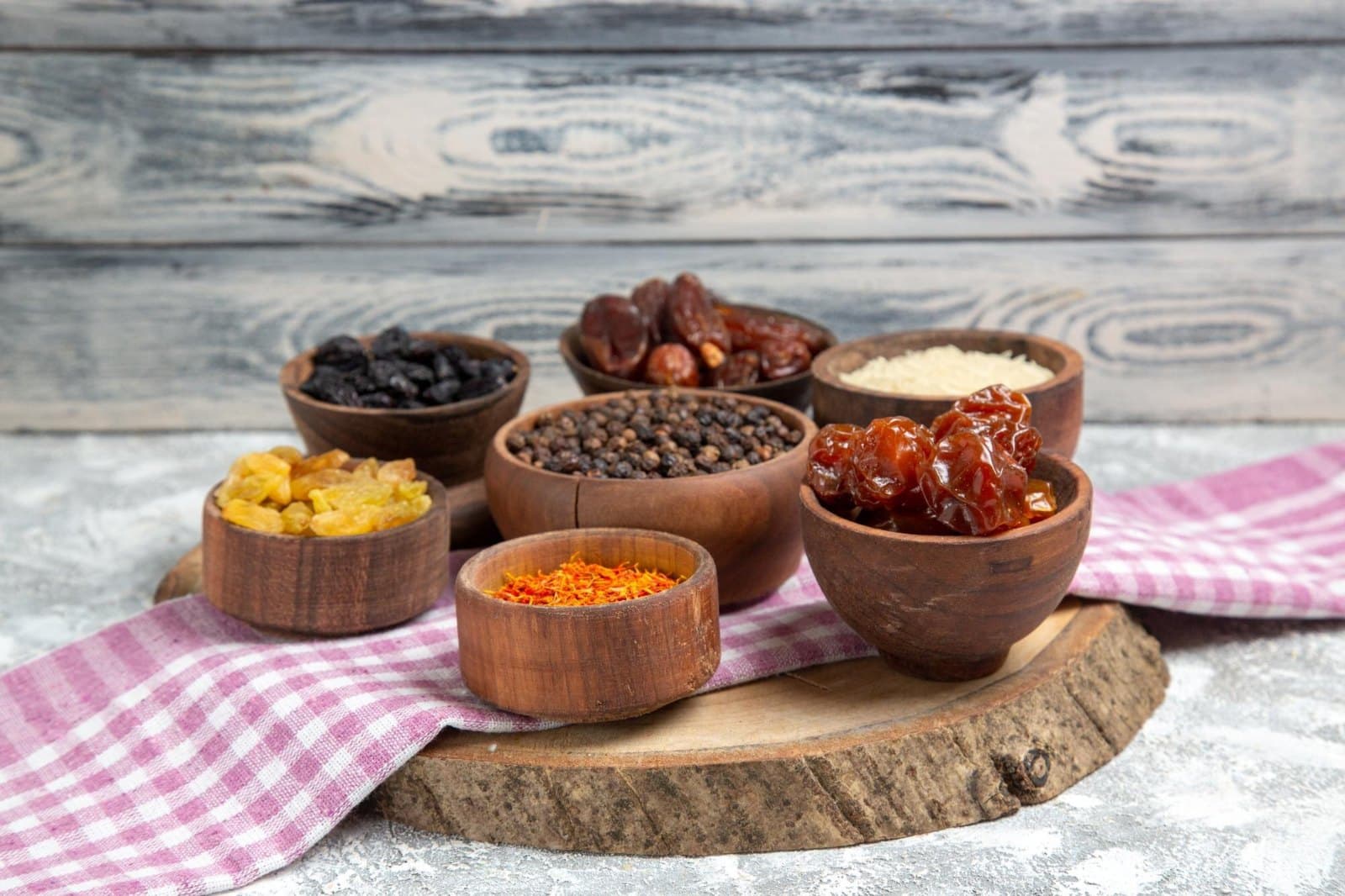
- Start with dense but easy-to-eat foods: Dates (Green), Dried fruits (Green), Banana (Green).
- Add flavour without using excluded condiments: Salt (Green), Cumin (Green), Ginger (Green), Black pepper (Green).
- Add a small homemade sweet at the end of the meal: Natural honey (Green), Date molasses (Green), Caramel and homemade desserts with butter and sugar (Green) prepared according to the system’s conditions.
- Drink liquids outside meals rather than just before, so as not to fill the stomach before the intake.
- Use a dense drink as a snack: Tamarind drink (Green) or Sugar cane juice (Green).
The idea is not to add Red foods, but to make the permitted meals more complete without getting stuck.
Which Green foods should be prioritised to make meals denser?
To gain weight, the system invites you to strengthen the bases of the meal, not to multiply chaotic intakes. Green zone foods provide this density:
- Starchy foods: Rice (basmati, white) (Green), Potato (Green), Bulgur (Green), Freekeh (roasted green wheat) (Green), Taro (colocasia) (Green) cooked.
- Dense fruits: Dates (Green), Dried fruits (Green), Grapes (Green), Banana (Green).
- Permitted fats: Natural butter (Green), Smen / ghee (clarified butter) (Green), Olive oil (Green).
- Matured cheeses: Cheddar (Green), Parmesan (Green), Roumi cheese (matured Egyptian cheese) (Green).
- Homemade sweets: Natural honey (Green), Date molasses (Green), Jam (Green), Chocolate-hazelnut spread (Green).
These foods are not sufficient on their own. The system suggests combining them in calm, repeated meals, without skipping an intake when the aim is to gain weight.
Here is a table of practical reference points, with no calorie values:
| Usage | Food | Zone | Reference according to the system |
|---|---|---|---|
| Base of a dense meal | Rice (basmati, white) (Green) | Green | Daily, as a side |
| Energy-giving fruit | Dates (Green) | Green | Within the daily limit provided by the system |
| Hot fat | Smen / ghee (clarified butter) (Green) | Green | Added to cooked dishes |
| Nut | Almonds (Yellow) | Yellow | In moderation, plain and unsalted |
| Cooked sauce | Tomato (Orange) | Orange | Preferably cooked, as a sauce |
| Shared meat | Goat meat (Orange) | Orange | Within the system’s shared weekly portion |
How to build meals and the fourth intake?
The system does not suggest weighing foods or counting calories. It suggests establishing regular meals, then adding a fourth intake if hunger requires it. According to the system, the fourth intake is not an additional imposed meal; it is justified when the three meals are not enough to cover hunger.
A meal structure can look like:
- A main dish based on a starchy food: Rice (basmati, white) (Green) or Bulgur (Green).
- An added fat source: Natural butter (Green), Smen / ghee (clarified butter) (Green) or Olive oil (Green).
- A permitted protein source: Sea fish (preferably grilled) (Green), Rabbit (Green), Quail (Green) or Pigeon (Green).
- A dense snack: Dates (Green), Dried fruits (Green) or Popcorn (Green).
The fourth intake can be made up of foods already permitted, without milk or fresh dairy products. For example, Bran bread (wholemeal toast) (Green) with Tahini (sesame paste) (Green) and Natural honey (Green), or a dense drink such as Sugar cane juice (Green).
Why is exercise presented as essential?
In the logic of the Nidam al-Tayyibat, weight gain is not limited to diet. According to the system, a food surplus that is not accompanied by exercise risks being transformed solely into fat, whereas regular physical work helps to distribute this surplus differently.
The system does not impose a precise sports programme. It invites you to choose regular, progressive efforts: brisk walking, climbing stairs, carrying moderate loads, bodyweight exercises. The important thing is to maintain activity without exhaustion, while the diet becomes denser.
What can slow weight gain according to the system?
Several mistakes make the objective slower, without any quantified result being guaranteed. According to the system, the main obstacles are:
- Adding Red foods in the belief that they make you gain weight faster. The system excludes, for example, Cow's milk (Red), Yoghurt (Red) and Pasta and lasagne (Red).
- Consuming Purple foods too often, even though they are reserved for very rare use: Mloukhia (jute mallow) (Purple).
- Mixing zones without respecting the prescribed frequencies: Beef (Orange), Lamb / mutton (Orange) or Camel meat (Orange) have a restricted share in the system.
- Drinking large amounts at the start of the meal, which can limit the room left for dense foods.
- Remaining inactive, because the absence of exercise is presented by the system as a factor that unbalances the use of the surplus.
When a difficulty persists, the system does not offer a remote diagnosis; it refers to a medical consultation.
Frequently asked questions
Can you gain weight with the Nidam al-Tayyibat without eating red meat?
Yes. According to the system, protein can come from Sea fish (preferably grilled) (Green), Rabbit (Green), Quail (Green) or Pigeon (Green). Permitted red meats remain possible, but they are not obligatory. Density can also come from starchy foods, nuts and permitted fats.
Do you have to count calories with this system?
No. The Nidam al-Tayyibat does not publish calorie values or gram amounts. It organises foods into frequency zones. The practice consists of choosing the permitted foods, respecting their zone and adjusting quantities according to hunger.
Is the fourth intake suitable for everyone?
It is not automatic. According to the system, it is justified if the three meals are not enough or if hunger returns regularly. If appetite is low, it is preferable first to expand the existing meals, without forcing yourself.
What should you do if your weight does not change?
First check whether any Red or Purple foods have slipped into the routine, then observe whether meals are dense enough and whether exercise is present. In the event of prolonged stagnation, intense fatigue or unintentional weight loss, a doctor must be consulted.
Can fresh dairy products be used to gain weight?
According to the system, no. Fresh dairy products such as Cow's milk (Red), Yoghurt (Red) or Fromage blanc / strained fresh cheese (Red) are excluded. The system directs towards permitted matured cheeses, such as Cheddar (Green), Parmesan (Green) or Matured Gouda / Edam (Yellow).
Further reading
- Thinness and Tayyibat: what to check first
- One day on, one day off: the Tayyibat protein rule
- Tayyibat dinner: ten ideas for the evening, in under an hour
- The Tayyibat two-hour rule: how to space your meals
Sources
- Food database of the Nidam Tayebat website, used for the zones cited.
- Public presentation of the Nidam al-Tayyibat, in particular the Green, Yellow, Orange, Purple and Red zones.
Disclaimer
This article does not replace medical advice. A consultation with a health professional is necessary in the event of unintentional weight loss, recent thinness, persistent digestive trouble, intense fatigue, absence of periods, chronic illness or monitoring of a child or adolescent.