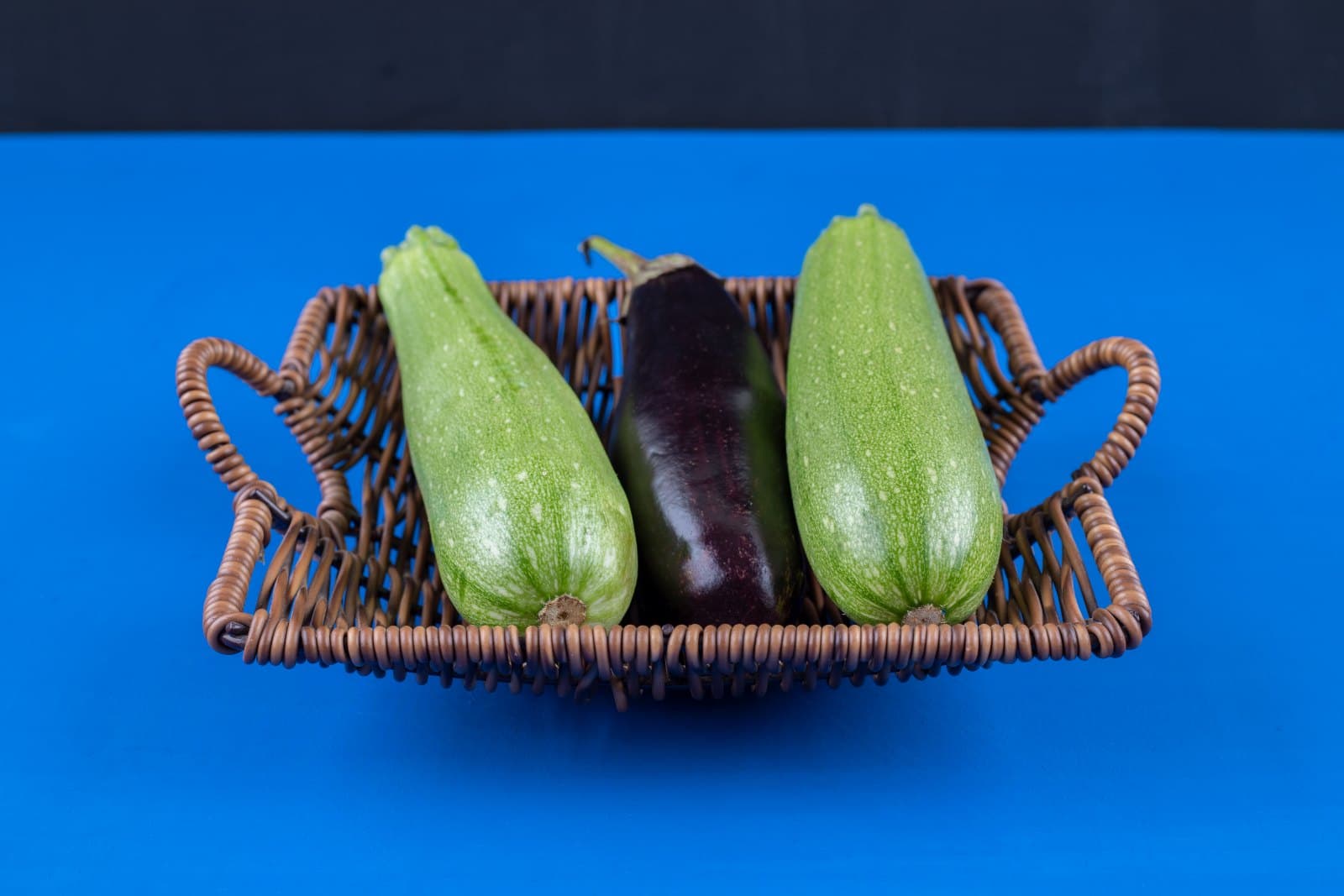
Only five vegetables are permitted without condition in the Nidam al-Tayyibat: mushrooms (Green), squash (Green), ginger (Green), taro (Green) and courgette (Yellow). Eight others are permitted under conditions, and most everyday green vegetables are excluded.
This is the narrowest family in the whole system, and the one that requires the most relearning. The zones below come from the site's food database.
The five vegetables permitted without condition
| Vegetable | Zone |
|---|---|
| Mushrooms | Green |
| Squash / pumpkin | Green |
| Ginger | Green |
| Taro (colocasia) | Green |
| Courgette | Yellow |
Four in Green, one in Yellow. Courgette is permitted in moderation, not every day. According to the system, these five form the vegetable backbone of the dish, and everything else has to be negotiated.
The eight vegetables permitted under conditions
The Orange zone means: permitted with a preparation condition, or in a limited amount.
- Tomato (Orange)
- Aubergine (Orange)
- Carrot (Orange)
- Okra / gumbo (Orange)
- Green pepper (Orange)
- Olives (Orange)
- Preserved lemon (Orange)
- Gherkins and pickles (torshi) (Orange)
Two more vegetables are in the Purple zone, that is, permitted very rarely: green beans (Purple) and mloukhia (Purple). Purple is not a more permissive Orange: it is one notch stricter.
On aubergine, the system's sources diverge — excluded plain for one, permitted cooked or stuffed for the others. The entry says this instead of settling the matter, and that is the right way to read an Orange zone: the condition matters as much as the colour.
What is excluded, and that is a great deal
Thirteen common vegetables are in the Red zone, including almost everything that is called a “green vegetable”.
| Vegetable | Zone |
|---|---|
| Garlic | Red |
| Onion | Red |
| Lettuce and green salads | Red |
| Spinach | Red |
| Broccoli | Red |
| Cabbage | Red |
| Cauliflower | Red |
| Raw cucumber | Red |
| Beetroot | Red |
| Peppers (all colours) | Red |
| Peas | Red |
| Raw greens | Red |
| Pulses | Red |
Garlic and onion are the two that change everything, because they are not an accompaniment but the base of the cooking. Their absence does not remove a vegetable from the dish: it removes the foundation of the dish.
Why so few green vegetables?
The system classifies by family, not by nutritional density. Cruciferous vegetables — broccoli, cabbage, cauliflower — are excluded as a family, and raw leaves as well. According to the system, it is membership that decides, and vitamin content does not enter into the classification.
This is the sharpest departure from conventional nutrition, which recommends five portions of fruit and vegetables a day and places precisely leafy green vegetables and cruciferous vegetables at the heart of that recommendation. We report the two positions without arbitrating between them.
A point that comes up often: the list does not exclude vegetables because they would be bad, but because they do not appear on a short whitelist. This is not the same reasoning, and confusing the two makes the list incomprehensible.
Raw or cooked: the rule that matters most
The word “raw” appears in three Red entries: raw cucumber, lettuce, raw greens. The system regards cooking as decisive, and several Orange foods are permitted only cooked.
In practice, this means that there is no raw salad in this system. The vegetable arrives cooked, as an accompaniment to a starchy food and a protein.
- Squash (Green) baked or as a purée.
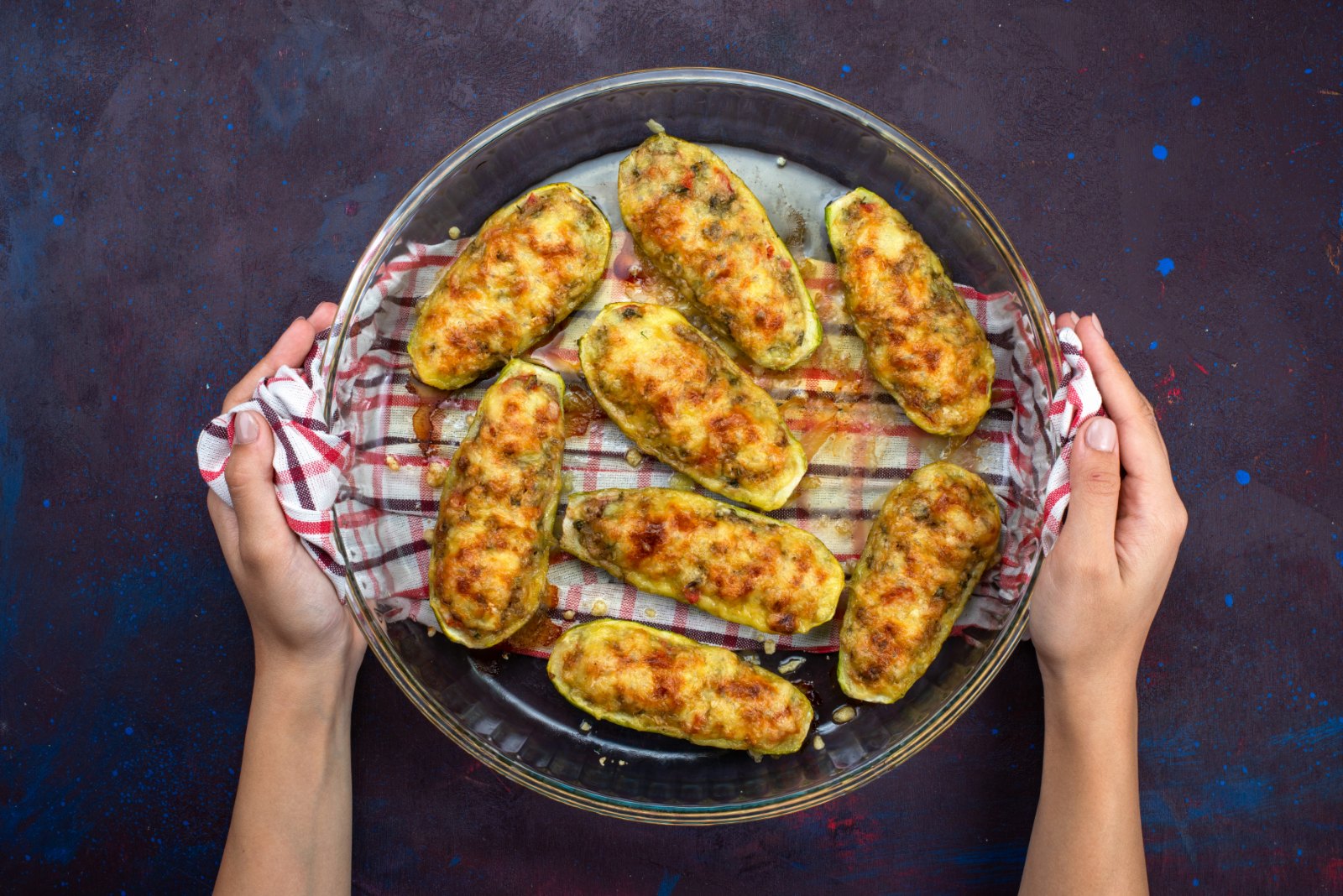
- Courgette (Yellow) pan-fried or stewed, in moderation.
- Mushrooms (Green) sautéed, without garlic or onion.
- Taro (Green) boiled, as a replacement for a starchy food or alongside one.
What the list gives to the market
The practical constraint is not the season but the aisle: most of what a vegetable stall offers is excluded, and what remains is found everywhere all year round.
Squash (Green) and taro (Green) are winter and storage vegetables, available for several months and easy to store. Mushrooms (Green) do not depend on the season. Courgette (Yellow) covers summer and part of spring.
The result is counter-intuitive: this very short list is in fact stable from one month to the next, whereas a broad list would depend heavily on the season. The system regards this stability as a practical advantage, since it makes the shopping basket predictable.
A detail that matters in the shop: fresh tomato (Orange) keeps its condition, but tomato concentrate (Red) is excluded. The same raw material changes zone according to how it is processed, and this is the kind of distinction that must be read on the entry and not deduced.
How to build a dish without garlic or onion
This is the practical question that comes before all the others, and it has a short answer: through the permitted spices and through cooking.
- Fat and heat first. Brown the vegetable properly, to seek flavour in caramelisation rather than in an aromatic base.
- Six seasonings, no more. Salt (Green), cumin (Green), black pepper (Green), tahini (Green), cinnamon (Yellow), cane vinegar (Yellow). The complete list is detailed on our page on spices.
- Ginger as the aromatic. It is the only fresh aromatic in the Green zone, and it takes on part of the role that garlic used to play.
Tomato concentrate (Red) is excluded, which surprises those who planned to replace the onion base with an industrial tomato sauce. Fresh tomato remains possible in Orange; its tinned version does not.
Frequently asked questions
Why is the tomato Orange and not Green?
Because the system permits it in a limited amount rather than freely. The tomato (Orange) entry keeps it on the list, but not at the same rank as squash or mushrooms. The detail is covered in our page on tomato and aubergine.
Can you eat green salad occasionally?
No. Lettuce and raw greens are in Red, and the Red zone has no permitted frequency. It is not a question of quantity.
Is cooked carrot permitted?
Carrot is in Orange, therefore permitted under conditions and in a limited amount. As with the other Orange foods, it is the entry that carries the condition, not a general rule.
How do you replace onion in a tagine?
There is no direct substitute: the system does not propose one. What works is to change method — bolder cooking, ginger (Green), cumin (Green) — rather than looking for an ingredient that imitates onion.
Is this list sufficient nutritionally?
The system does not publish a nutritional analysis of its own list, so we cannot say that, and we do not affirm it. Excluding leafy green vegetables and pulses removes intakes that conventional nutrition considers important. This is a question to put to a health professional.
Further reading
- The food database — the zone and condition of each vegetable.
- What is the Tayebat diet?
- Permitted spices: the complete list
- Tomato and aubergine: under what conditions?
The zones, conditions and divergences cited come from the site's food database, compiled from the published lists of the system described by Dr Diaa Al-Awadi. The counts by zone are those of the database on 2 November 2026.
Disclaimer
This article describes a food system; it does not give medical advice and does not replace medical advice. Such a restricted list of vegetables significantly alters intakes of fibre, folate and vitamin K. If you are pregnant, taking anticoagulant medication, diabetic or being monitored for a deficiency, speak to a health professional before changing your diet.