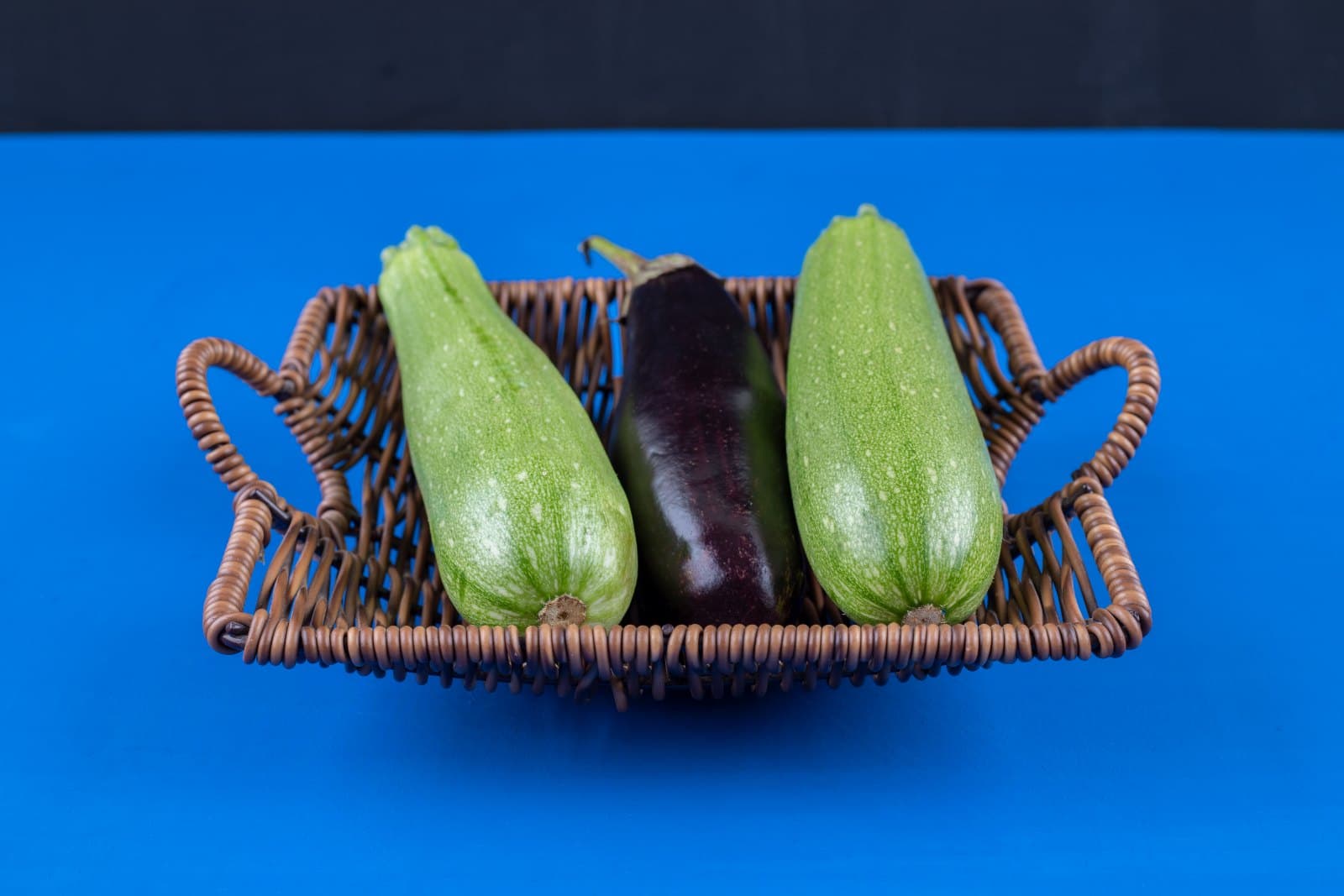
Yes, but under condition. The tomato and the aubergine are both in the Orange zone of the Nidam al-Tayyibat: admitted in a limited portion or with a preparation condition, not freely like a Green food.
As for aubergine, the system's sources do not agree, and the database says so instead of choosing. The zones come from the site's food database.
What 'Orange' means exactly
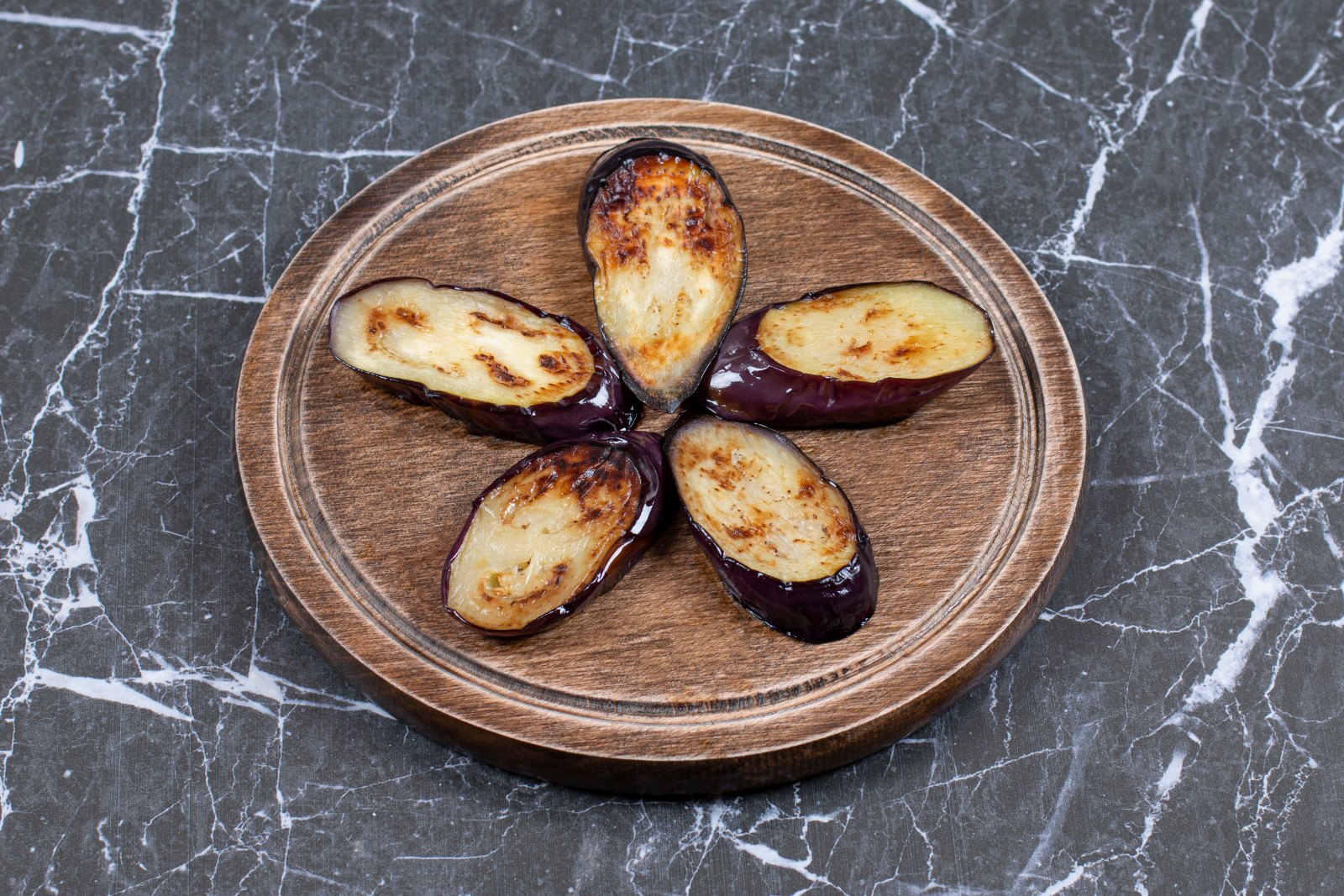
The Orange zone is neither a softened Green nor a tolerated Red. It is a separate category: the food remains on the list, but its place there is conditional.
| Zone | What the system says about it |
|---|---|
| Green | without restriction of frequency |
| Yellow | admitted, with moderation |
| Orange | admitted under condition, or in a limited portion |
| Purple | admitted very rarely |
| Red | excluded |
The system therefore asks you to read the entry, not just the colour: two Orange foods can carry two very different conditions.
Tomato: admitted, in limited portion
The tomato entry (Orange) keeps it on the list without giving it the rank of the five Green vegetables. There is no explicit cooking condition attached to the entry, but the general logic of the system — which excludes raw foods in several families — points towards cooked tomato rather than in salad.
A much sharper point, and one much more often missed: the processed form is excluded. Tomato concentrate (Red) is in the Red zone, along with ketchup (Red) and industrial sauces.
It is the same raw material, and two opposite zones. According to the system, processing demotes it, not the vegetable.
Aubergine: the sources diverge, and we say so
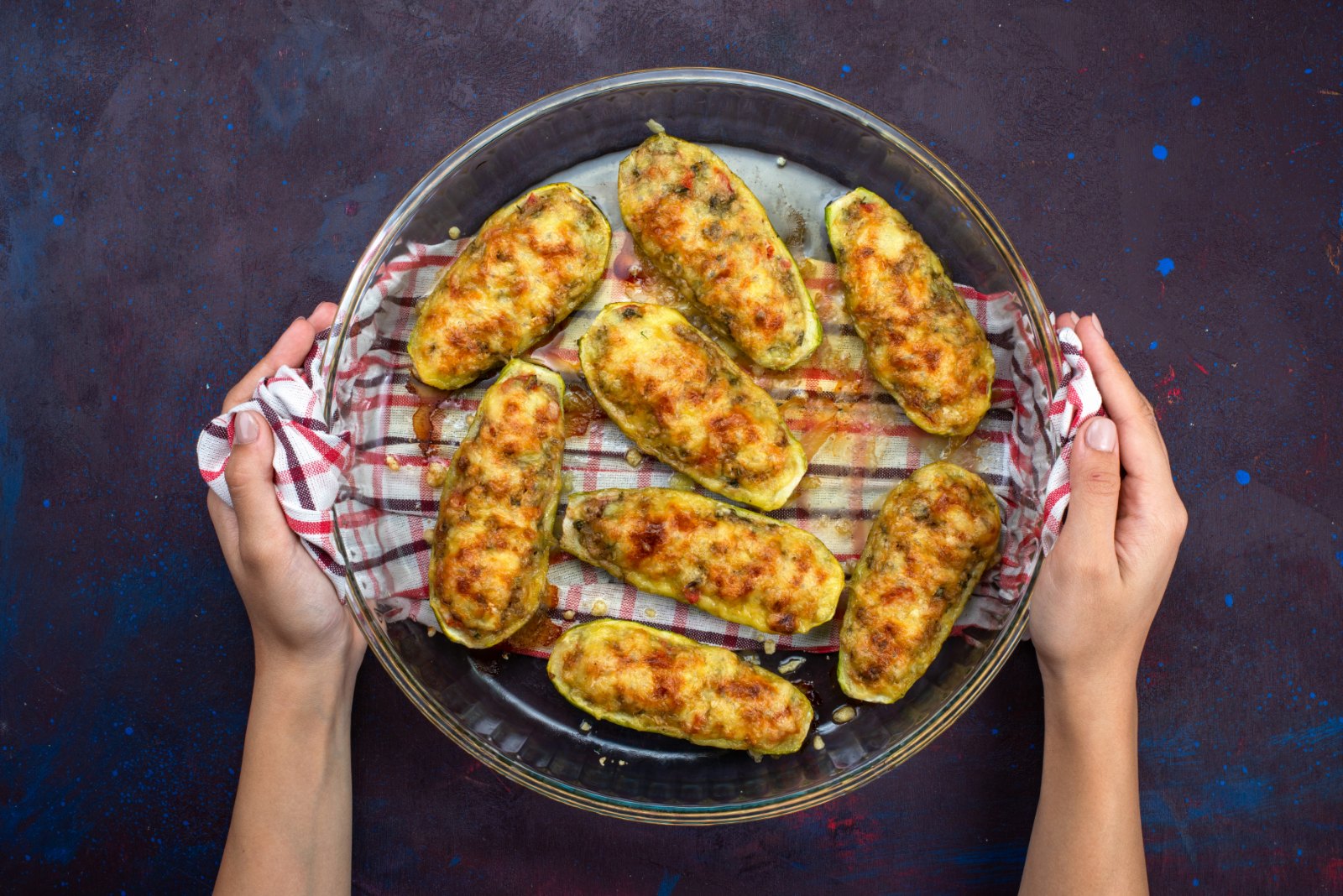
The aubergine entry (Orange) carries an explicit note of disagreement: excluded raw for one source, admitted cooked or stuffed for the others.
We do not decide on the system's behalf. It is an uncomfortable position, but it is the only honest one: inventing a single rule where the published lists give two would amount to fabricating authority that does not exist.
In practice, this leaves two defensible readings:
- The more cautious one: aubergine only cooked, and in limited portion, never raw or marinated.
- The more permissive one: aubergine cooked or stuffed like an ordinary Orange.
Both remain on the list. Neither treats it as a Green vegetable.
Why these two are a problem
Because they are the basis of almost all slow-cooked dishes in the region, and their conditional status clashes with habit.
A ratatouille, a chakchouka, a zaalouk, a tomato sauce for rice: these dishes rely on tomato and aubergine as if they were free foods, and the system does not treat them that way. Add to this the fact that the usual base of these preparations — garlic (Red) and onion (Red) — is excluded.
In other words, the difficulty is not tomato alone. It is the combination tomato + onion + garlic, which is precisely the basis of everyday cooking.
How to use them without leaving the framework
Three actions are enough to remain within the list.
- Cook, do not serve raw. The system considers cooking decisive in several families, and this is the safest reading for an Orange.
- Limit the portion, not just the frequency. An Orange in a small quantity in a dish built on a Green starchy staple remains an Orange; the same dish where tomato is the main ingredient is no longer one.
- Avoid the tinned version. Concentrate, industrial coulis and ketchup are Red. Fresh tomato is the only form that keeps its Orange zone.
For flavour, the base is built with the six permitted seasonings, detailed on our page on spices: cumin (Green), black pepper (Green), salt (Green), plus ginger (Green) as a fresh aromatic.
The other Orange vegetables, for comparison
Tomato and aubergine are not alone in this zone. Six other vegetables appear there, and seeing them together helps to understand the logic.
- Carrot (Orange)
- Okra (Orange)
- green pepper (Orange)
- Olives (Orange)
- Preserved lemon (Orange)
- Gherkins and pickles (Orange)
Three of them — olives, preserved lemon, pickles — are salt preserves. The system keeps them in Orange while it excludes industrial preserves, which shows that the criterion is not 'processed or not' but the nature of the processing.
Also worth noting is the contrast within the pepper family: the green pepper is Orange, while peppers of all colours are in the Red zone. Two entries, two zones, for what the market sells side by side.
What the season changes
An Orange-zone food is easier to manage when you know at what point it arrives in the basket.
Tomato and aubergine are summer vegetables, and that is precisely the season when the permitted list is shortest: melons are excluded, salads too, and the temptation is therefore strong to make summer rest on these two. The system asks for the opposite — a limited portion remains limited even when the alternative is missing.
In winter, the question arises differently: the available tomato is often greenhouse-grown or tinned, and the tinned version changes zone. It is the season when the distinction between the fresh vegetable and its processed form matters most.
For the rest of the year, squash (Green) and courgette (Yellow) cover the role that tomato occupies in everyday cooking, without condition for the former.
What conventional nutrition says
It does not limit tomato or aubergine, and on the contrary recommends cooked vegetables rich in carotenoids, of which cooked tomato is an often-cited example. It draws no unfavourable distinction against tomato concentrate, which remains for it one tomato product among others.
It is a real divergence from the system, and we report it without arbitrating: each food entry indicates the system's position, and this section indicates the other.
Frequently asked questions
Is raw tomato in salad permitted?
The entry carries no explicit cooking condition, so we do not state it. What is certain: the system excludes raw foods in several families — raw cucumber (Red), raw greens (Red) — and the cooked reading is the most coherent with that.
Is tomato concentrate really excluded?
Yes, tomato concentrate is in Red, separately from fresh tomato. Processing changes the zone.
Is stuffed aubergine admitted or not?
It depends on the source: the entry explicitly signals that one source excludes it raw and that the others admit it cooked or stuffed. We do not choose for you; the cooked version is the reading common to both.
Why is the green pepper Orange and the other peppers Red?
Because they are two distinct entries in the database, with two zones. It is a good reminder that you do not deduce a zone by analogy in this system.
How many times a week can you eat them?
The database gives zones, not numerical frequencies. The system asks you to respect a limited portion without publishing a number, and we do not invent one.
To go further
- The food database — the entry for each food, its zone and its condition.
- What is the Tayebat diet?
- Permitted vegetables: the complete list
- Permitted spices
The zones, conditions and divergences cited come from the site's food database, built from the published lists of the system described by Dr Diaa Al-Awadi. The disagreement about aubergine is reported as it appears in the database.
Disclaimer
This article describes a food system; it does not give medical advice and does not replace a medical opinion. If you are pregnant, diabetic, under treatment or followed for a medical reason, talk to a health professional before changing your diet.