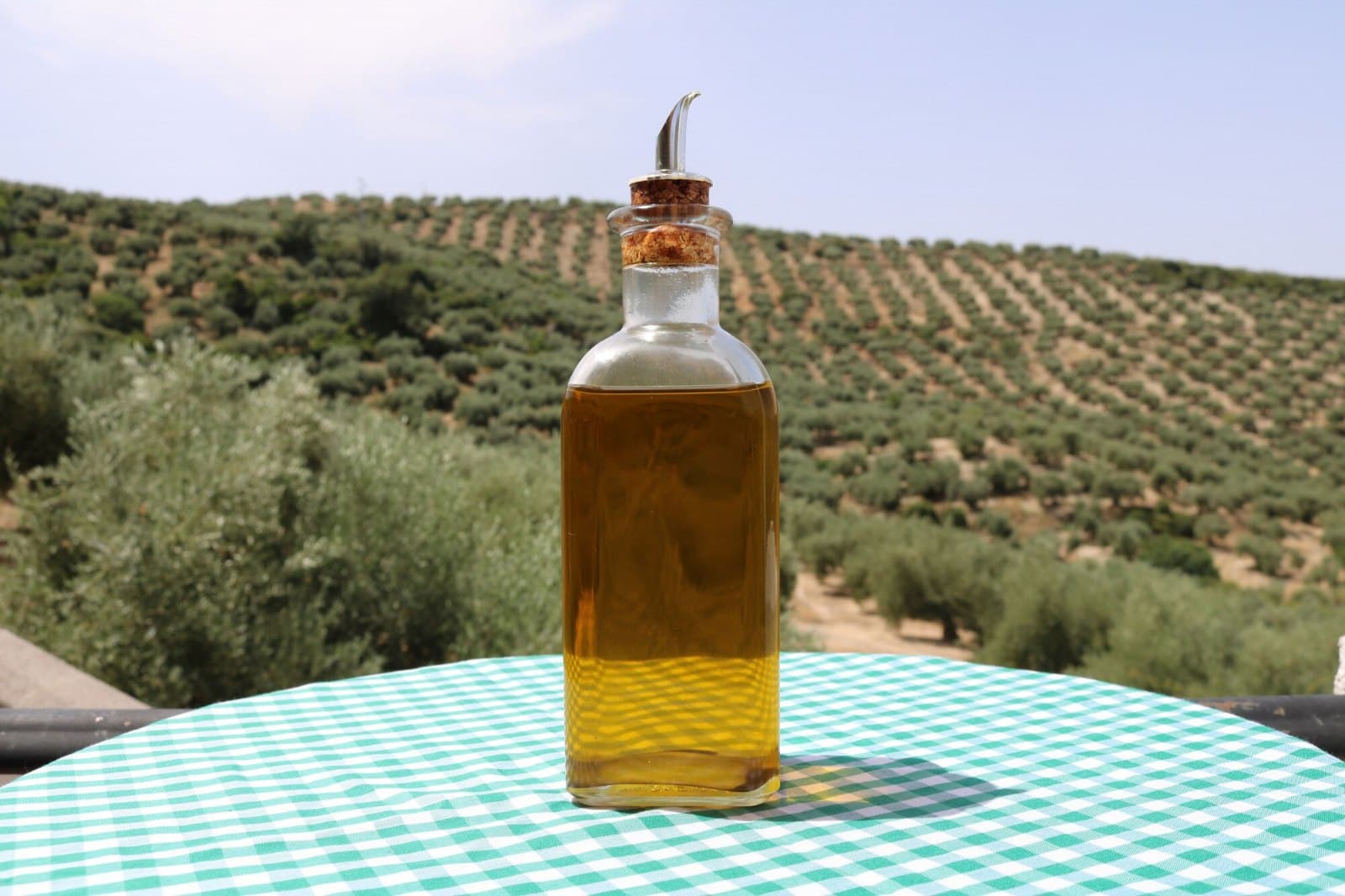
According to the Nidam al-Tayyibat system, olive oil is a Green zone food, authorised daily. It serves as the reference fat, raw or in gentle cooking, in place of the excluded oils. The Egyptian physician Diaa Al-Awadi includes it among the foods called "tayyib". No consumption figure is published by the system.

Why is olive oil classified in the Green zone?
According to the system, olive oil is one of the Green zone foods, in the same way as Natural butter (Green) and Smen / ghee (clarified butter) (Green). This zone includes the foods that the system considers usable every day, with no particular frequency condition. Olive oil carries no restriction related to cooking, quantity or combining with other foods, unlike products classified in the Orange or Yellow zone.
The system does not publish any quantified study on the components of olive oil. It classifies the food in the Green zone, which means for its readers that it can replace other fats in everyday meals. Conventional nutrition, for its part, is interested in the composition of olive oil, particularly its monounsaturated fatty acids and compounds such as oleocanthal, but this work is not taken up as justification by the system.
Does olive oil withstand cooking?
According to the system, olive oil is classified in the Green zone, with no reservation about its use in cooking. It can be used raw, as a dressing, or heated over a low heat. The system does not specify a maximum temperature or a heating time. It does, however, exclude other oils for frying or high-temperature cooking, such as Maize oil (Yellow) and Sunflower oil (Yellow), which are classified in the Yellow zone with the condition that they be reserved for frying.
The question of cooking with olive oil is often debated. Conventional nutrition mentions a smoke point that varies according to the quality of the oil, but the Nidam al-Tayyibat system does not publish data on this point. According to the system, olive oil remains a Green zone choice, while the frying oils classified in the Yellow zone are considered acceptable only for that specific use.
Which oils does the system exclude?
The Nidam al-Tayyibat system distinguishes several fats. The table below compares the zone assigned to different oils and fats, according to the information published by the site.
| Food | Zone | Condition or use according to the system |
|---|---|---|
| Olive oil | Green | Authorised daily, without condition |
| Natural butter | Green | Authorised daily, without condition |
| Smen / ghee (clarified butter) | Green | Authorised daily, without condition |
| Maize oil | Yellow | Reserved for frying |
| Sunflower oil | Yellow | Reserved for frying |
| Olives | Orange | In a small quantity |
| Argan oil | Red | Excluded by the system |
| Coconut oil | Red | Excluded by the system |
| Soya oil and rapeseed oil | Red | Excluded by the system |

This table shows that olive oil is not the only fat in the Green zone, but that it differs from the Yellow frying oils and the Red oils that are excluded. The system does not always explain the reason for the classification, but it is consistent: olive oil remains in the Green zone.
How to use olive oil daily?
According to the system, olive oil can be added simply to meals. Here are some common uses, suggested by the site team, without claiming to be exhaustive:
- As a raw dressing on cooked vegetables, such as Squash / pumpkin (Green, cooked) or Sweet potato (Green).
- In a homemade vinaigrette with Cane vinegar (Yellow, in a small quantity), Salt (Green) and Black pepper (Green).
- For gentle cooking of meats classified in the Green zone, such as Rabbit (Green) or Pigeon (Green).
- Mixed with Tahini (sesame cream) (Green) for a cold sauce, with a little Cumin (Green).
- At the end of cooking on Mushrooms (Green, cooked) or Courgettes (Yellow, cooked).
The site team suggests a simple vinaigrette recipe: mix two spoonfuls of olive oil, one spoonful of cane vinegar, a pinch of salt, a pinch of black pepper and a touch of cumin. This preparation does not come from the system, but from the team's cooking.

Olive oil and the question of oleocanthal
Oleocanthal is a compound present in olive oil, often nicknamed "natural aspirin" by the popular science press. Conventional nutrition studies its potential anti-inflammatory effects, but the Nidam al-Tayyibat system does not mention this compound in its fact sheets. According to the system, olive oil is classified in the Green zone for reasons of overall coherence, without any particular health claim.
The system does not publish several pieces of information that are often sought:
- No distinction between virgin, extra virgin or other qualities of olive oil.
- No maximum cooking temperature.
- No claim about cancer or the liver.
- No recommended daily amount.
The competing page mentions the importance of extra virgin olive oil, but the Nidam Tayebat site does not publish such a distinction. The quality question therefore remains open, and the reader must refer to the site's fact sheets for the available mentions.
What the system does not say about cancer and the liver
Some outside sources associate olive oil consumption with protection against certain cancers or with a beneficial effect on the liver. The Nidam al-Tayyibat system makes no promise of this kind. It classifies olive oil in the Green zone, which means that it is authorised daily, but it does not claim to prevent or treat a disease. No study is cited, no quantified result is published.
Conventional nutrition carries out work on these subjects, with sometimes divergent results. The Nidam Tayebat site does not settle this debate. It merely places olive oil among the accepted foods. By way of comparison, Peanuts (Purple) are classified in the Purple zone, to be consumed very rarely, whereas olive oil is in the Green zone. Similarly, Fresh lemon (Red) is excluded by the system, unlike olive oil, which remains a staple food. For any medical question, a health professional must be consulted.

Frequently asked questions
Is olive oil allowed every day in the Nidam al-Tayyibat?
Yes. According to the system, Olive oil (Green) is classified in the Green zone, which means it can be consumed daily. The system does not publish a daily quantity limit. It is therefore considered a basic fat.
What is the difference between olive oil and frying oils in the system?
According to the system, Olive oil (Green) is in the Green zone, with no restriction on use, whereas Maize oil (Yellow) and Sunflower oil (Yellow) are in the Yellow zone, reserved for frying. Frying oils are not excluded, but they carry a condition of use. Olive oil does not have this condition.
Does the system recommend extra virgin olive oil?
The system does not make an explicit distinction between qualities of olive oil on the fact sheet consulted. It classifies the food Olive oil (Green) in the Green zone, without specifying a grade. The question of extra virgin comes from conventional nutrition, not from the Nidam al-Tayyibat system.
Why are some oils such as coconut oil excluded?
The system classifies Coconut oil (Red) in the Red zone, which brings together the excluded foods. It does not always detail the reason, but the Red zone means that the food is not proposed. Olive oil, in the Green zone, is therefore preferred.
Can you fry with olive oil according to the system?
The system does not prohibit it, because olive oil is in the Green zone without restriction. However, it classifies frying oils separately in the Yellow zone, which suggests that they are intended for that use. Frying with olive oil is not documented on the fact sheet.
Further reading
- Tayebat diet (al tayebat, taibat, tayabat): what it is
- Critique of the Nidam al-Tayyibat: the debate
- The Egyptian physician's diet: who are we talking about?
- Tayyibat shopping list: the first thirty products to buy
Sources
- Page of the Nidam al-Tayyibat system on olive oil (consulted for the assigned zone).
- Source page dealing with olive oil on tayibat.org, used only to identify the questions asked.
- Food fact sheets from the Nidam Tayebat site for the zones cited.
Disclaimer
This article does not replace medical advice. Any question relating to an illness, a treatment or a dietary change must be addressed to a doctor, a nutritionist or another qualified health professional. The information presented here reflects the classification of the Nidam al-Tayyibat system, not a diagnosis or an individual recommendation.