
The Tayebat diet, also called Nidam al-Tayyibat, is a food system described by the Egyptian doctor Diaa Al-Awadi. It classifies foods into five frequency zones, from everyday to forbidden, in order to guide choices without imposing calories or set menus.
What is Nidam al-Tayyibat?

Nidam al-Tayyibat, also known as Tayebat, Taibat or Tayabat, is a food classification system described by the Egyptian doctor Diaa Al-Awadi. According to the system, each food belongs to one of the five frequency zones: Green, Yellow, Orange, Purple, Red. These zones indicate how often a food may be consumed, without imposing menus, calories or gramme quantities. The system publishes no result or portion figures, only a frequency framework.
The system is based on a particular conception of food quality, called tayyib, which refers to what is good and wholesome. It does not provide quantified shopping lists or official standard menus. Each food is classified into a zone according to criteria specific to Dr Diaa Al-Awadi, which are not made public in detail.
Who is Diaa Al-Awadi?
Diaa Al-Awadi is an Egyptian doctor who described Nidam al-Tayyibat. His name is associated with this system, but there is no peer-reviewed scientific publication that validates his proposals. The point of view of conventional nutrition does not necessarily confirm this classification, and it is presented here as an unproven framework.
No public health body officially recommends this classification. The available information comes from online publications and videos attributed to the doctor. The Nidam Tayebat website documents this system without validating it. To learn more about this doctor, see The Egyptian doctor’s diet: who are we talking about?.
The five zones of the system
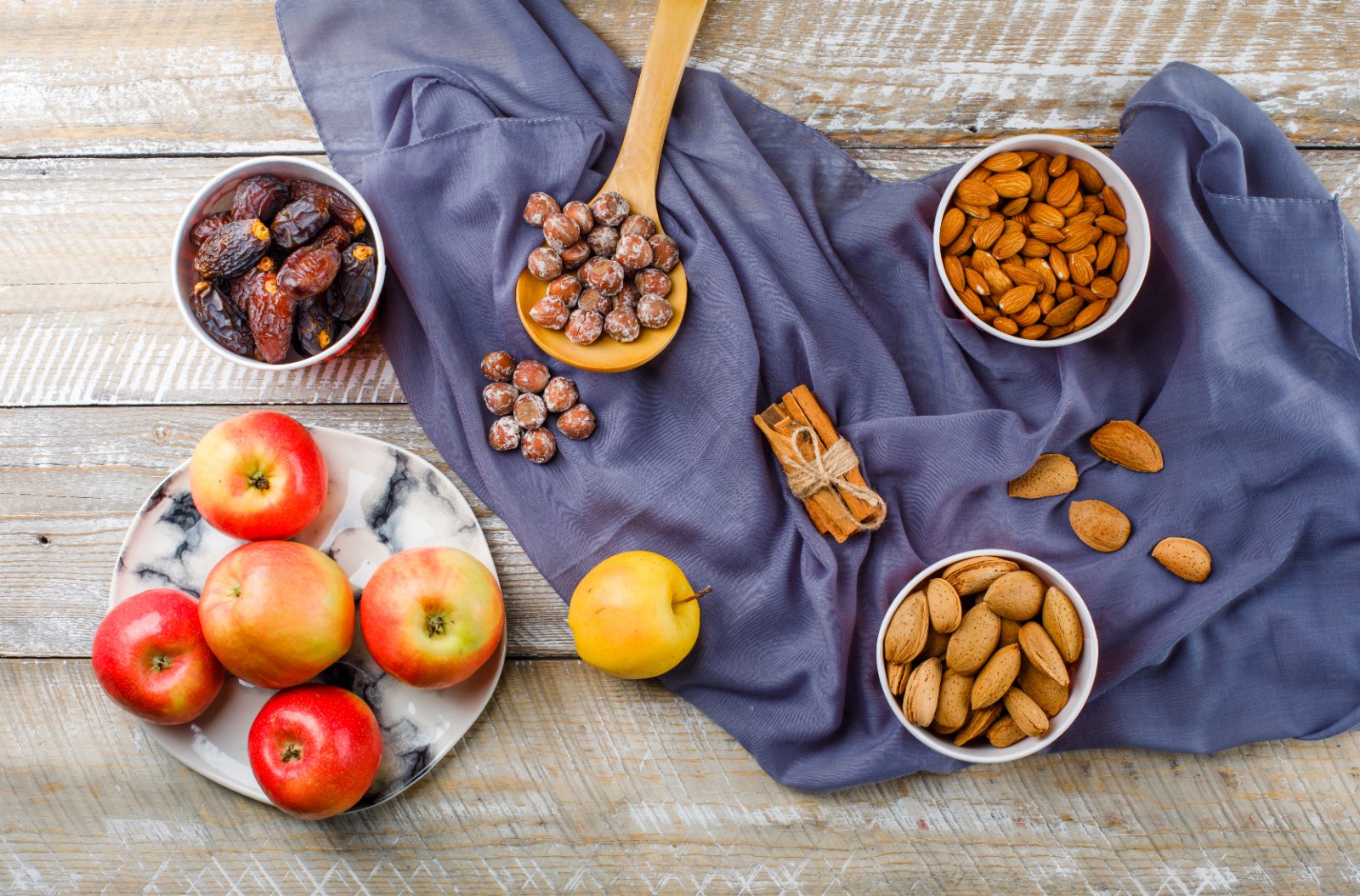
Here is a summary table of the five zones and their recommended frequency, according to the system.
| Zone | Recommended frequency | Examples of foods |
|---|---|---|
| Green | Daily | Apricot (Green), White basmati rice (Green), Potato (Green) |
| Yellow | Daily with a point of vigilance | Almonds (Yellow), Mango (Yellow) |
| Orange | Every two days to once a week | Lamb / mutton (Orange), Tomato (Orange) |
| Purple | Very rarely | Peanuts (Purple), Mloukhia (Purple) |
| Red | Never | Cow’s milk (Red), Eggs (Red) |
The particular conditions for each food are specified in its individual article. For example, Mango (Yellow) is preferably consumed as juice, and Tomato (Orange) preferably cooked. This distribution serves as a visual guide. It does not replace consultation of the individual articles, because certain preparation or quantity conditions apply even within a zone.
Which foods are allowed daily?
According to the system, the Green zone is the foundation of daily eating. It brings together foods to be consumed without any particular frequency restriction, provided that the instructions specific to each food are followed. Here are a few examples:
- Apple (Green), preferably peeled.
- Pear (Green), preferably peeled.
- Peach (Green), preferably peeled.
- Strawberry (Green).
- Dates (Green), according to the system, one to six per day.
- Grapes (Green).
- White basmati rice (Green).
- Potato (Green).
- Sea fish (Green), preferably grilled.
- Olive oil (Green).
- Coffee (Green), without milk or whitener.
- Green tea (Green), without milk.
This list is not exhaustive; it illustrates the variety of foods allowed daily according to the system.
What happens with the Yellow and Orange zones?
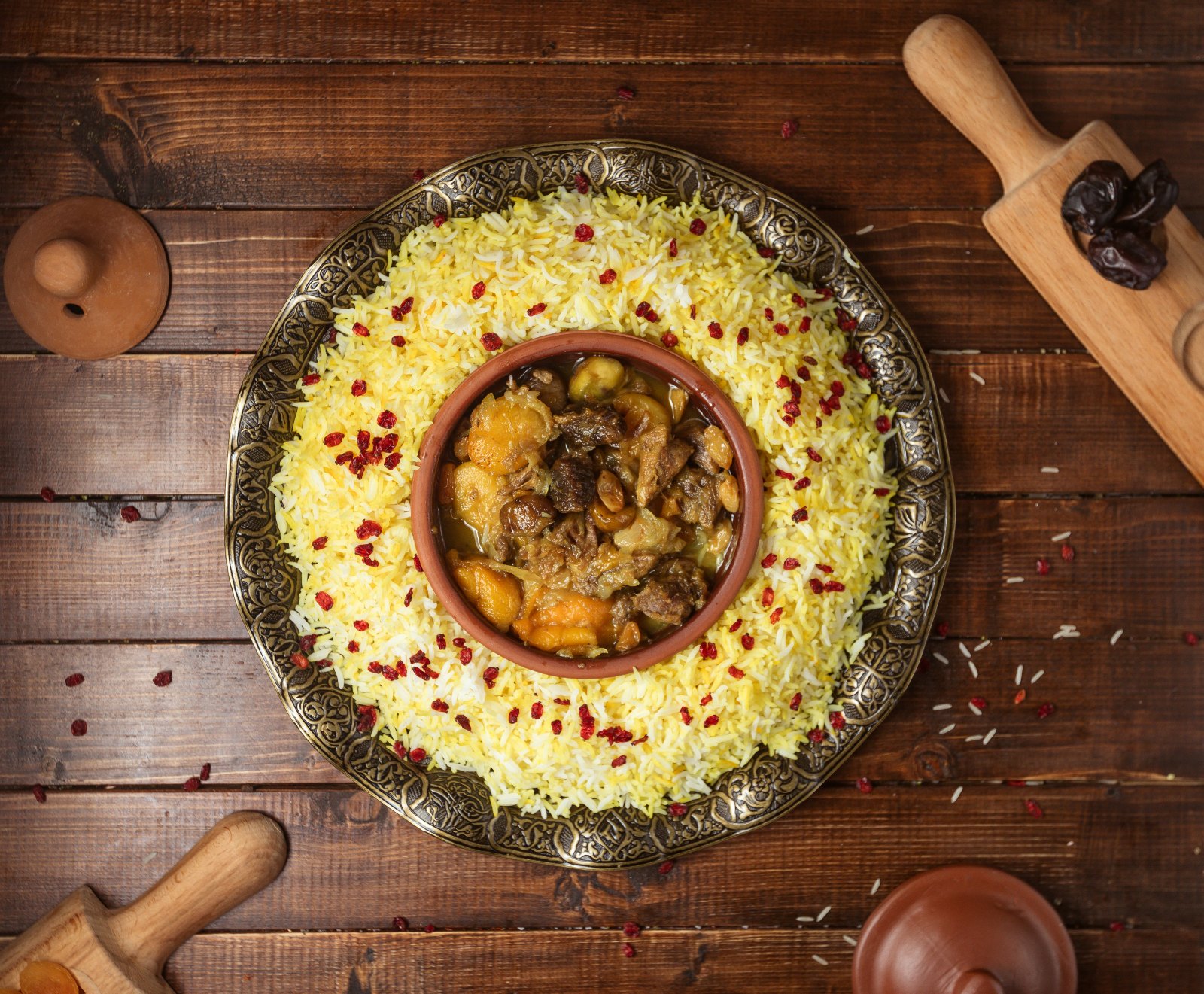
The Yellow zone corresponds to foods allowed daily, but with a point of vigilance: quantity, form of preparation or individual tolerance. According to the system, almonds are consumed in moderation, plain and unsalted (Almonds (Yellow)). Mango (Yellow) is preferably drunk as juice. Fruit juice (Yellow) is also part of this zone.
The Orange zone, for its part, reduces the frequency: every two days to once a week. Meats there are subject to shared portions. According to the system, Lamb / mutton (Orange) is limited to twice a week, in a portion shared with goat and camel. Tomato (Orange) is preferably consumed cooked, in sauce. Okra (Orange) is cooked in tomato sauce with the meat, without garlic.
Here is a list of vigilance points for these two zones:
- Respect the cooking or form conditions.
- Do not exceed the frequency indicated for the Orange zone.
- For orange meats, share the weekly portion between the authorised species.
- Monitor your personal tolerance for Yellow foods.
What does the system exclude?
The Red zone brings together the foods that the system completely excludes. They are never offered in meals. According to the system, these include, for example:
- Cow’s milk (Red)
- Yoghurt (Red)
- Eggs (Red)
- Chicken (Red)
- White bread (Red)
- Pasta and lasagne (Red)
- Sodas and fizzy drinks (Red)
- Sweets and industrial confectionery (Red)
Conventional nutrition considers some of these foods as common, or even useful in other dietary frameworks, but it does not take a position here. The system, for its part, excludes them because of its own classification.
How to follow the system daily?
Following Nidam al-Tayyibat consists of composing your meals by giving priority to the Green zone, using the Yellow zone with vigilance, reserving the Orange zone for the planned frequencies and avoiding the Red zone. Here is a suggested day prepared by the site team, as a practical example, and not a protocol attributed to Dr Diaa Al-Awadi.
- On waking: Coffee (Green) without milk, accompanied by a few Dates (Green).
- At midday: White basmati rice (Green) with grilled sea fish (Green), and a sauce made from home-cooked Tomato (Orange).
- At snack time: an Apricot (Green) or a few Strawberries (Green).
- In the evening: baked Potato (Green), with Courgette (Yellow) cooked in its own steam.
The team also suggests a simple recipe: a tagine of Potato (Green), cooked Courgette (Yellow), cooked Tomato (Orange), seasoned with Olive oil (Green), Cumin (Green) and Black pepper (Green). Cook for one hour at a simmer. This recipe comes from the team’s kitchen, not from the system.
A few practical reference points drawn from the zone framework:
- Give priority to Green zone foods at each meal.
- Introduce a Yellow zone food with attention to the recommended quantity.
- Reserve the Orange zone for the planned days, without accumulation.
- Systematically check the zone of a food before cooking it.
- If in doubt, consult the corresponding food page on this site.
Frequently asked questions
Is Tayebat a weight-loss diet?
According to the system, Nidam al-Tayyibat is not presented as a slimming diet. It classifies foods by frequency, without a quantified weight-loss objective. No weight-loss result is demonstrated by the system. Any question about weight should be addressed by a doctor or a dietitian.
Can you eat bread on Tayebat?
White bread such as baguette or khobz is excluded (White bread (Red)). On the other hand, Bran sandwich bread (Green) is allowed, provided that it is a wholemeal bran toast. According to the system, maize-based breads are also excluded.
Is milk really forbidden?
Yes, according to the system, Cow’s milk (Red) is forbidden, as are goat’s milk, powdered milk and plant milks. The system, on the other hand, allows certain matured cheeses such as Cheddar (Green) or Parmesan (Green). Conventional nutrition does not necessarily share this exclusion.
Are eggs allowed?
No, Eggs (Red) are in the Red zone, so are never consumed according to the system. There is no documented exception. This position is specific to the system.
Can you follow Tayebat while travelling?
Yes, by relying on the Green zone and checking the conditions of Orange and Yellow foods. The site offers a dedicated article: Tayyibat in restaurants and while travelling: how to order. You need to remain attentive to cooking methods and added ingredients.
For further reading
- Critique of Nidam al-Tayyibat: the debate
- Tayyibat food zones: Green, Yellow, Orange, Purple, Red
- The Egyptian doctor’s diet: who are we talking about?
- Taibat or Tayyibat? The real name of the diet
Sources
- Source consulted: Sehtin — Tayebat Diet: What It Is and How to Follow It (in Arabic)
- Food database of the Nidam Tayebat website.
Disclaimer
This article does not replace medical advice. Pregnant or breastfeeding women, children, people with chronic diseases (diabetes, hypertension, kidney failure, etc.), people with eating disorders, or anyone following medical treatment should consult a health professional before changing their diet. Nidam al-Tayyibat has not been the subject of independent scientific validation, and its effects have not been demonstrated.