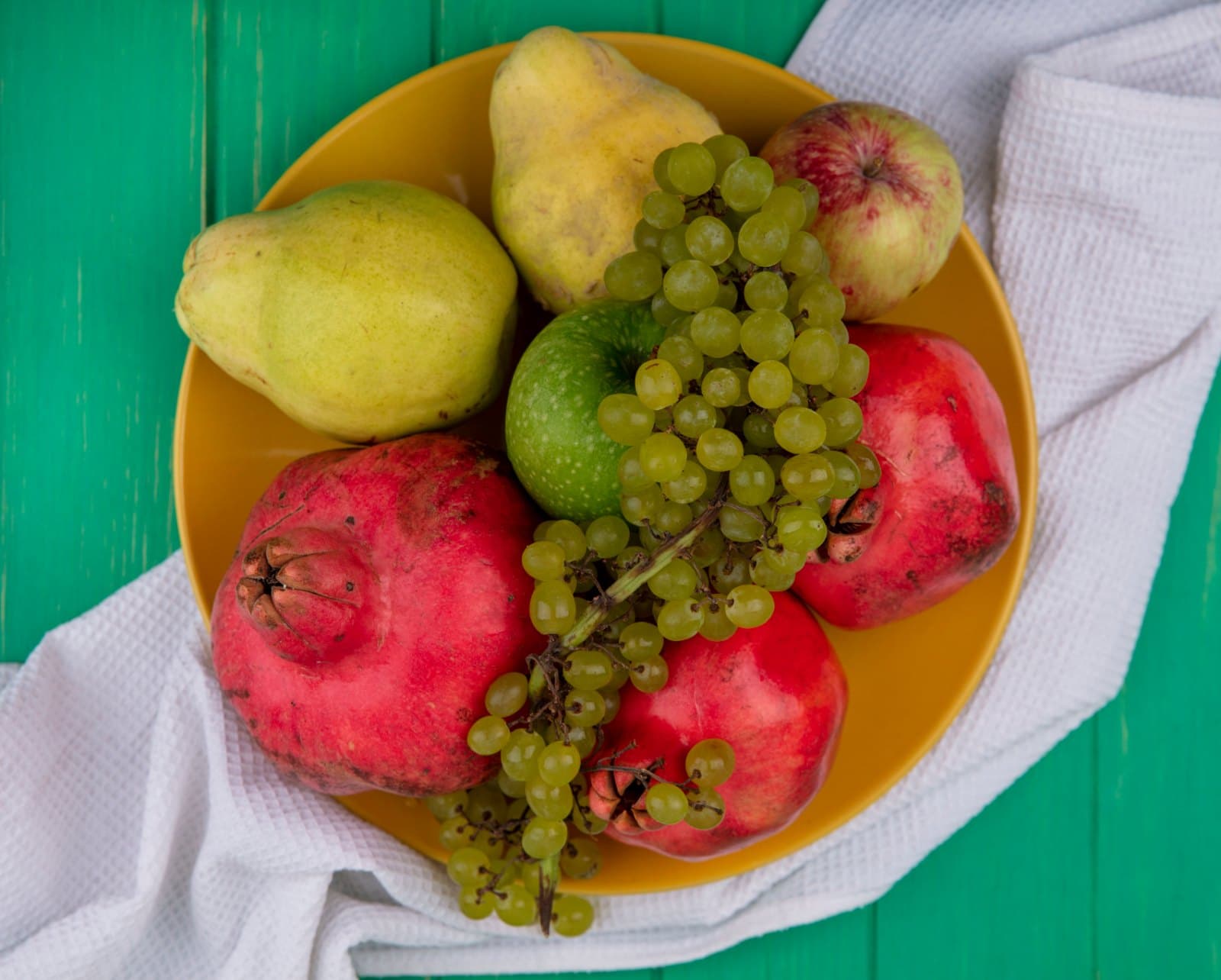
Pomegranate is classified in the Green zone by the Nidam al-Tayyibat, the system described by the Egyptian physician Diaa Al-Awadi. According to the system, it can be consumed daily, preferably as filtered juice. This classification comes with no quantified promise: possible effects remain a matter of observation and research, not a prescription by the system.
Why does the Nidam al-Tayyibat place the pomegranate in the Green zone?
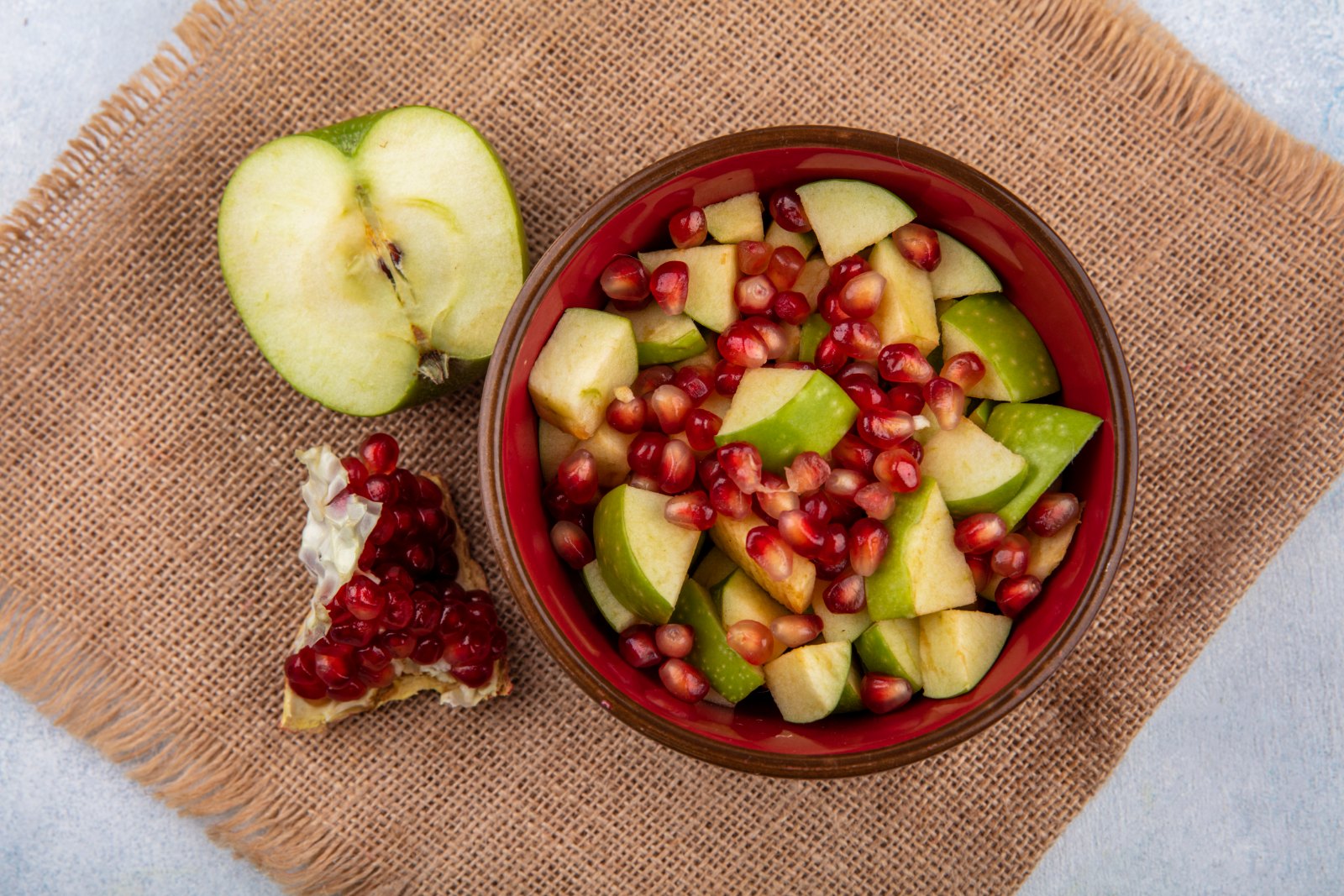
The Nidam al-Tayyibat, described by Diaa Al-Awadi, divides foods into five frequency zones: Green (daily), Yellow (daily with a point of vigilance), Orange (every two days to once a week), Purple (very rarely) and Red (never). According to the system, Pomegranate (Green) belongs to the Green zone. This means that it can be consumed every day, without the system setting a maximum quantity or a number of glasses.
Unlike other fruits that the system places in the Orange or Red zone, pomegranate is not subject to any particular frequency restriction. It thus joins Green fruits such as Apple (Green), Pear (Green) or Grapes (Green). For the system, this classification is not based on a promise of a specific benefit, but on a frequency hierarchy.
List of some Green fruits allowed daily by the system:
- Pomegranate (Green) — preferably as filtered juice
- Apple (Green) — preferably peeled
- Pear (Green) — preferably peeled
- Dates (Green) — one to six per day according to the system
- Grapes (Green)
- Prickly pear (Green) — preferably as filtered juice
This list is not exhaustive; the site database lists other Green fruits.
Why favour filtered pomegranate juice according to the system?
According to the system, pomegranate is to be consumed preferably as filtered juice. This instruction does not come from a quantified study, but from a practical recommendation. Filtering removes the seeds and the hard membranes, which gives a more fluid drink. The system does not document consumption of the whole fruit, but classifies it in the Green zone with this preparation condition.
The site team suggests a simple preparation: press the pomegranate seeds, then pass the juice through a fine sieve or a clean cloth. Leave it to stand for a few minutes so that the particles settle. This recipe is from the team, not from Dr Diaa Al-Awadi.
Filtered pomegranate juice can be likened to other Green drinks allowed by the system, such as Tamarind drink (Green), Karkadé (hibiscus) (Green) or Hot infusions (cinnamon, anise, herbal teas) (Green). The system, by contrast, excludes Industrial juices and nectars (Red), because they are classified in the Red zone. A commercial pomegranate juice, if it is industrial, therefore does not fall within the Green zone. Other drinks such as Fruit juice (fresh or bottled) (Yellow) are classified in the Yellow zone, therefore consumable daily but with a point of vigilance.
Pomegranate and joints: what does the system say, what does science say?

The Nidam al-Tayyibat does not publish any specific protocol concerning pomegranate and arthritis. According to the system, pomegranate is simply a Green food, consumable daily. The system does not claim a therapeutic effect on the joints. The pages that mention pomegranate do so within the general framework of food classification, not as a treatment.
Conventional nutrition takes an interest in the polyphenols and antioxidants present in pomegranate. Research studies explore their possible role in modulating inflammation, but this work is not incorporated into the Nidam al-Tayyibat corpus. The system draws no quantified conclusion from it, and it does not recommend replacing medical treatment with pomegranate juice. Anyone suffering from joint pain should consult a health professional.
The system excludes certain foods sometimes associated with an inflammatory diet in popular discourse, such as Garlic (Red) or Onion (Red), but this falls under the general classification, not a validated anti-arthritis strategy.
Pomegranate and the mouth: a point of vigilance and use
The system does not formulate any specific recommendation for oral health. Because pomegranate is a sweet and acidic fruit, conventional nutrition recalls that fruit juice can promote enamel erosion or tooth decay if hygiene is insufficient. This advice does not come from the Nidam al-Tayyibat, but it is compatible with its logic: the system allows Water (Green) as the basic drink, and excludes Sodas and fizzy drinks (Red), which reduces exposure to industrial liquid sugars.
According to the system, consuming pomegranate in the Green zone does not exempt one from standard oral hygiene. The site does not mention a pomegranate mouthwash or any specific recipe for the gums. If a person has an oral condition, they should consult a dentist.
Pomegranate before or after exercise: what the system allows, what science explores
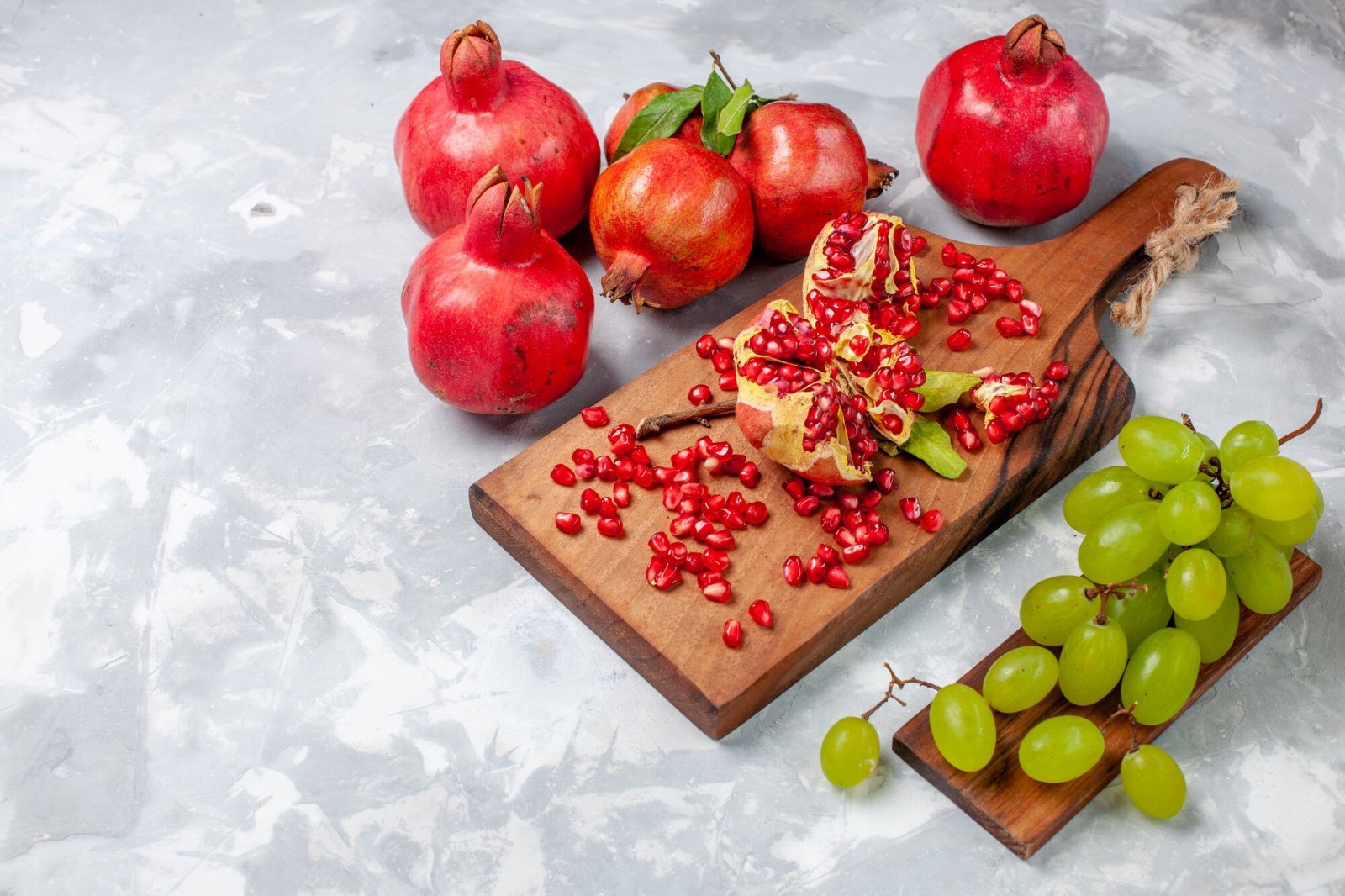
The system classifies pomegranate in the Green zone, so it does not forbid consuming it around physical exercise. But the system does not provide precise timing or a recommended quantity for sports performance. No ‘pomegranate loading’ protocol is described.
Conventional nutrition studies the interest of pomegranate polyphenols for muscle recovery and oxidative stress, but the results are not unequivocal and the Nidam al-Tayyibat does not adopt them as its own. The site team suggests, as an indication, consuming a few Dates (Green) or a Banana (Green) before exercise, because these fruits are also in the Green zone. These suggestions are from the team, not from the system.
Green fruits often used around exercise, according to the site database:
- Banana (Green)
- Dates (Green) — one to six per day according to the system
- Grapes (Green)
- Pomegranate (Green) — as filtered juice
Which other fruits does the system allow, and which does it exclude?
The table below compares pomegranate with other fruits according to the zones of the Nidam al-Tayyibat. For Red foods, the system excludes them.
| Fruit | Zone | Condition / status |
|---|---|---|
| Pomegranate | Green | Preferably as filtered juice |
| Apple | Green | Preferably peeled |
| Pear | Green | Preferably peeled |
| Dates | Green | One to six per day according to the system |
| Fruit juice (fresh or bottled) | Yellow | Daily with a point of vigilance |
| Fresh fig | Orange | Peeled; limited frequency |
| Fresh orange juice | Orange | Pressed at home, small glass, not on an empty stomach; industrial juices forbidden |
| Peanuts | Purple | Very rarely |
| Melon | Red | Excluded |
| Fresh lemon | Red | Excluded |
| Orange | Red | Excluded |
This difference between the whole orange and its fresh juice illustrates the logic of the system: the form of consumption changes the zone.
Frequently asked questions
Is pomegranate allowed every day in the Nidam al-Tayyibat?
According to the system, yes. Pomegranate is classified in the Green zone, which corresponds to possible daily consumption. No maximum quantity is published by the system.
Is it mandatory to drink pomegranate as filtered juice?
The system recommends filtered juice by preference. It does not say that the whole fruit is forbidden, but it documents this form of consumption. A home-made preparation with nothing added is closest to the instruction.
Does the system recommend pomegranate for arthritis?
No. The system does not publish a therapeutic protocol against arthritis. Pomegranate is simply a Green zone food. Any joint pain is a matter for medical advice.
Can pomegranate replace medical treatment?
No. The Nidam al-Tayyibat is a food classification system, not a substitute for treatment. No food should be used to delay a consultation.
What is the difference between pomegranate and industrial pomegranate juice?
The system classifies pomegranate in the Green zone, but Industrial juices and nectars (Red) are excluded. An industrial pomegranate juice therefore does not fall within the Green zone, unless it is prepared at home and filtered.
To go further
- Fruits allowed and excluded in the Tayyibat: the complete list
- Nidam al-Tayyibat recipes: composing meals
- Nidam al-Tayyibat and science: comparisons
Sources
The source page consulted to identify the subject is “Pomegranate benefits” on tayibat.org. The zones and conditions of the foods cited come from the public database of the Nidam Tayebat site. No quantified data has been taken from the source or from the system.
Disclaimer
This article does not replace medical advice. Any persistent joint pain, any oral problem, any question about sports performance or any unusual symptom must be assessed by a health professional. The Nidam al-Tayyibat does not replace medical follow-up, particularly for people under treatment, pregnant women, children or people with chronic diseases.