In the Nidam al-Tayyibat, bran sliced bread (wholemeal toast) is classified in the Green zone, while white bread is excluded. The system presented by the Egyptian doctor Diaa Al-Awadi distinguishes wheat whose bran is kept from refined bread, which it considers less suitable. This difference in classification is based on the way milling transforms the grain.
Wholemeal wheat bread and white bread: what should we understand?
Wholemeal wheat bread and white bread both come from wheat, but their milling differs. White milling separates the bran and the germ from the rest of the grain, whereas wholemeal milling keeps them. According to the system, this separation changes the nature of the final product and justifies a different classification.
The Nidam al-Tayyibat system divides foods into five frequency zones, from the Green zone to the Red zone, passing through the Yellow zone, the Orange zone and the Purple zone. It therefore does not treat all breads in the same way: it classifies Bran sliced bread (wholemeal toast) (Green) in the Green zone, which means that it can be eaten daily. By contrast, it excludes White bread (baguette, fino, khobz) (Red), placing it in the Red zone.
It can therefore be remembered that, for this system, the question is not whether a food contains wheat, but which part of the wheat it comes from and how it has been processed.
Why does the system exclude white bread?
According to the system, white bread is the result of refining that removes the bran from the wheat grain. Bran is the part of the grain that the system considers important for everyday eating. Without bran, white bread does not appear among the foods the system proposes.
The system does not present this exclusion as an isolated condemnation, but as a classification rule: a Red food is not a food to be eaten occasionally; it is excluded from everyday use. Thus, according to the system, replacing white bread with a bread that keeps the bran changes the composition of the meal without radically changing habits.
Conventional nutrition does not state the same rule. It recognises that white bread contains less fibre than wholemeal bread, but it does not ban it for all that. General recommendations focus rather on the diversity of cereal sources and on the place of cereal products in the diet. The site reports this view without ruling on it.
Is bran sliced bread really an alternative?
Bran sliced bread, often sold under the name wholemeal toast, is the bread that the system classifies in the Green zone. According to the system, it is a direct alternative to white bread, because it keeps the wheat bran while remaining an everyday bakery product.
This is not a food reserved for special occasions: the Green zone corresponds to possible daily consumption. The system does not set any additional condition for this bread, provided that it really is bran sliced bread and not white bread in disguise. Reading the ingredient list remains useful for checking that bran is present.
Some readers may wonder whether an industrial bran sliced bread is equivalent to a traditional wholemeal loaf. The system does not document this comparison in detail; it simply classifies the product under the name Bran sliced bread (wholemeal toast) (Green). Where the system does not provide details, the site team does not draw a conclusion.
Which starchy foods does the system allow in place of white bread?
The system does not limit starchy foods to bran sliced bread alone. Several other Green-zone foods can replace white bread in a meal:
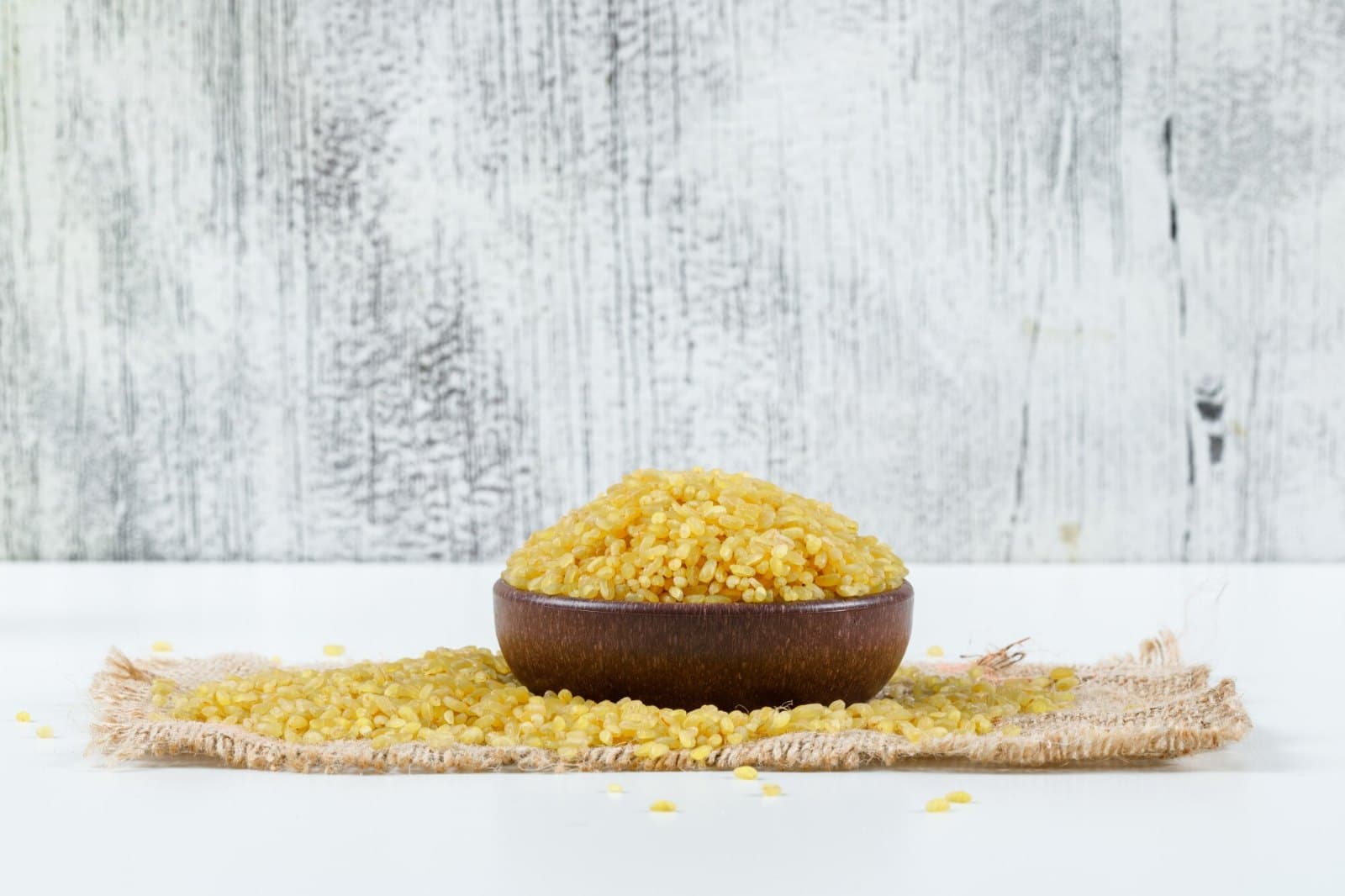
- Bulgur (Green)
- Frik (roasted green wheat) (Green)
- Rice (basmati, white) (Green)
- Maize (corn on the cob) (Green)
- Potato (Green)
- Sweet potato (Green)
- Popcorn (Green)
These foods are all classified in the Green zone, which indicates that the system considers them suitable for regular consumption. They do not replace bran sliced bread in an identical way, but they offer other options.
| Food | Zone according to the system | Note |
|---|---|---|
| Bran sliced bread (wholemeal toast) | Green | Accepted daily, provided that bran is present |
| White bread (baguette, fino, khobz) | Red | Excluded by the system |
| Bulgur | Green | Replacement starchy food |
| Frik (roasted green wheat) | Green | Replacement starchy food |
| Oats (flakes, bread, pasta) | Red | Excluded by the system |
| Wholegrain rice / brown rice | Red | Excluded by the system |
Conversely, the system excludes several common starchy foods. It classifies in the Red zone Oats (flakes, bread, pasta) (Red), Wholegrain rice / brown rice (Red), Quinoa (Red), Pasta and lasagne (Red), Couscous (Red) and Maize bread and maize flour (Red). The contrast is clear: not all wholemeal or semi-wholemeal foods are accepted, because the system applies its own criteria.
How to compose a meal with wholemeal bread according to the system?
The site team suggests a few simple ways to use Bran sliced bread (wholemeal toast) (Green) in a meal, while keeping to the accepted foods.
- Slice of lightly toasted bran sliced bread with Natural butter (Green) and a little Jam (Green)
- Slice of bran toast baked in the oven for a few minutes, then rubbed with Olive oil (Green) and sprinkled with Black pepper (Green)
- Bran sliced bread served with a green vegetable soup prepared without excluded ingredients
These ideas come from the team’s cooking and not from the system. They do not constitute medical prescriptions. They simply illustrate how to include this bread in everyday meals.
It is also possible to prepare a more complete meal by combining bran sliced bread with a portion of Sea fish (preferably grilled) (Green) or with accepted cooked vegetables. The system classifies each food separately, but combining Green foods is consistent with its frequency logic.
Is wholemeal bread enough to make a meal tayyib?
No. A meal that complies with the system depends on all the foods that make it up, not only on the bread. Bran sliced bread accompanied by charcuterie, spreadable fresh cheese or industrial sauces would not be considered a tayyib meal, because these accompaniments are classified in the Red zone.
According to the system, the fact that a food is in the Green zone does not offset the presence of a Red food on the same plate. Classification applies to each ingredient. For example, a slice of bran sliced bread does not become an exception if it is covered with Fromage blanc / drained fresh cheese (Red) or Ketchup and industrial sauces (Red).
The team therefore encourages checking the zone of each food before composing a meal. Bran sliced bread is a practical starting point, but it does not remove the need to read the fact sheets for the other ingredients.
Frequently asked questions
Is white bread forbidden in the Nidam al-Tayyibat?
According to the system, white bread is classified in the Red zone, which means it is excluded from everyday use. This is not a medical ban, but a classification rule specific to the system. People who follow this system are invited not to use it.
Can bran sliced bread be eaten every day?
Yes, the system classifies Bran sliced bread (wholemeal toast) (Green) in the Green zone. This zone corresponds to possible daily consumption. The system does not set a frequency limit for this product.
Is shop-bought wholemeal toast accepted?
The system does not specify a brand or a production method. It classifies the product under the name bran sliced bread. The essential point is to check that bran really appears in the ingredients list and that the product does not contain excluded ingredients.
What should you do if you do not have access to bran bread?
The system offers other starchy foods in the Green zone, such as Bulgur (Green), Frik (roasted green wheat) (Green) or Rice (basmati, white) (Green). These foods can replace bread in a meal. The important thing is to avoid starchy foods classified in the Red zone.
Does the system consider wholemeal wheat more filling?
The system does not give any figure on satiety. It classifies bran sliced bread in the Green zone and white bread in the Red zone, without publishing any study on the feeling of hunger. The question of satiety is a matter of individual experience and not a claim made by the system.
For further reading
- Is bulgur allowed in the Tayyibat? All the starchy foods
- Tayebat diet (al tayebat, taibat, tayabat): what it is
- Sea fish: benefits and place in the system
- The Egyptian doctor’s diet: who are we talking about?
Disclaimer
This article does not replace medical advice. The information presented here comes from the Nidam al-Tayyibat system and from the site’s documentation; it does not constitute treatment advice. Anyone suffering from a chronic illness, an intolerance, a digestive disorder or a deficiency should consult a health professional before changing their diet. Pregnant or breastfeeding women, children, older people and people on medical treatment should also seek medical advice. If in doubt, speak to a doctor or a dietitian.