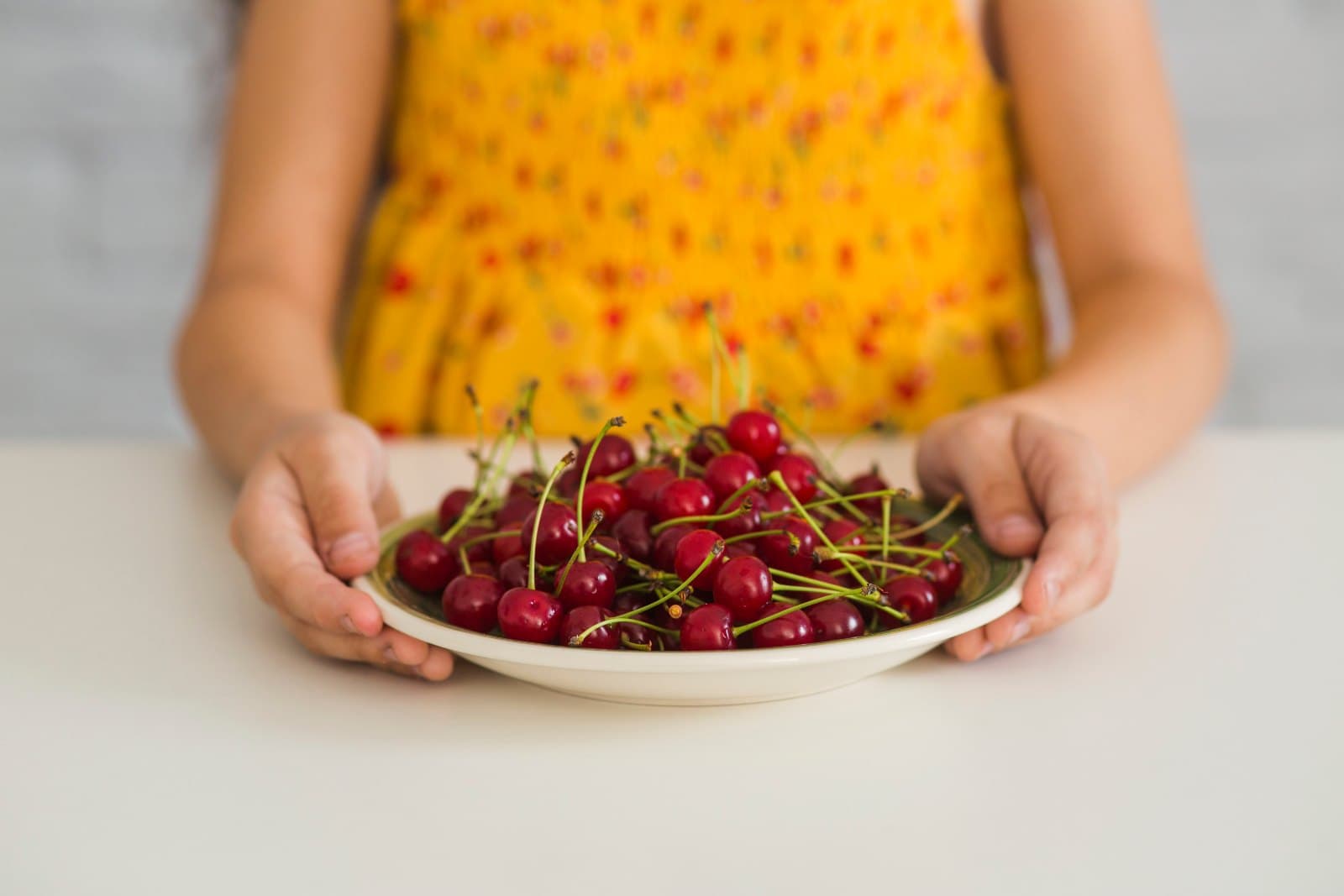
Nidam al-Tayyibat, the eating system described by Dr Diaa Al-Awadi (1979–2026), provides no snack for children: every one of its sources refers to the paediatrician, and the site's guide states that it "offers them nothing". This article shows a snack built only from the site's food database, then what paediatric nutrition recommends differently. A child must not be put on the system without their paediatrician's advice.
What the system says about children: nothing, and that matters
The system addresses adults. Its eleven daily rules, its two-hour rule between eating occasions and its alternation of protein days are never adapted for childhood; the guide chapter on the two-hour rule states that, for children, the system itself refers to the doctor. Its most disputed pillar, white sugar (green, 5 to 15 tablespoons a day according to a single source), runs against every public-health recommendation, and nothing in this article recommends sugar to children.
Medical institutions also consider useful to children several families of food the system excludes: cow's milk (red), a recognised source of calcium and protein according to its entry; yoghurt (red), recommended for its protein, its calcium and its cultures; eggs (red); legumes (red); raw vegetables. A parent who follows the system therefore has no documented reason to impose it on their child.
Why the snack is a real meal, not a reward
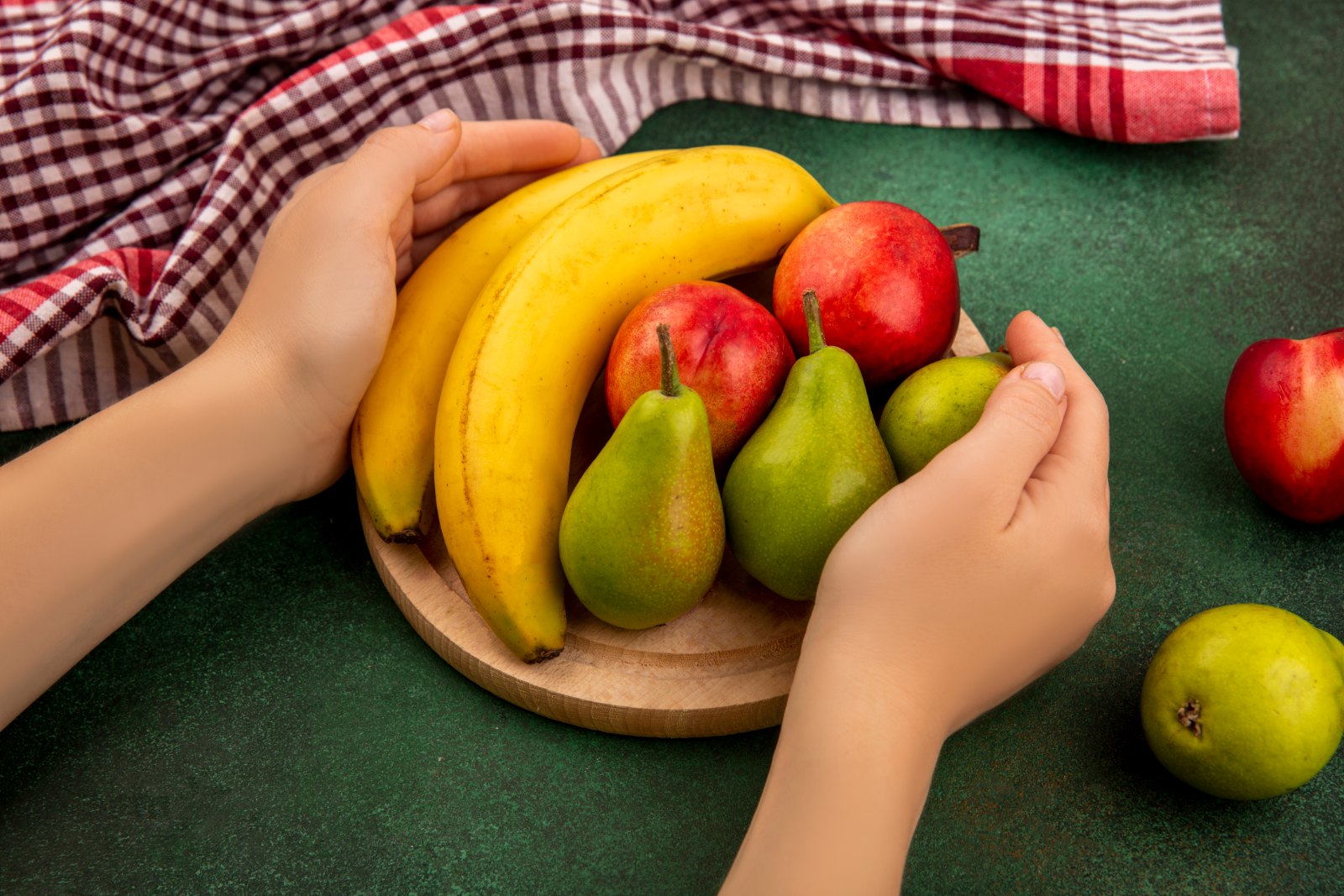
In the system's logic, every eating occasion is a meal: the two-hour rule does not distinguish the afternoon snack from lunch, and the real-hunger rule asks you to eat when hunger is there, not "because it is time" and not as a reward. A snack is therefore an eating occasion in its own right, built like the others from two or three simple elements of the palette, and never a biscuit handed over as a reward between two meals.
On one point that reading meets ordinary paediatric common sense: a child's snack deserves to be built like a small meal rather than to be a treat. It parts company on the rest: the sources do not say whether the two-hour rule suits a child, and the guide refers to the doctor. A child's eating rhythm is decided with the paediatrician.
What makes a balanced snack for a child
The system's formula for any eating occasion holds two or three elements. Applied to the afternoon snack with foods from the palette only, it gives: an admitted fruit — apple (green, peeled for preference), banana (green), pear (green, peeled for preference), strawberries (green), grapes (green), apricot (green); an aged cheese or a small portion of nuts; and water (green).
| Part of the snack | What the palette keeps | What the system leaves out and paediatric nutrition uses |
|---|---|---|
| Fruit | peeled apple, pear and peach, banana, strawberries, grapes, apricot (green) | fruit with the skin, orange and mandarin (red), kiwi (red) |
| Dairy | cheddar, kashkaval, processed cheese, qechta (green) | milk, yoghurt, petit-suisse, quark (red) |
| Cereal | bran toast (green) | wholemeal bread, oats (red), biscuits (red) |
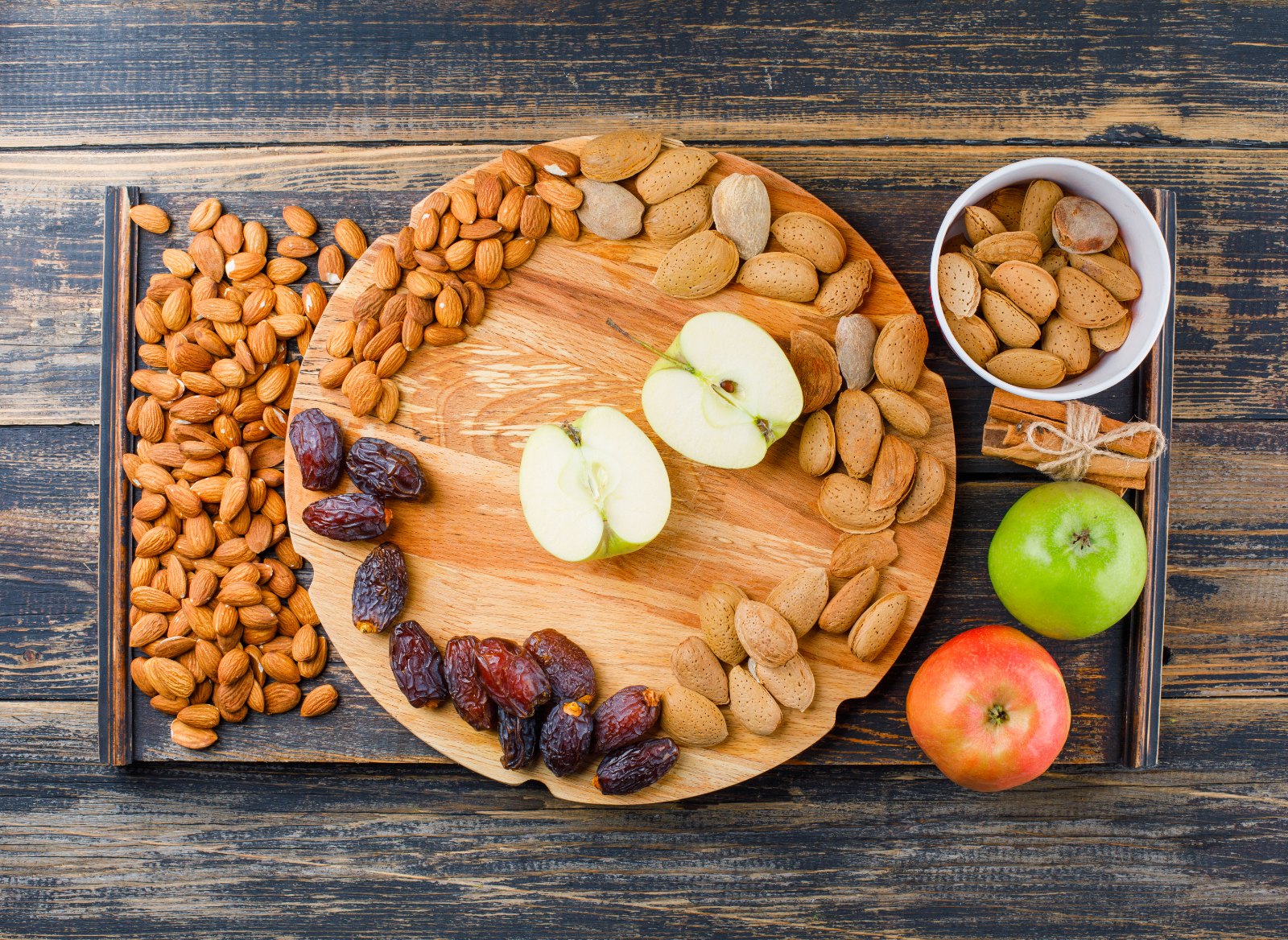
| Dried fruit and nuts | dates (green), almonds and walnuts (yellow, in measure), dried fruit (green) | peanuts (purple, very rarely) |
| Drink | water (green), fruit juice (yellow) | milk (red); sodas and industrial juices (red), which paediatrics also sets aside |
The right-hand column shows what a child would lose if the system were applied to them as it stands.
Snack ideas built from the palette
The ideas below use only foods admitted by the site's database; they do not replace the paediatrician's markers.
Simple snacks of fruit and dairy
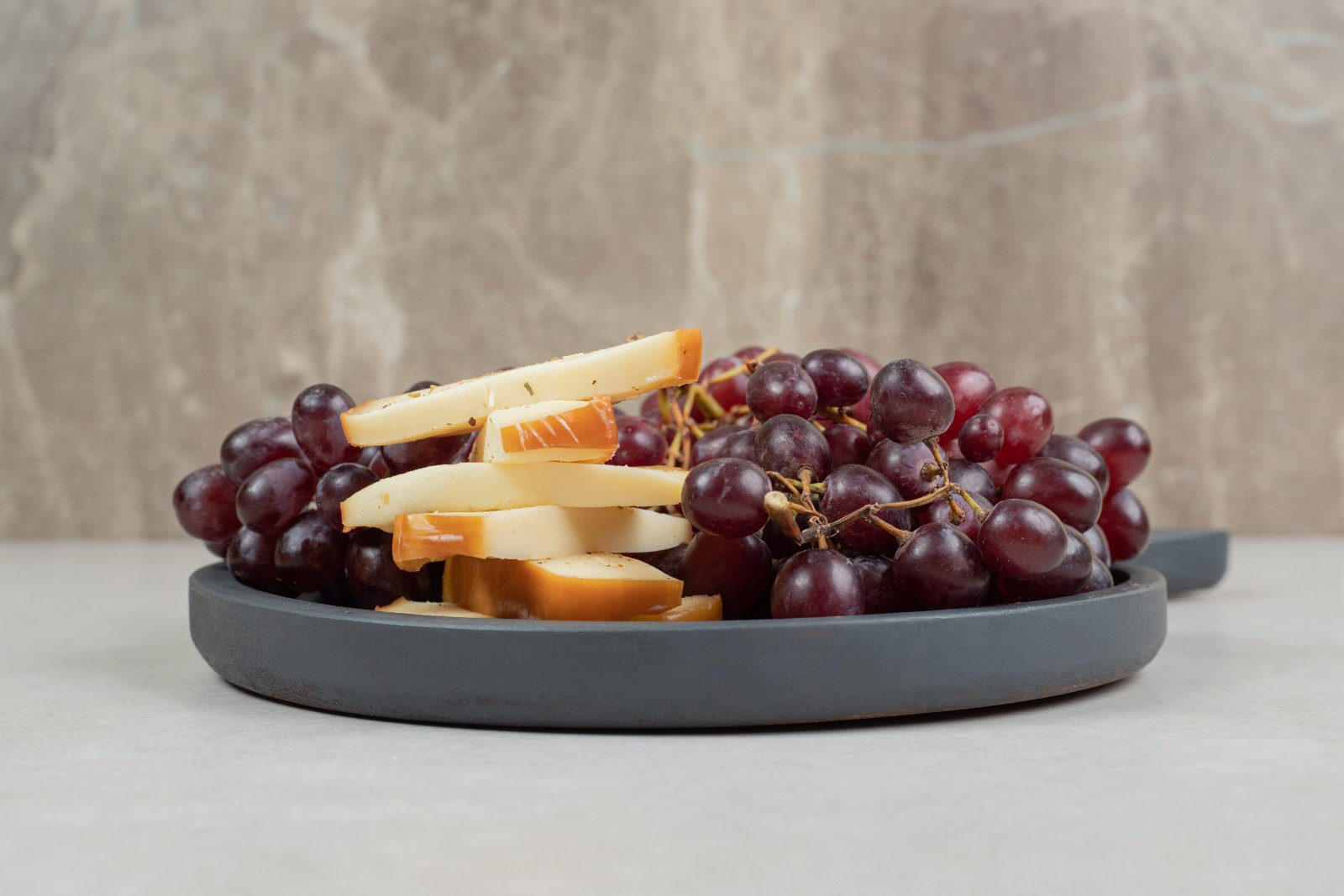
In the palette, "dairy" means aged cheese, processed cheese or qechta: yoghurt, milk and fresh cheeses are excluded, a position paediatric nutrition does not share. The pairings: peeled apple in quarters with cubes of cheddar; grapes with a slice of kashkaval; banana with a spoonful of qechta and a drizzle of honey (green); strawberries with a portion of processed cheese; peeled pear with mozzarella (green).
Home-made snacks on bread
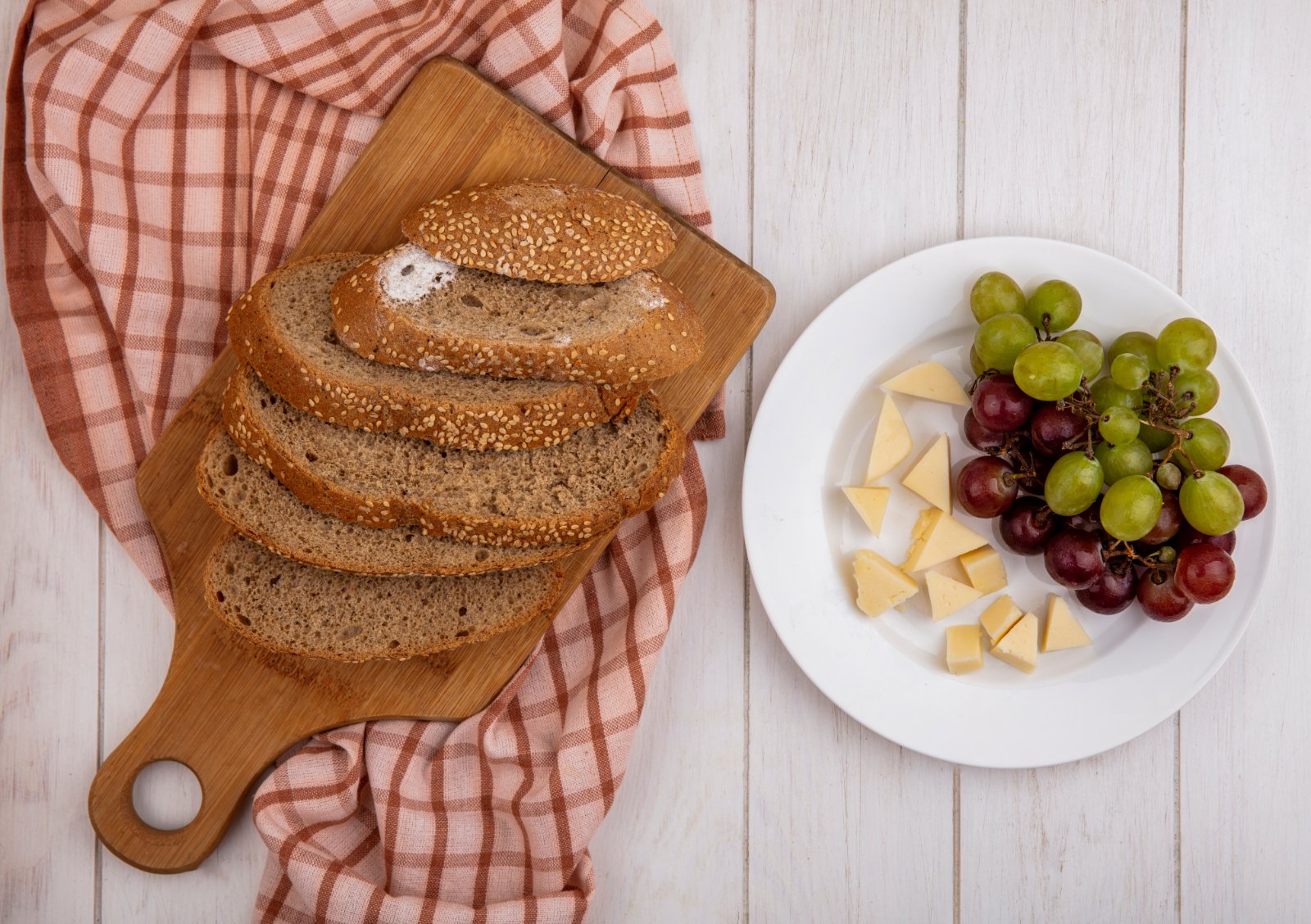
The system leaves out wholemeal bread. The site's guide is explicit: only bran toast — the packaged wheat-bran sliced bread — is admitted; round wholemeal loaves, khobz and rye bread appear on no list and are excluded by the whitelist rule. The white bread (red) entry nevertheless recalls that, for conventional nutrition, wholemeal or sourdough bread has its place, and the bran-toast entry notes that it remains a processed product. What the palette puts in their place: bran toast with butter (green) and honey; bran toast with jam (green); bran toast with processed cheese; bran toast dipped in tahini (green) mixed with date molasses (green).
Snacks of dried fruit and nuts (age 6 and up)
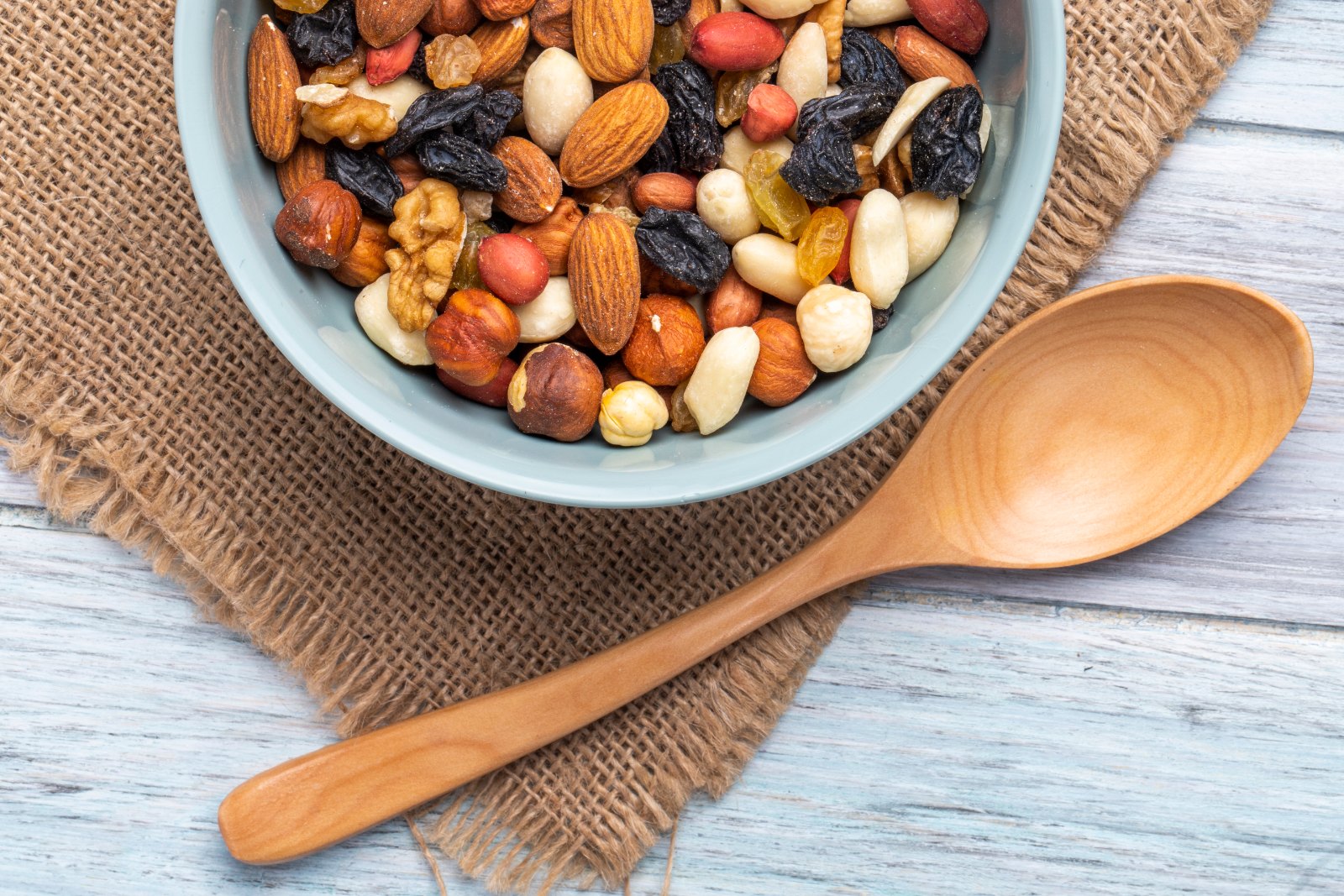
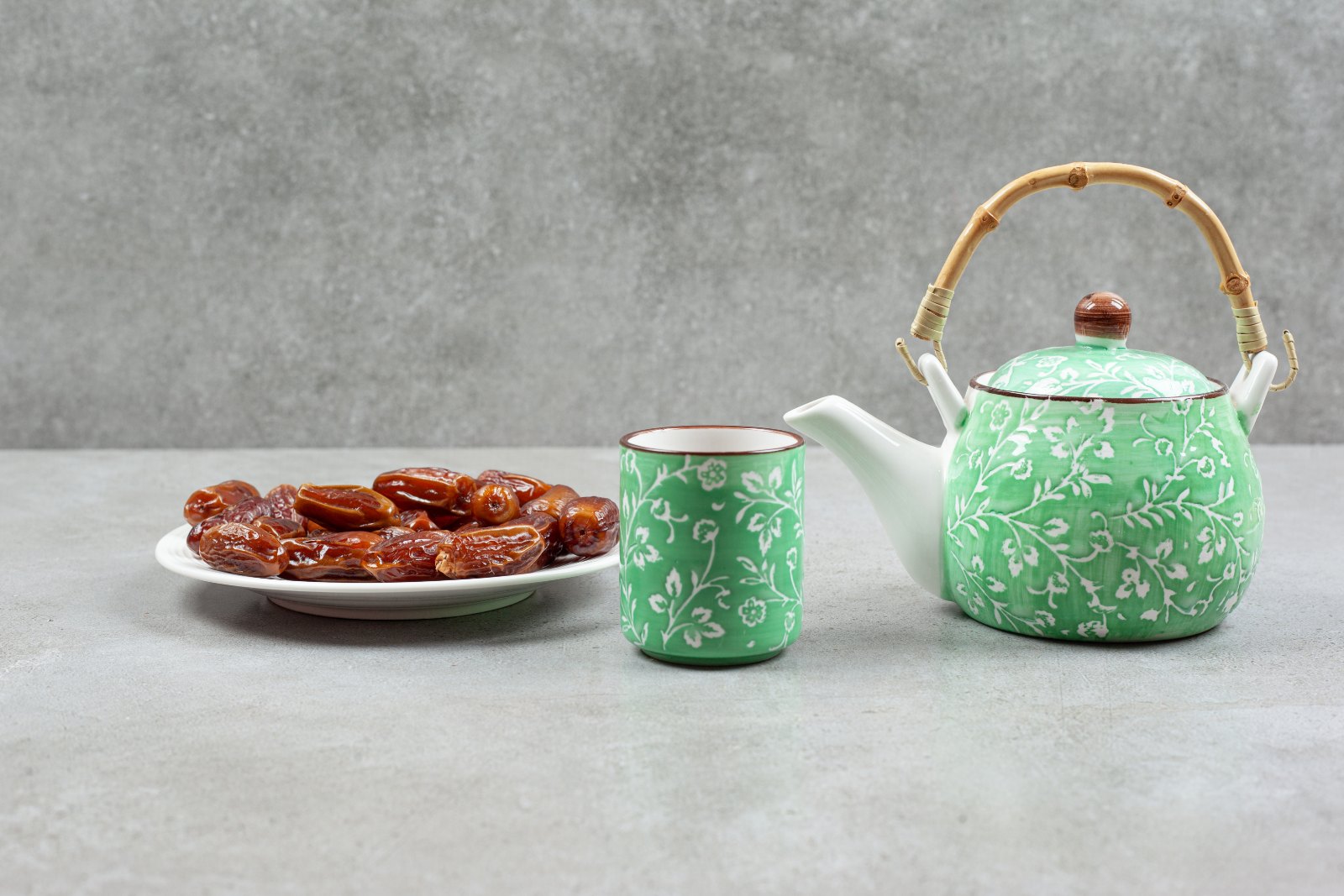
Dates are the system's reference snack; it admits one to six a day for an adult and says nothing for a child. Almonds, walnuts, pistachios (yellow, in measure) and cashews (yellow, in measure) are given plain, unsalted, a small handful at a time; the almond entry recalls that conventional nutrition recommends a handful a day. Dried apricots, sesame halva (green) and roasted pumpkin seeds (green) complete this family. The age limit in the heading repeats the usual paediatric caution about whole nuts in small children; it does not come from the system.
School snacks: practical constraints and solutions
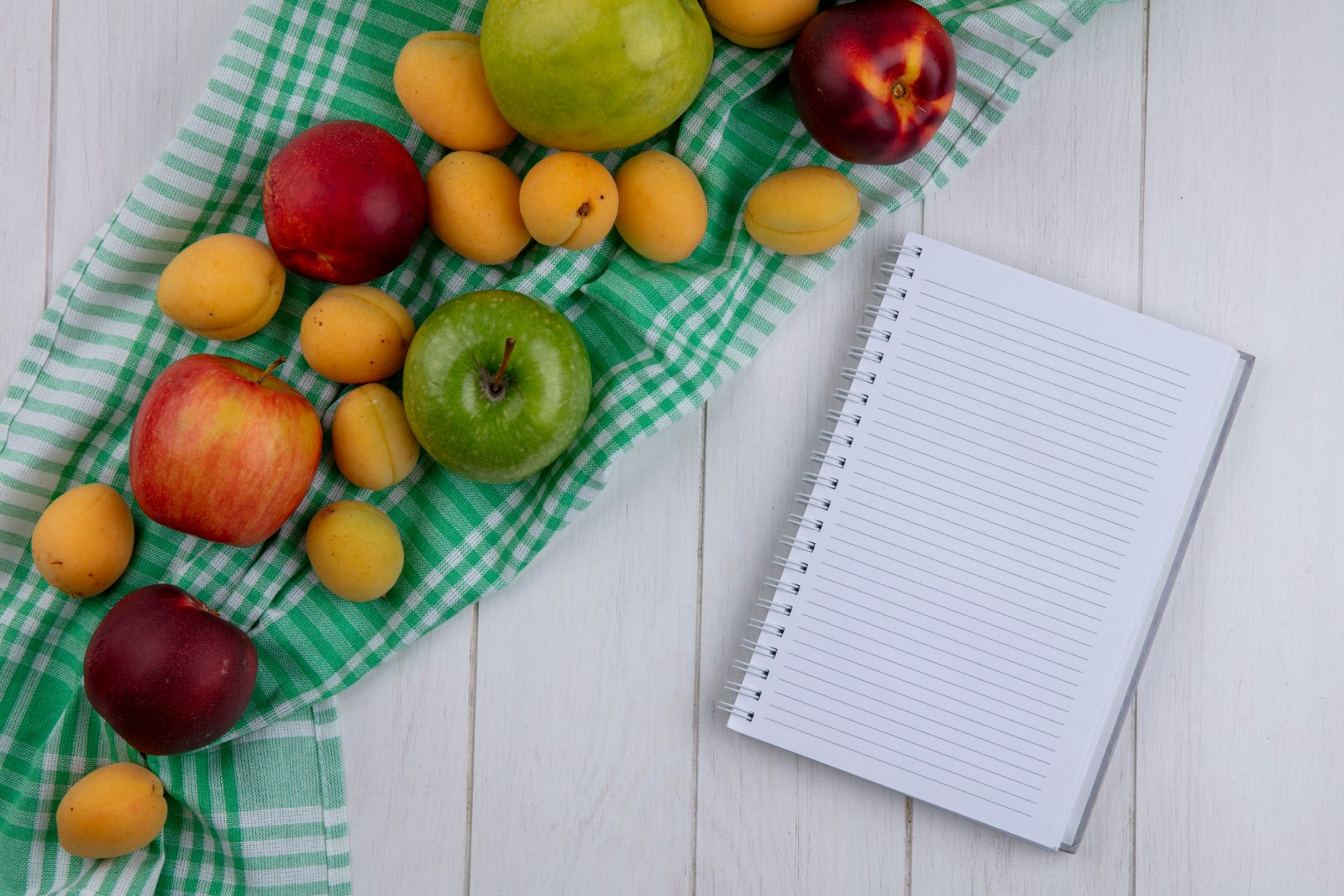
The system's sources say nothing about the school bag; what follows is household organisation. The palette foods that survive a morning in a bag:
- a banana, a pear or a bunch of grapes;
- a few dates or a small box of plain almonds;
- two bran toasts with a portion of processed cheese;
- a small bottle of water.
Sodas (red) and industrial juices (red) are excluded by the system as by paediatrics; fruit juice (yellow) is admitted by the system, but its entry recalls that conventional nutrition prefers the whole fruit.
Cutting down on ultra-processed snacks, step by step
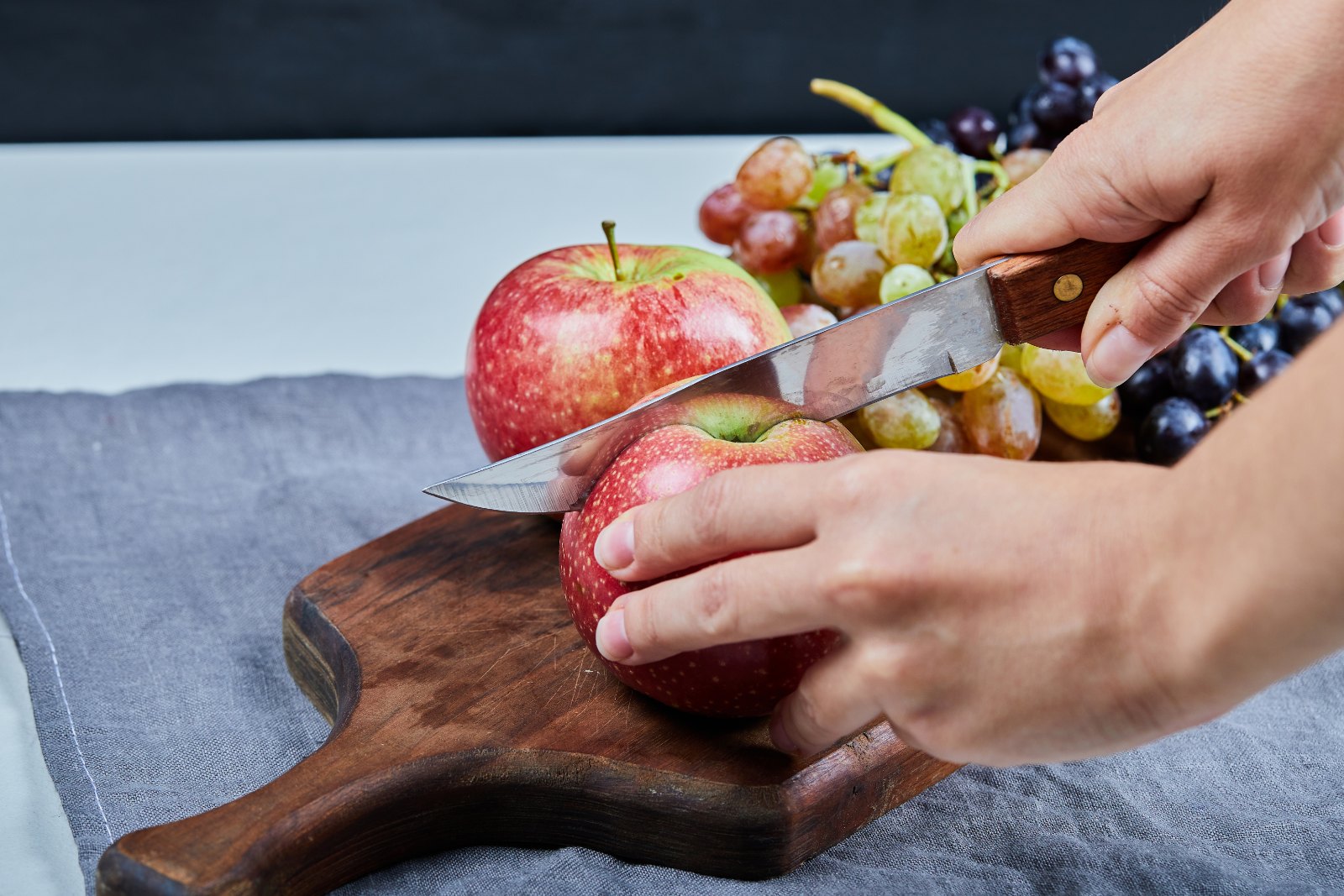
This is the one ground where the system and conventional nutrition pull in the same direction. The system files in the red zone biscuits (red), industrial pastries (red), milk chocolate and chocolate bars (red), industrial sweets (red), sodas and industrial juices; conventional nutrition files them among the products to limit in children.
The method advises against changing everything at once: one family of foods at a time, replacing rather than removing. What the database offers in their place: bran toast and dates for biscuits, dates and dark chocolate (purple, very rarely, for healthy adults and children) for chocolate bars, karkadeh (green) and fruit juice for sodas. Two reservations: some of the system's substitutes — gummy sweets (green), crisps (green) or popcorn (green) — are no better regarded by paediatrics than what they replace; and the system's "sugar" pillar has no place in a child's diet.
Expert tips
These organising markers come from the system's sources and from the site's team; they are not medical advice.
- Keep what the paediatrician recommends. If the paediatrician advises milk, yoghurt or wholemeal bread, those foods stay in the child's snack, even if the parents follow the system: it has provided nothing for the child.
- Prepare the snack with the child. Peeling and cutting the fruit, choosing the cheese, filling the box: shared preparation makes the snack something to look forward to without turning it into a reward.
- Read the labels. The system's whitelist rule applies to hidden ingredients: a "butter" biscuit containing white flour and eggs stays red zone.
- Do not apply the two-hour rule to a child without advice. The guide gives no instruction for children and refers to the doctor.
The most common mistakes
- Putting a child on the system. No source provides for it; all of them refer to the paediatrician.
- Removing yoghurt and milk from a child's snack. The system sets them aside for adults; paediatrics recommends them.
- Taking the system's substitutes for health foods. Gummy sweets, crisps and white sugar are green zone according to the system and to be limited according to paediatrics.
Frequently asked questions
Is Nidam al-Tayyibat suitable for children?
Nothing allows that to be said: the system contains no instruction for children, and all of its sources refer to a specialist consultation. Medical institutions consider useful several foods it excludes — milk, yoghurt, eggs, legumes, raw vegetables. The decision belongs to the paediatrician.
Can a child have yoghurt in a family that follows the system?
The system sets yoghurt aside for the adults who follow it; paediatric nutrition recommends it for its protein, its calcium and its cultures. Since the system offers nothing for children, nothing justifies removing it from a child's snack; that is for the paediatrician to decide.
Is wholemeal bread admitted at snack time?
No. Only bran toast is admitted; round wholemeal loaves, khobz and rye bread are excluded by the whitelist rule. Conventional nutrition, on the contrary, holds wholemeal or sourdough bread to be a good choice.
Can dates replace sweets?
That is what the site's database proposes: dates are the system's substitute for sweets and chocolate bars. Their entry recalls that they are a nutritious but very sweet fruit; a few are enough, above all for a child.
Does the two-hour rule apply to children?
The site's guide gives no instruction on this and refers to the doctor. A child's eating rhythm is decided with the paediatrician, not with a rule designed for adults.
Further reading
The article on children's nutrition and healthy family meals and the balanced 7-day family menu give the general markers of family nutrition. The one on the cheeses and dairy the system admits details what the palette keeps in place of yoghurt and milk, and breakfast according to Nidam al-Tayyibat shows the same pairings in the morning. Every entry in the food database gives the zone, the condition and the view of conventional nutrition.
Disclaimer
This article describes an eating system for information. It does not replace medical advice. In case of illness, ongoing treatment, pregnancy or diabetes, talk to your doctor before any change of diet.