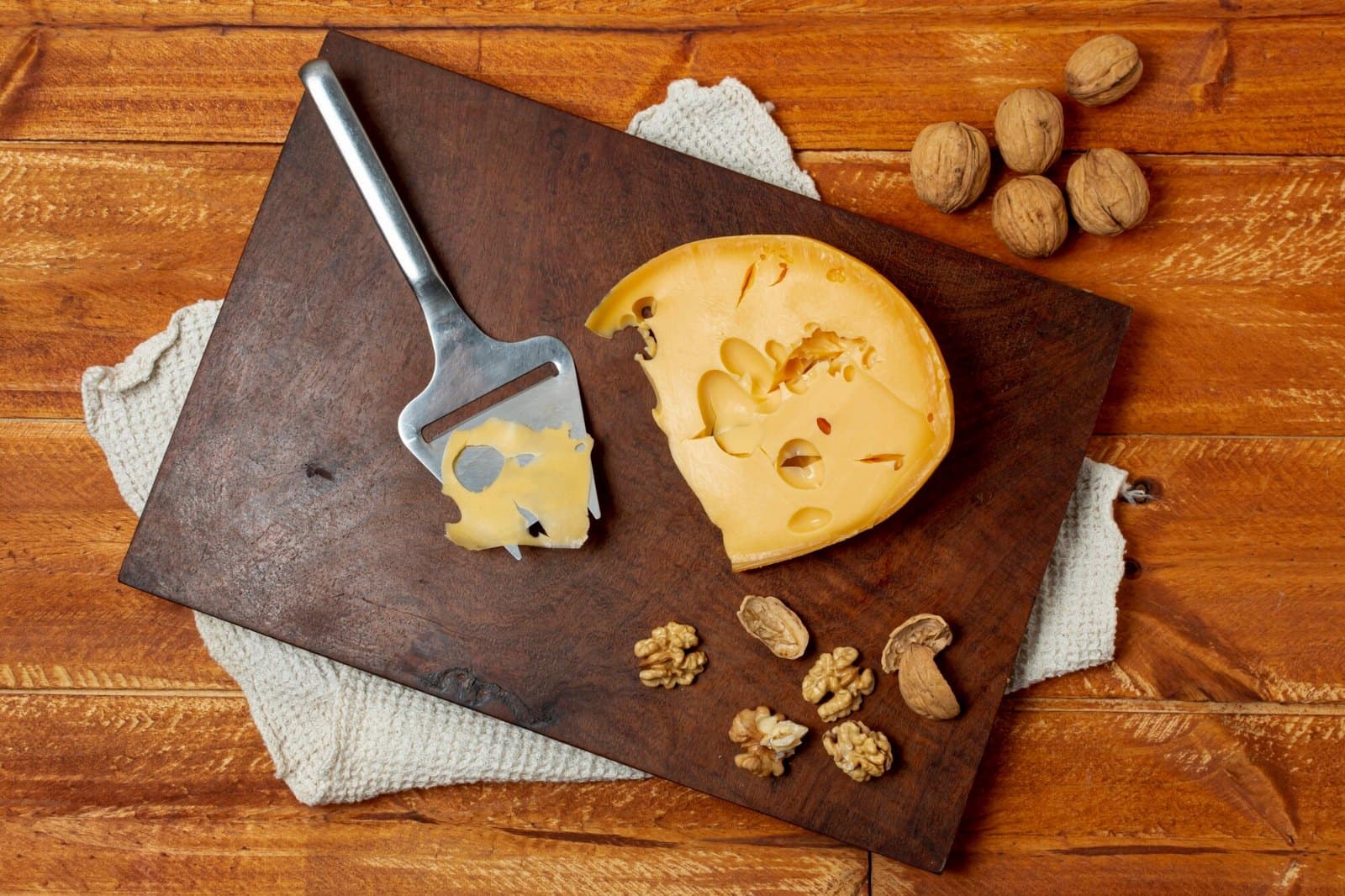
Nidam al-Tayyibat, the eating system described by Dr Diaa Al-Awadi, takes a clear-cut position on dairy products: it excludes milk and everything that keeps its fresh form, but allows butter and encourages aged cheeses. This article details what the site's food database records for each dairy product common in Morocco and France, the explanation put forward by the method, practical replacements at breakfast and snack time, and the mistakes that come up most often.
The dividing line: fresh excluded, aged allowed
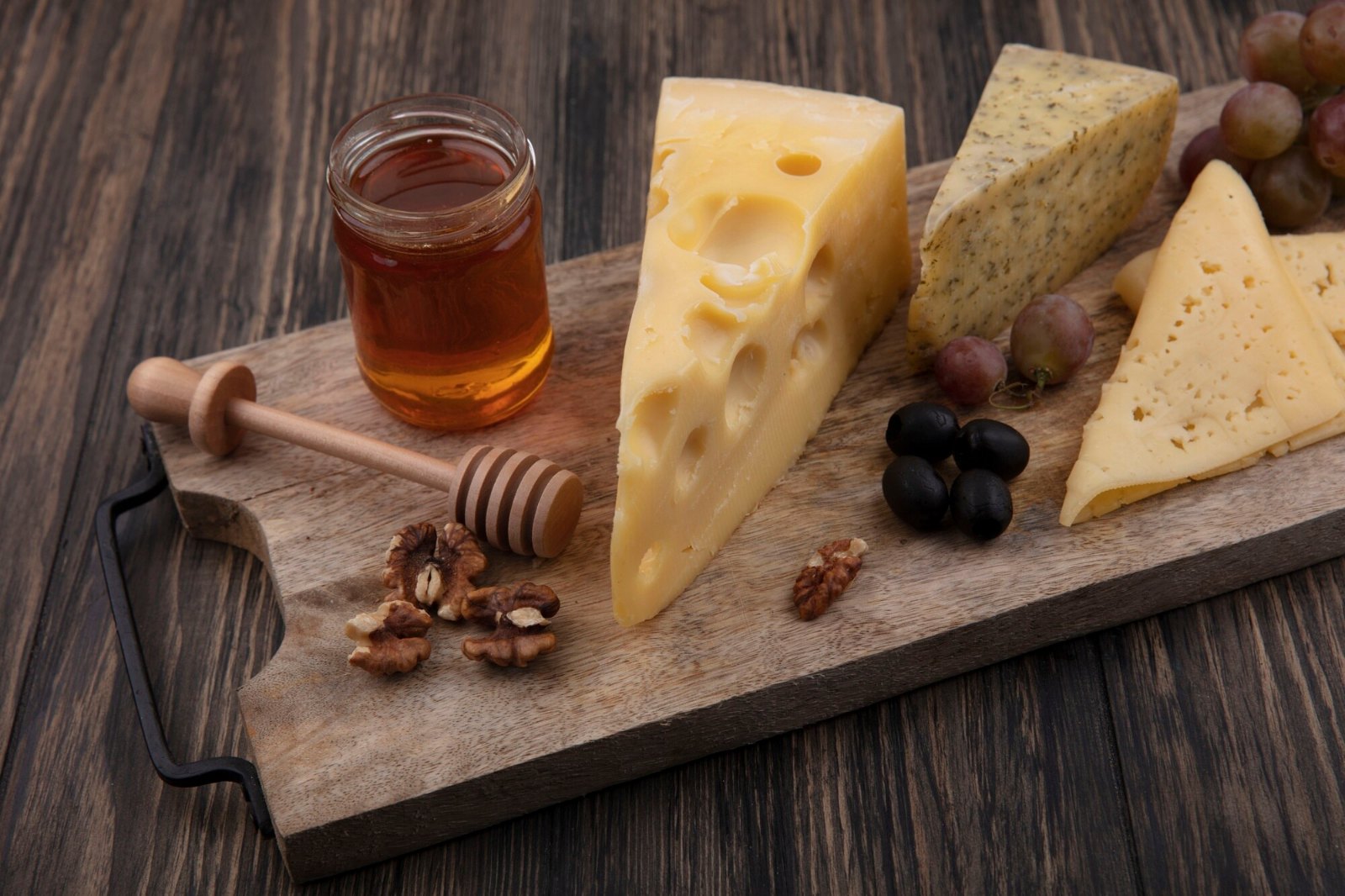
In the database's dairy and cheeses category, the line is not drawn between "low-fat" and "full-fat," nor between cow's milk and goat's milk. It is drawn between products that stay close to fresh milk and those that have been transformed by aging, long fermentation or separation of the fat.
On the excluded side, in the red zone: cow's milk, goat's milk, powdered milk, plant milks, yogurt, lben, fromage blanc, petit-suisse, faisselle and cottage cheese, feta, fresh cheese spreads and whipped cream. On the allowed side, in the green zone: cheddar, kashkaval, Parmesan, roumi cheese, mozzarella, processed cheese, qechta, butter and smen. In between, the yellow and orange zones hold Gouda and Edam, mish, natural cream and cooking cream, each with a condition detailed in the table below.
The explanation put forward by the method
The system bases the exclusion of milk on its own reading of casein, the main protein in milk. According to it, fresh milk and its liquid or creamy derivatives (yogurt, lben, fresh cheese) keep it as is, while aging, the long fermentation of mish or the melting of processed cheese would transform it. Butter is allowed because, according to the method, the fat separated from the whey changes in nature; it is in fact one of the system's five daily pillars.
This explanation is the method's own, reported here for documentary purposes. Conventional nutrition does not share it: milk is recognized as a source of calcium and protein, plain yogurt is recommended for its live cultures, and fresh fromage blanc is among the most recommended cheeses because it is low in fat and rich in protein. Only lactose intolerance or an allergy justifies, on medical advice, cutting out dairy. Conversely, butter, smen and qechta are saturated fats that conventional guidelines advise limiting.
A useful clarification: one English-language source claims that aged cheese is forbidden. The site's database flags this as a translation error: it is fresh cheese that the method excludes.
Dairy product by dairy product: what the database records
| Product | Zone | Condition or remark according to the database |
|---|---|---|
| Cow's milk, goat's milk, powdered milk | red | all fresh, condensed or powdered milk |
| Plant milks (almond, oat, soy, coconut) | red | whole coconut remains allowed, but not its milk |
| Yogurt, lben | red | liquid fresh dairy |
| Fromage blanc, petit-suisse, faisselle, cottage cheese, feta | red | fresh, unaged cheeses |
| Fresh cheese spreads (Kiri, cream cheese) | red | high proportion of fresh milk |
| Whipped cream | red | fresh-milk base |
| Margarine | red | industrial fat |
| Cooking cream | orange | only in dishes cooked hot |
| Natural cream (eshta) | yellow | pure, no thickener, small amounts; medium confidence |
| Gouda, Edam | yellow | aged only; avoid young Gouda |
| Mish | yellow | homemade, without chili |
| Cheddar, kashkaval, Parmesan, roumi cheese | green | aged cheeses; cheddar is the system's typical breakfast cheese |
| Mozzarella | green | allowed as the system's lists give it |
| Processed cheese (portions, cubes) | green | disputed zone: one source places it in red |
| Qechta (thick clotted cream) | green | reference cream for cold uses |
| Natural butter | green | daily pillar |
| Smen (clarified butter) | green | preferred cooking fat |
Two rows deserve a comment. Mozzarella, which is barely aged, nonetheless appears in the green zone: the database reports it as the system's lists give it. And Moroccan smen, fermented and salted, is not distinguished from clarified butter by the sources; the database groups it with smen by analogy and flags this. As for margarine, the system rejects it as an industrial fat, whereas conventional nutrition often considers modern margarines preferable to butter.
Replacing fresh dairy day to day
Milk, yogurt and lben hold a central place in Moroccan and French habits. Here is how the system's palette replaces them, with green- and yellow-zone foods, or orange-zone foods with their condition.
At a Moroccan breakfast
- Coffee with milk (nouss-nouss) becomes a black coffee (green, no milk or creamer) or a mint tea (green) without milk.
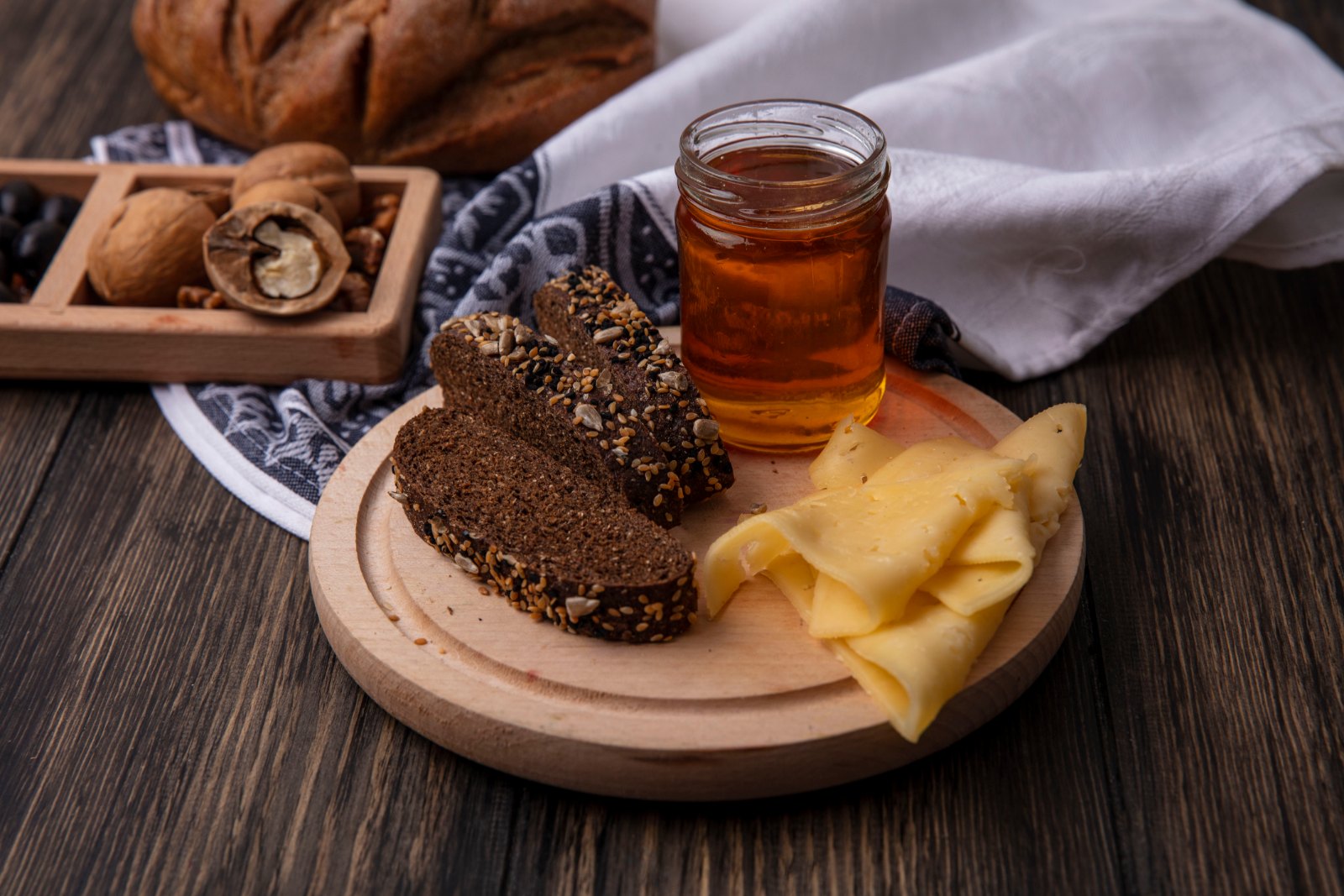
- The bowl of milk or glass of lben has no liquid equivalent in the palette. The database suggests qechta as a substitute: a spoonful of qechta (green) and natural honey (green) on bran toast (green), a breakfast that the site's program uses from its first week.
- Fresh jben on msemen or harcha goes out entirely: white-flour flatbreads are in the red zone, and unaged fresh cheese belongs to the same family as fromage blanc in the system's reading. The replacement is bran toast with a slice of cheddar or kashkaval (green), or aged Gouda (yellow).
- Milk with cereal can give way to rice with butter and sugar and a hint of cinnamon (yellow, in small amounts), also on the menu in the program's first week.
At a French breakfast
- Buttered bread keeps its butter (green) but loses its baguette, which is in the red zone: bran toast replaces it, with jam (green) or honey.
- Yogurt or fromage blanc is replaced by a fruit, for example a peeled apple (green) or a few strawberries (green), by two or three dates (green, one to six a day according to the system), or by qechta with honey.
- Café crème or a latte becomes a black coffee; green tea (green) is also drunk without milk.
- The cheese board is rebuilt around cheddar, Parmesan (green), kashkaval, mozzarella (green) and aged Gouda (yellow).
At snack time
- Dates and a black coffee.
- A peeled apple and a small handful of plain, unsalted almonds (yellow, in moderation).
- Sesame halva (green) with a slice of roumi cheese (green), a pairing that the site's program uses at breakfast.
- Tahini (green) and date molasses (green) on bran toast.
In the kitchen
- A gratin or a cream sauce is made with cooking cream (orange, only in dishes cooked hot) or a small amount of natural cream (yellow, pure and without thickener). For cold uses, the system points to qechta.
- Grated cheese comes from Parmesan, kashkaval or mozzarella (green).
- Rice pudding is in the red zone in its milk version; the database specifies that rice with butter and sugar remains tolerated.
The most common mistakes
- Thinking "cheese" means any cheese. Jben, feta, Kiri and fromage blanc are in the red zone. Only aged cheeses, processed cheese and mozzarella are allowed.
- Buying young Gouda or vacuum-packed slices. The entry's condition is clear: aged version only.
- Using cooking cream cold. It is tolerated only in hot dishes; qechta is for cold uses.
- Forgetting hidden milk. Powdered milk goes into cookies, milk chocolate (red) and many industrial products; reading labels is part of the whitelist rule.
- Replacing milk with a plant-based drink, or yogurt with 0% fromage blanc. Plant milks are in the red zone, and fromage blanc remains a fresh cheese, therefore excluded, even though conventional nutrition recommends it.
- Eating cheese without moderation. The system does not limit it, but it remains high in salt and saturated fat according to conventional guidelines.
- Cutting out dairy for a child, a pregnant woman or an older person. The site gives no instructions for these situations, which are a matter for the doctor.
Frequently asked questions (FAQ)
Is lben allowed in Nidam al-Tayyibat?
No. The site's database places lben in the red zone, with all liquid fresh dairy, and suggests qechta as a substitute. Conventional nutrition sees no reason to avoid it: it is well tolerated and valued for its live cultures.
Why is butter allowed when milk is excluded?
According to the method, the fat separated from the whey changes in nature, which would take butter out of the ban on milk; natural butter is even one of the system's five daily pillars. Conventional nutrition considers it a saturated fat to be limited.
Which cheeses can you eat every day according to the system?
The green-zone aged cheeses: cheddar, kashkaval, Parmesan and roumi cheese, as well as mozzarella and processed cheese. Gouda and Edam are allowed in the aged version only, and mish homemade, without chili.
Is crème fraîche allowed?
The database distinguishes three creams. Qechta is in the green zone for cold uses and desserts. Natural cream is in the yellow zone, pure, without thickener and in small amounts. Cooking cream is in the orange zone, tolerated only in dishes cooked hot. Whipped cream is in the red zone.
Is processed cheese in portions really allowed?
The system's cross-checked lists place it in the green zone, on the grounds that melting would modify the casein, but one source classifies it as red, and the database flags this disagreement. Conventional nutrition prefers a real aged cheese, less salty and richer in protein.
Going further
The place of dairy is easier to understand with the general logic of the zones, detailed in the article on the five food zones of Nidam al-Tayyibat. Aged cheeses and qechta also make up the days without animal protein, explained in the article on the "every other day" rule. For the first meal of the day without milk or yogurt, see breakfast according to Nidam al-Tayyibat, and for meal timing, the two-hour rule. Finally, each entry in the food database and the dairy and cheeses category give the zone, the condition and the position of conventional nutrition for each product.
Disclaimer
This article describes an eating system for informational purposes. It does not replace medical advice. If you have an illness, are undergoing treatment, are pregnant or have diabetes, talk to your doctor before making any change to your diet.