
Eating out on Nidam al-Tayyibat comes down to one sentence: order simple, cooked, without onion, without garlic and without fresh lemon. The system described by Dr Diaa Al-Awadi does not document restaurants; this article applies its rules and its food database to an ordinary menu, then to travel.
What the system changes when you eat out
At home, the palette is managed at the market. Outside, three of the system's constraints land at once, and none of them appears on a menu.
- The foods. Vegetables are eaten cooked, according to the system; raw greens (red), lettuce (red) and cucumber (red) are set aside, as are white bread (red) and chicken (red).
- The seasonings. Onion and garlic are red zone, and fresh lemon (red) goes with all the citrus. Yet those three ingredients are the base of nearly every restaurant kitchen.
- The rhythm. The two-hour rule keeps running: tea served forty minutes after the dish counts as a new eating occasion, according to the method.
Nothing in the documented sources says you must refuse an invitation. The site's guide recalls, on the contrary, that the system means to be a liveable way of life; an imperfect meal at a friend's table cancels nothing.
Why an ordinary menu is a problem
Most dishes are not set aside for what they are, but for what the kitchen adds to them. The table below takes the most common dishes in Morocco and in France.
| Dish on the menu | What the system objects to | What to order instead |
|---|---|---|
| Moroccan salad, raw vegetables | raw tomato and cucumber, lettuce (red); vegetables are eaten cooked | cooked vegetables: courgette (yellow, cooked), carrot (orange, cooked only) |
| Chicken tagine | chicken (red) is set aside, and so are onion and garlic | a tagine of sea fish (green) or lamb (orange, 2 meals a week) without onion |
| Breaded fried fish | the coating is flour, and frying is admitted only without flour | sea fish grilled with salt and cumin (green) |
| Friday couscous | couscous (red) is refined wheat semolina | white rice (green) or potatoes (green) |
| Harira, lentil soup | legumes (red) are set aside | squash soup (green, cooked) or courgette soup |
| Omelette, fried eggs | eggs (red) are set aside by the method | aged cheese: kashkaval (green), roumi cheese (green) |
| Bread, khobz, msemen | only bran toast (green) is admitted | ask for the bread to be taken off the table |
| Industrial juice, soda | industrial juices and sodas are red zone | water (green), lightly sweetened mint tea (green) |
Two details often go unnoticed. The "house" sauce on a grilled fish almost always contains garlic and lemon; and the lemon wedge served beside the fish is, in the system, the same citrus that is excluded — preserved lemon (orange, in small quantity) is the only tolerated form.
How to order: five sentences are enough
The method fits into a few simple requests, made without a long explanation. A waiter understands "no onion, no garlic" better than a lecture on an eating system.
- "Grilled please, no flour and no breadcrumbs." That is the cooking the sea fish entry explicitly recommends.
- "No onion or garlic, not in the sauce either." The words "not in the sauce" avoid half the misunderstandings.
- "No lemon, thank you." The lemon wedge is removed before service, not after.
- "Cooked vegetables instead of the salad." Courgettes, carrots, squash: most kitchens have them.
- "Rice or potatoes, no bread." The two starches the system admits every day.
If the kitchen cannot promise anything, the system's sources advise simplicity: a whole grilled fish and a plain starch remain the two dishes easiest to get exactly as they come.
What to order in Morocco: the dishes that pass
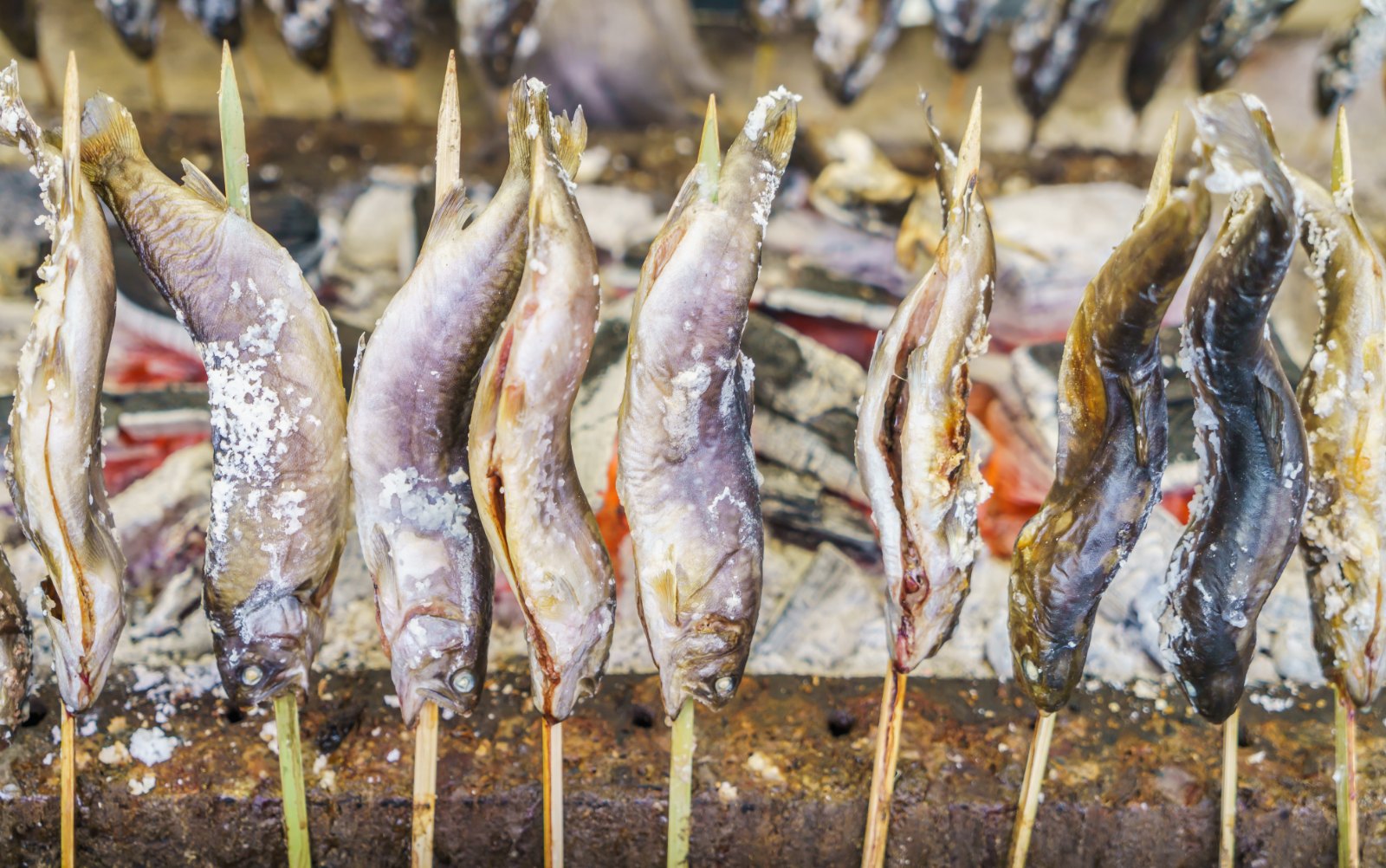
A good part of the Moroccan table fits the palette, provided a few details change.
- Salt-grilled sardines (yellow, fresh, on protein days), without lemon and without grilled peppers: pepper (red) is set aside.
- Oven-baked sea fish, with potatoes and cooked carrots.
- Lamb tagine with dried apricots, within the two meals a week the system allows for lamb, goat and camel together.
- Courgettes stuffed with rice, in a cooked tomato sauce (orange, in sauce for preference).
- Rice with butter or smen (green), the most neutral side dish on any menu.
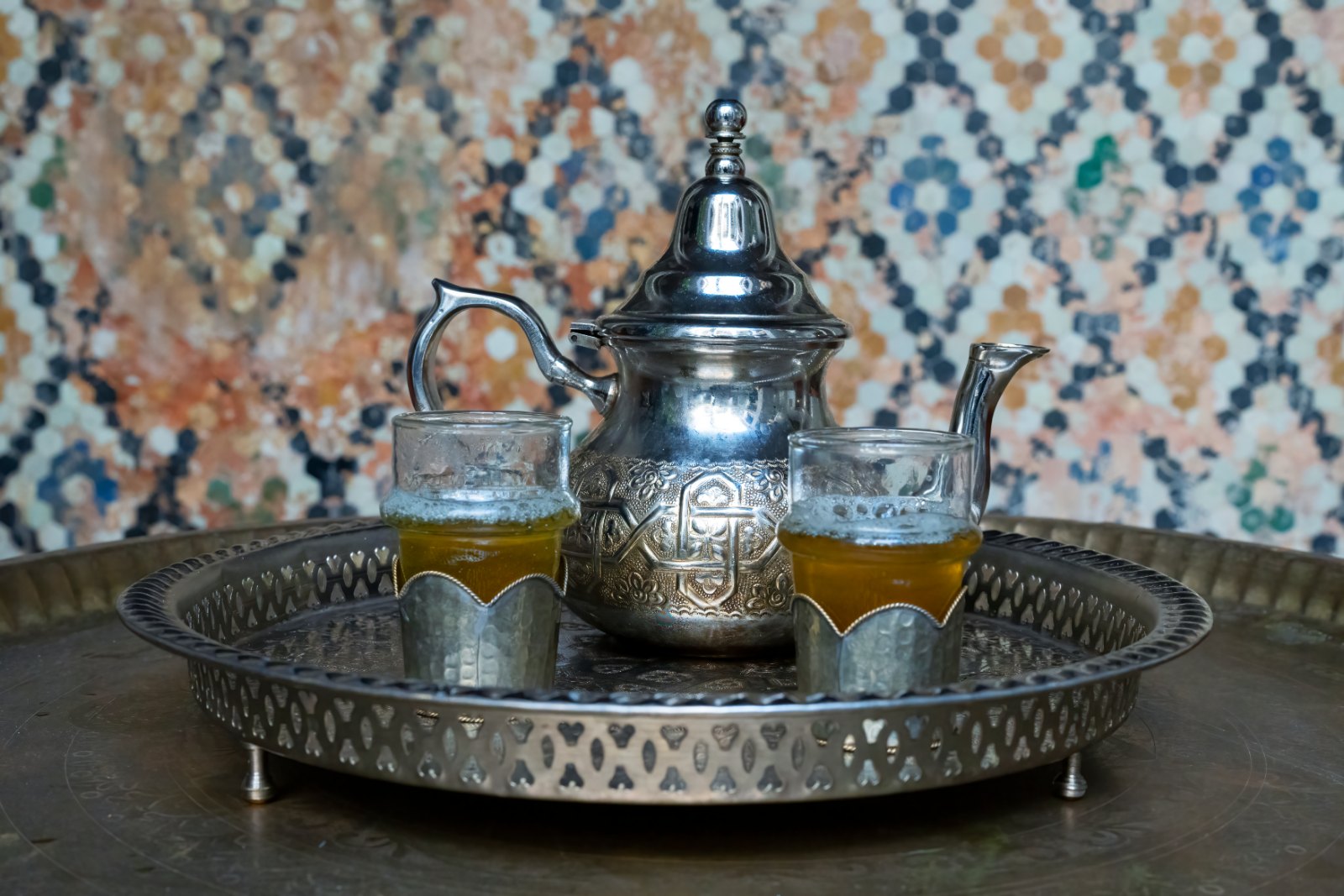
- Mint tea, taken right along with the meal, lightly sweetened.
Olives (orange, in small quantity) dressed with olive oil (green) replace the raw-vegetable starter. Couscous, pastilla, harira, chicken and oriental pastries stay out.
Travelling: plane, train, hotel
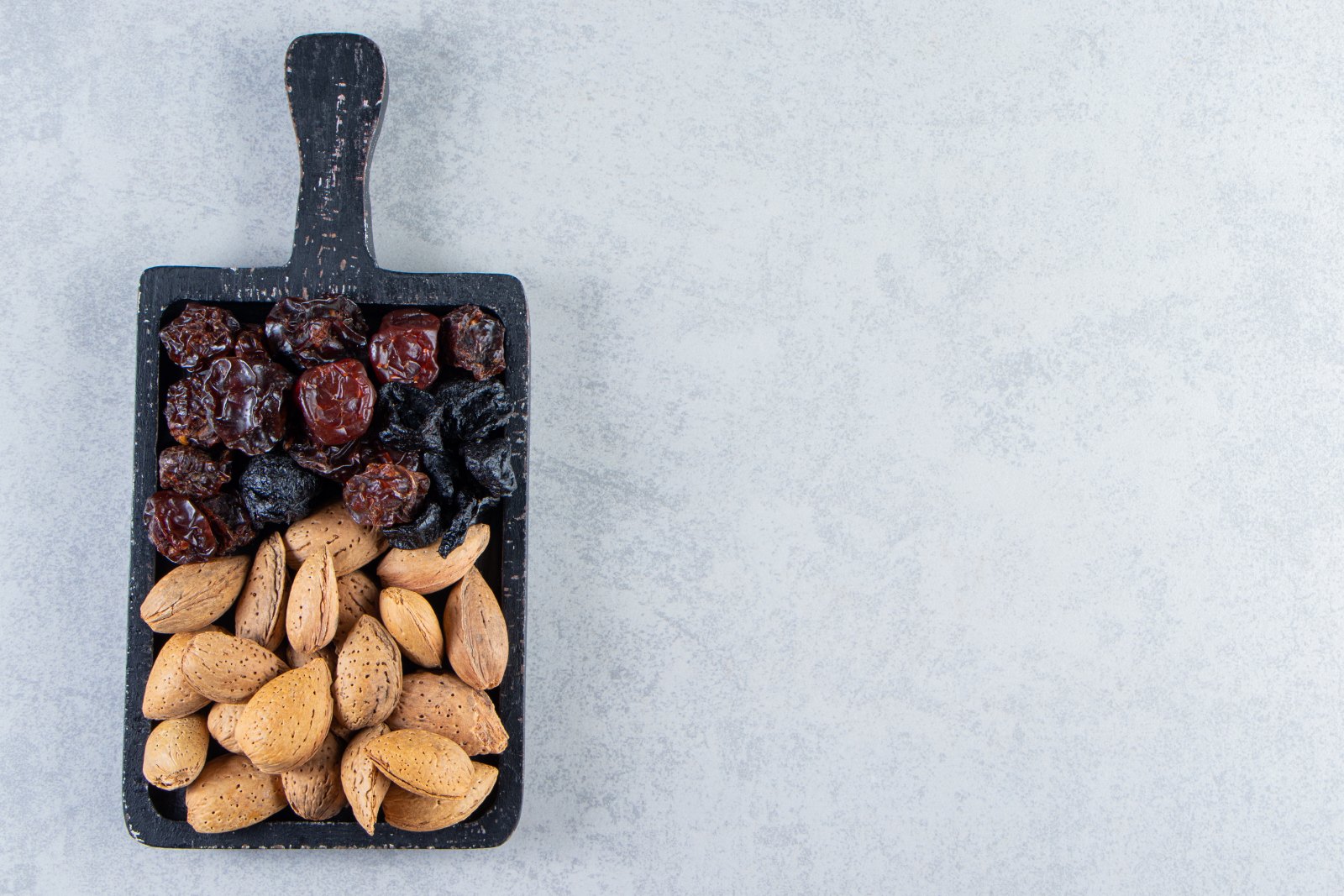
Travel poses a different problem: not the menu, but the absence of one. The system's sources do not cover the subject; what follows applies the palette to portable formats.
The bag that covers a day
- a few dates (green, one to six a day according to the system);
- a small handful of almonds (yellow, in measure, plain and unsalted) or walnuts (yellow, in measure);
- a packet of bran toast (green);
- a piece of aged cheese, cheddar (green) or kashkaval, which travels better than one expects;
- an apple (green, peeled for preference) or a pear (green);
- a bottle of still water.
Those five items fit in a pouch and cover two eating occasions, spaced by the two hours the method asks for. Airline trays, by contrast, rest almost always on bread, chicken and a fresh dairy product.
Hotel breakfast
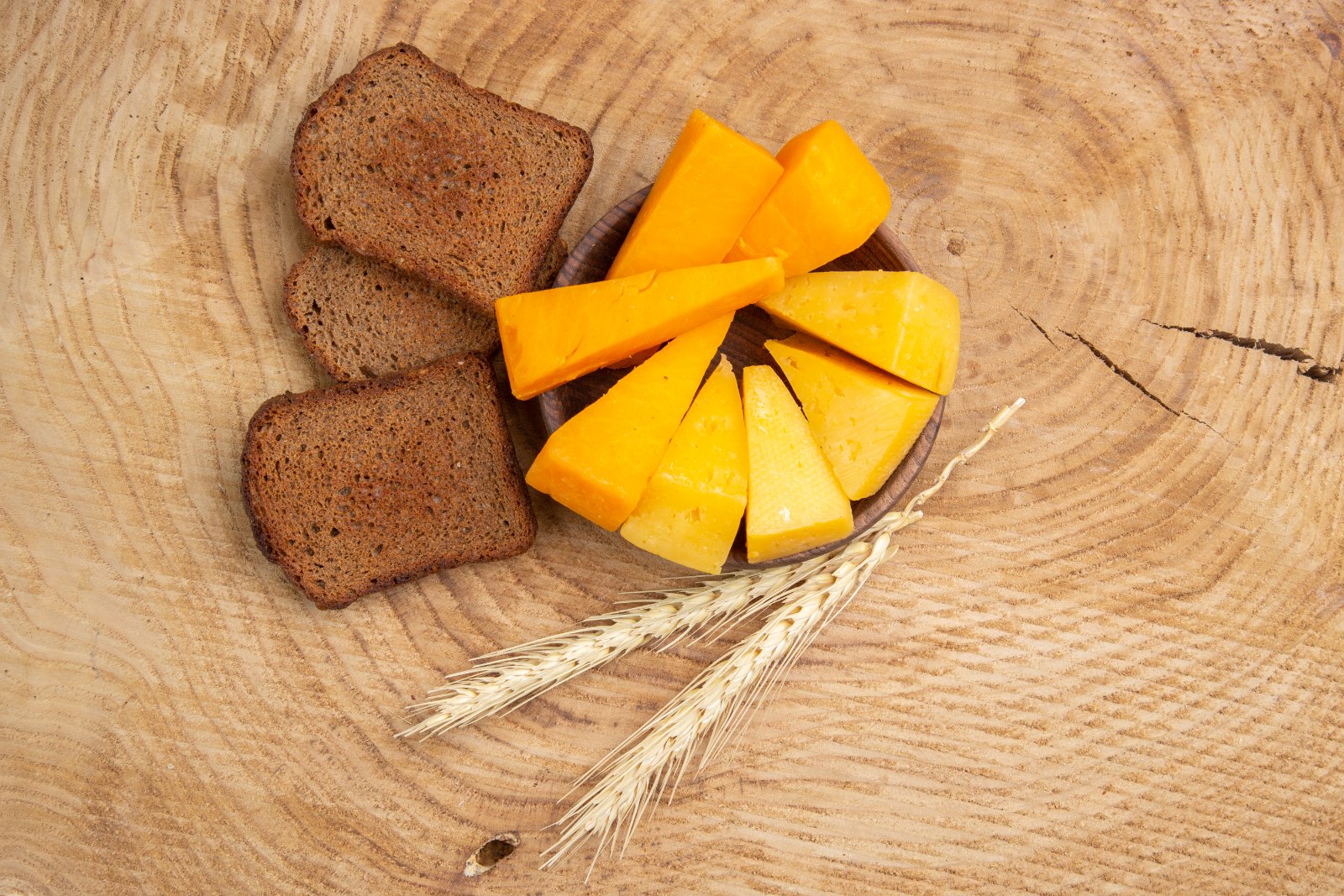
A buffet almost always holds enough for a compliant breakfast: aged cheeses, honey (green), butter (green), whole fruit, tea or black coffee. What stays on the buffet: eggs, yoghurt (red), milk, cereals, pastries and industrial juices. Coffee (green) is taken without milk or creamer, according to the site's database.
The most common mistakes
- Ordering a salad "to keep it light". This is the commonest slip: raw vegetables are precisely what the system sets aside.
- Forgetting the sauce. A faultless grilled fish sometimes arrives coated in a garlic-and-lemon sauce.
- Accepting bread "just while we wait". The bread basket is the first thing to send back.
- Having the tea an hour later. Under the two-hour rule, that is a new eating occasion; tea is drunk with the meal.
- Turning an imperfect meal into giving up. The system describes itself as a way of life; none of its sources provides for making up for it, or for a penalty.
Frequently asked questions
Can you follow Nidam al-Tayyibat when you often eat out?
Partly. Grilled dishes, rice, potatoes and cooked vegetables can be ordered almost anywhere; onion, garlic and lemon, on the other hand, are hard to avoid entirely. The system's sources do not cover restaurants and provide no rule for making up for a meal.
What do you order when the menu only has chicken?
According to the site's database, chicken is red zone. If there is no fish and no lamb, the usual answer is to build a meal without animal protein — rice or potatoes and cooked vegetables — and make it a "no" day in the sense of the "one day yes, one day no" rule.
How do you handle an invitation at someone's home?
The system asks for nothing more than simplicity. Eat what comes closest to the palette, leave the rest, and do not turn the meal into a demonstration: no documented source requires refusing an invitation.
What about jet lag and in-flight meals?
The two-hour rule counts from the last bite, not from a time of day: it works as it is while travelling. For someone whose treatment depends on meal times, however, that rhythm is set with their doctor, never alone.
Further reading
The two-hour rule explains the countdown that keeps running at the restaurant, and one day yes, one day no says which days to order animal protein. To build meals yourself, see the balanced week menu; for the cheeses at a buffet, the cheeses the system admits. Every entry in the food database gives the zone, the condition and the position of conventional nutrition.
Disclaimer
This article describes an eating system for information. It does not replace medical advice. In case of illness, ongoing treatment, pregnancy or diabetes, talk to your doctor before any change of diet.