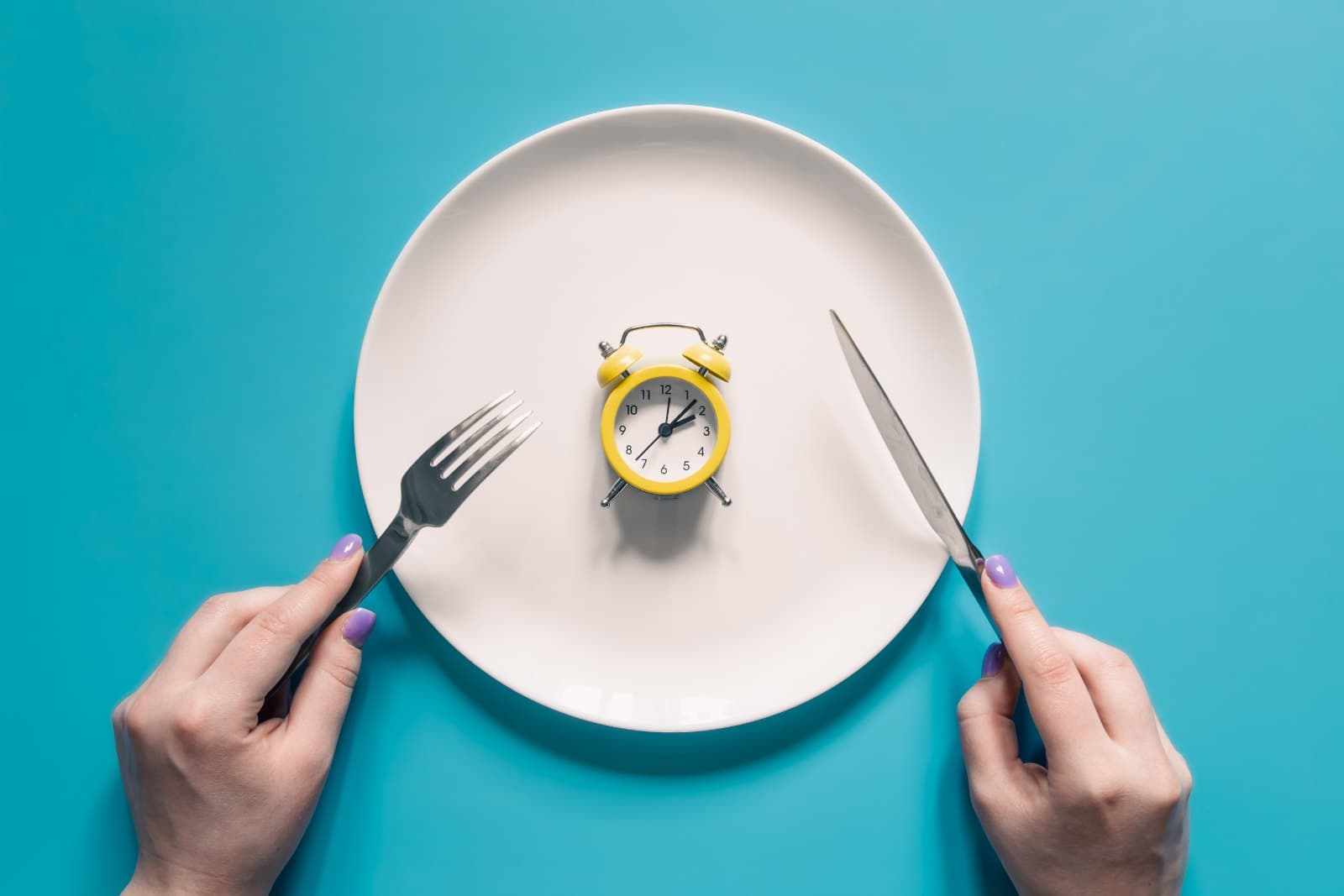
Nidam al-Tayyibat, the eating system described by Dr Diaa Al-Awadi, rests on three pillars: a palette of foods sorted into five zones, eleven daily rules, and one central rule about meal timing, the two-hour rule. This article explains what that rule asks, how to apply it on an ordinary day and which mistakes come up most often. It relies solely on the site's food database and on the way the method presents itself.
What the two-hour rule says

The principle fits in one sentence: once a meal is over, the system asks you to let at least two hours pass before eating anything again. The countdown starts with the last bite, not the first. According to the Tayyibat method, any food swallowed before those two hours are up "resets the clock to zero": you then have to wait another two hours from that bite.
Three points clear up the most common misunderstandings:
- The rule sets a minimum spacing, not a number of meals. It does not say "three meals a day" or "two meals a day." It only says: no less than two hours between the end of one eating occasion and the start of the next.
- The rule is about when; the food palette is about what. The two work together: spacing out meals made of red-zone foods does not follow the system.
- The rule does not ask you to count calories or weigh portions. The system does not think in quantities, with a few exceptions found in the food database (dates, for example, are listed as "1 to 6 a day according to the system").
The explanation put forward by the method
The system justifies this rule with its own reading of how the body works: according to it, about two hours after the last bite the body enters a phase it describes as a "repair" phase, and any new intake would interrupt it. This explanation is the method's own; it is not validated by medical institutions, and this site reports it for documentary purposes, without presenting it as an established fact. The full text of the rule appears in the first pages of the guide, offered as a free excerpt.
How to apply the rule on a normal day
In practice, the two-hour rule mostly calls for organization. Here is the simplest way to put it in place.
1. Plan when you will eat in advance
The most comfortable approach is to plan three meals and, if needed, one or two snacks, checking that each one starts at least two hours after the previous one ended. With breakfast at 7:30 a.m., lunch at 1 p.m. and dinner at 8 p.m., there is plenty of room for a mid-morning snack and an afternoon snack.
2. Group everything you eat into the same meal
This is the habit that changes everything. Dessert, dates, fruit, sweet tea: everything that goes with a meal is taken during the meal, not forty-five minutes later. A piece of fruit eaten "in passing" an hour after lunch counts as a new intake and restarts the countdown.
3. Note the time of the last bite
A simple phone alarm set for two hours after the end of the meal is enough. After a few days the rhythm becomes natural and the alarm is no longer needed.
4. Build meals that last
The system relies on its staple foods to make the two hours pass without difficulty. The site's food database names five daily pillars: white rice, the potato, natural butter, dates and white sugar, the last being the most disputed point of the whole system. A meal built around a green-zone starch, an allowed protein and a cooked vegetable is the format the method favors.
5. Handle drinks
The food database classifies plain water as a staple drink, with no restriction. For other drinks between meals (sweet tea, coffee, juice), the simplest approach is to have them with the meal, and to refer to the full text of the rule for special cases: the sources documented on this site do not settle every situation.
The most common mistakes
People discovering the method almost always stumble over the same points.
- Nibbling while cooking. Tasting the sauce, biting into a date while the rice cooks: every bite restarts the clock. If you taste while cooking, the meal "starts" at that moment.
- Counting from the start of the meal. A family lunch that stretches from 1 p.m. to 2:15 p.m. allows the next intake from 4:15 p.m., not 3 p.m.
- Pushing back dessert or tea. In Morocco, mint tea often arrives a good while after the main dish. According to the method, it is better to serve it right away, while the meal is still "open."
- Believing the rule replaces the palette. Spacing slices of white bread, which is in the red zone, two hours apart is still outside the system. The rule only makes sense with allowed foods.
- Turning the rule into a fast. Two hours is a minimum, not a target to stretch endlessly. The method does not ask you to skip meals.
- Changing your meal rhythm without medical advice. For a person with diabetes or on a treatment whose timing depends on meals, changing the time or number of meals is not something to decide alone. That is a matter for the doctor, not for an eating system.
Sample day with allowed foods

Here is a day built only with foods from the site's database, in the green or yellow zone, plus two orange-zone foods used according to their condition. The times show when each intake ends and when the next one becomes possible.
7:30 a.m. – Breakfast. Bran toast (green) with butter (green) and natural honey (green), sweetened mint tea (green). Last bite at 7:50 a.m.: next intake possible from 9:50 a.m.
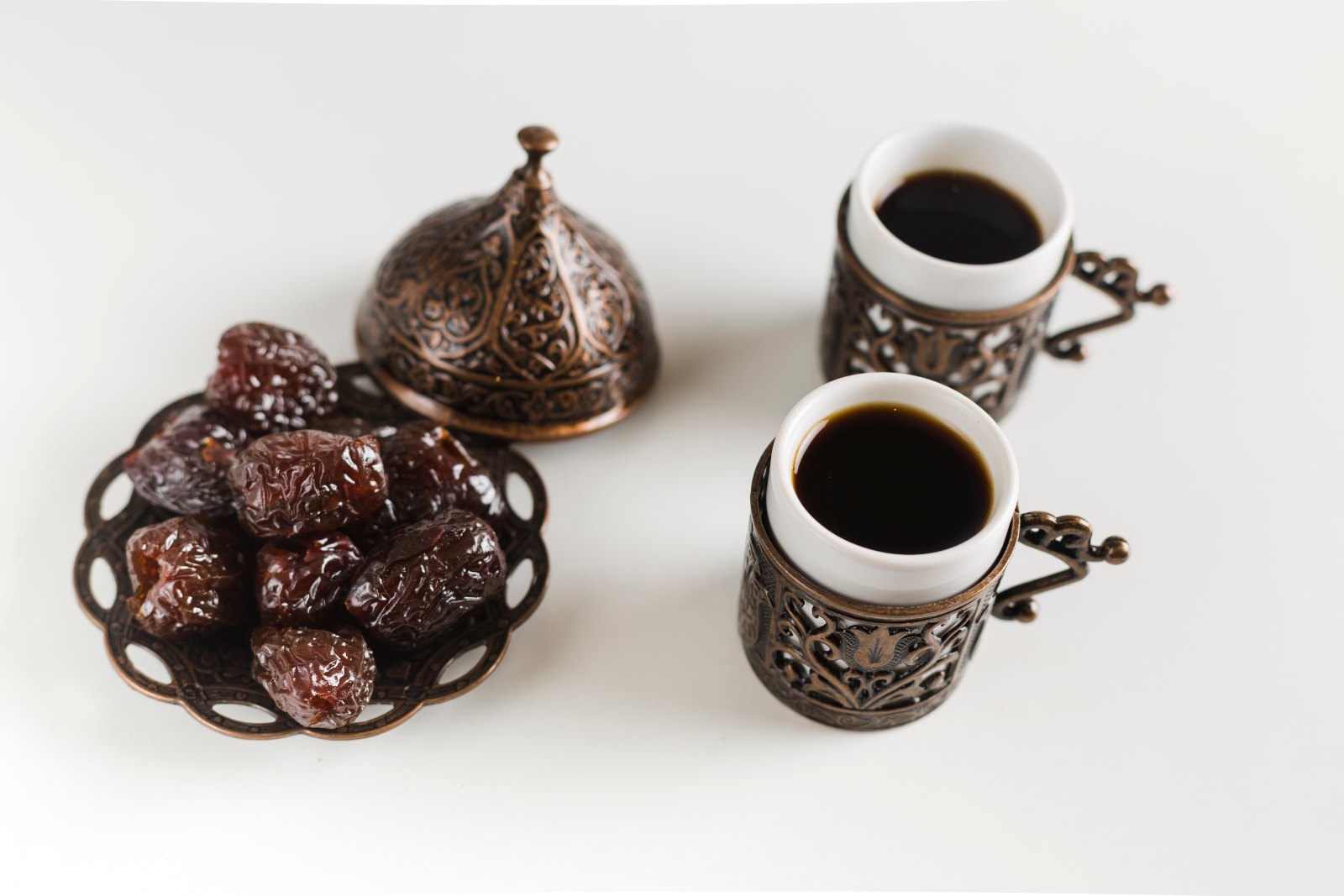
10:30 a.m. – Optional snack. Two or three dates (green, 1 to 6 a day according to the system) and a black coffee (green, no milk or creamer). Ends at 10:40 a.m.: next intake from 12:40 p.m.
1:15 p.m. – Lunch. White rice (green) cooked without onion or garlic, grilled sea fish (green), zucchini (yellow, cooked) simmered in a tomato sauce (orange, preferably cooked in a sauce), a portion of roasted squash (green, cooked). Dessert eaten right after: a few strawberries (green). Ends at 1:50 p.m.: next intake from 3:50 p.m.
4:30 p.m. – Afternoon snack. A peeled apple (green, preferably peeled), a small handful of plain almonds (yellow, in moderation), a green tea without milk (green). Ends at 4:45 p.m.: next intake from 6:45 p.m.
8 p.m. – Dinner. Baked potatoes (green) with smen (green), a slice of kashkaval (green), a few olives (orange, in small amounts), then an anise infusion (green, no milk). Ends at 8:30 p.m.
Five intakes in the day, each separated from the previous one by more than two hours, and plain water as desired in between. Nothing requires you to keep all five: someone who is not hungry at 10:30 a.m. simply goes straight to lunch.
Adapting the rule to your schedule
The rule fits any schedule, since it sets no fixed times. Someone who works shifts keeps the same principle: at least two hours between the end of one intake and the next, whatever the time of day. A family that eats dinner late simply moves the afternoon snack to keep the gap.
For children, pregnant women and older people, the site gives no instructions: these situations are a matter for the doctor or pediatrician, and the rule should not be applied to them without advice.
Going further
The two-hour rule only makes full sense together with the food palette. The article on the five food zones of Nidam al-Tayyibat details what the green, yellow, orange, purple and red zones mean, and the one on breakfast according to Nidam al-Tayyibat offers twelve ideas for the first meal of the day. To plan the week around these spaced meals, the guide how to organize your meals for the week and the article on cravings are useful complements. Finally, each entry in the food database gives the zone, the condition and the system's position for the food concerned.
The full text of the two-hour rule, with the eleven daily rules and the introduction to the palette, appears in the free excerpt of the guide (in French) offered on the site.
Disclaimer
This article describes an eating system for informational purposes. It does not replace medical advice. If you have an illness, are undergoing treatment, are pregnant or have diabetes, talk to your doctor before making any change to your diet.