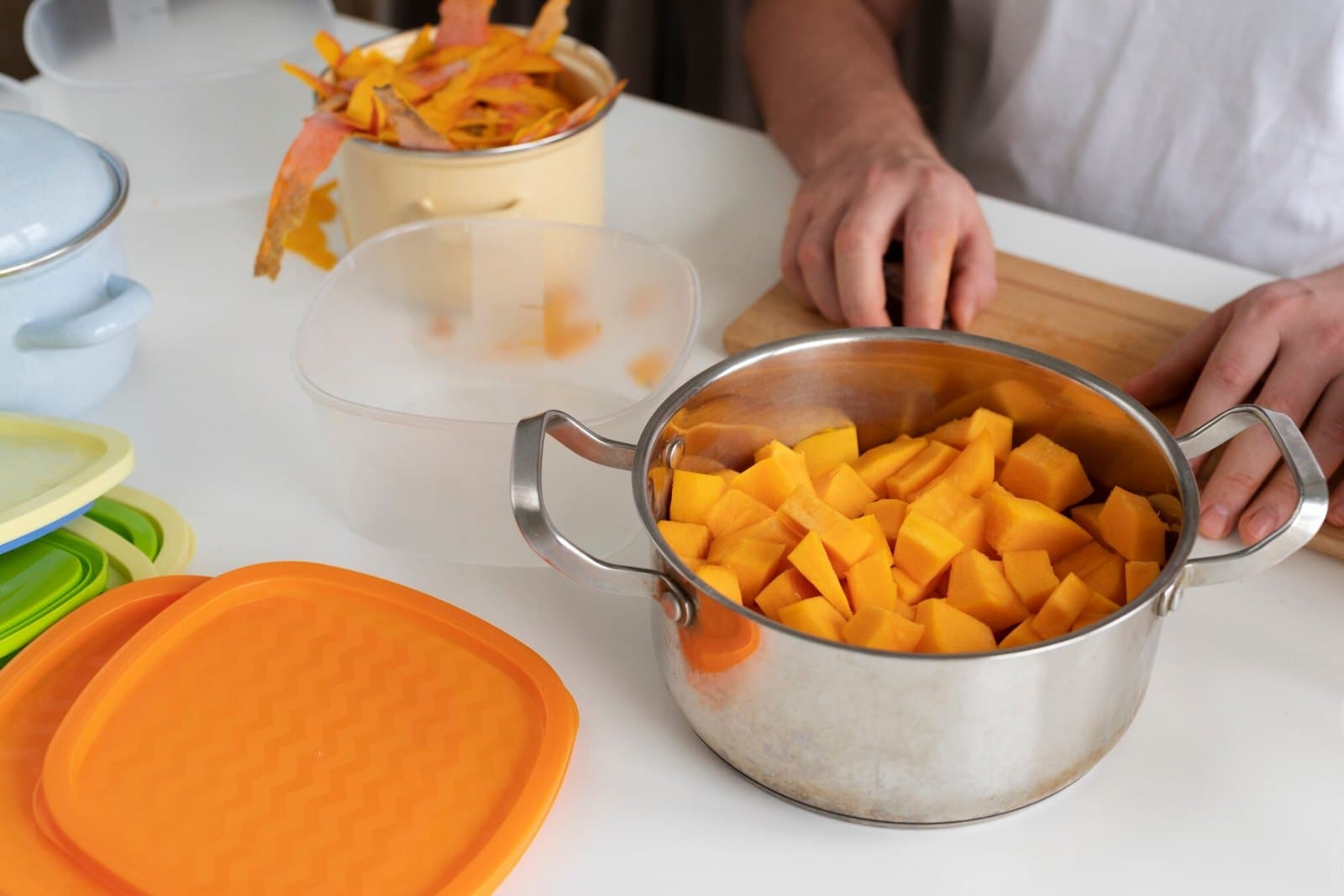
Batch cooking — making the week's meal components in one session — suits Nidam al-Tayyibat, the eating system described by Dr Diaa Al-Awadi (1979–2026): its sources recommend preparing a "starch base" in advance, cooked rice and boiled potatoes. This guide organises the session with foods from the site's food database only, and shows what replaces chicken, legumes and couscous, which the system leaves out.
Why batch cooking suits Moroccan cooking particularly well
Two of the system's rules call for preparing ahead: simple meals — a starch, an admitted protein on "yes" days, a natural fat — and the "one day yes, one day no" alternation, which has to be planned.
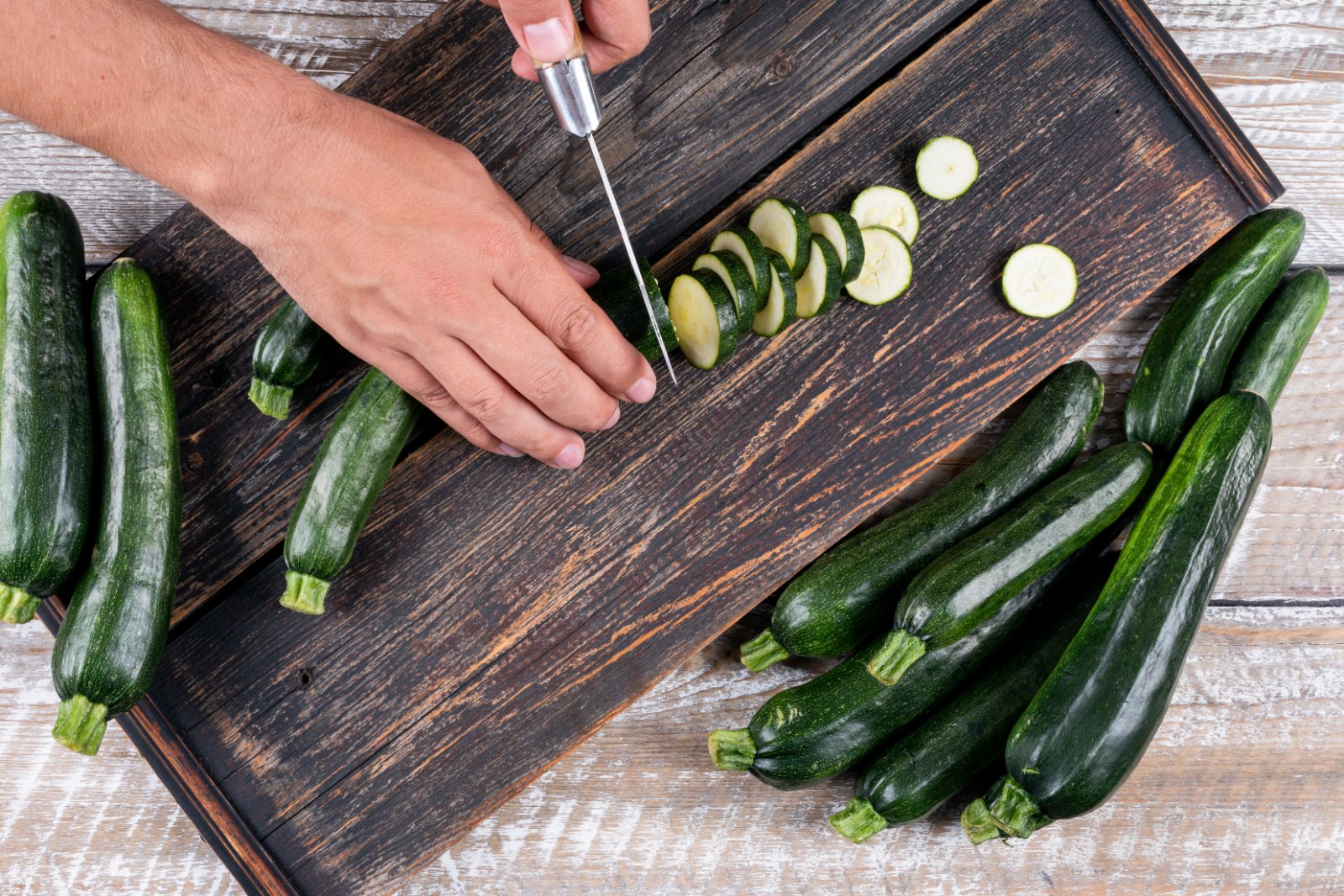
Moroccan cooking is a cuisine of stews, soups and cooked vegetables, precisely what the palette keeps. The system leaves out all raw vegetables but admits courgette (yellow, always cooked), squash (green, cooked), carrot (orange, cooked only), aubergine (orange, cooked only), mushrooms (green, cooked) and tomato (orange, cooked in sauce for preference). In other words, the vegetables of the tagine and the soup, not those of the salad; they are made in quantity, several pots in parallel, and reheat well.
Red meat follows the same logic. The cooking "method" reported by one source of the system — boil the meat, then sear it in smen (green) — is a long cooking that lends itself to a single session: you boil the lamb (orange, two meals a week, an allowance shared with goat and camel) for an hour, sear it, and it waits in the fridge for the planned "yes" day. What changes is the list of components: bread, couscous (red), harira and its legumes (red), and chicken (red) all go.
The batch-cooking session: how to organise it
Start with the week on paper
Before any pan, the system's sources ask you to decide the "yes" and "no" days on a sheet of paper and to count the meat allowances: two meals of lamb, goat or camel, one meal of beef (orange, one meal a week, shared with buffalo).
Draw up the list of components
A typical session has six items:
- a large pot of white rice (green);
- whole boiled potatoes (green);
- roasted squash and courgettes cooked in butter (green);
- a home-made cooked tomato sauce;
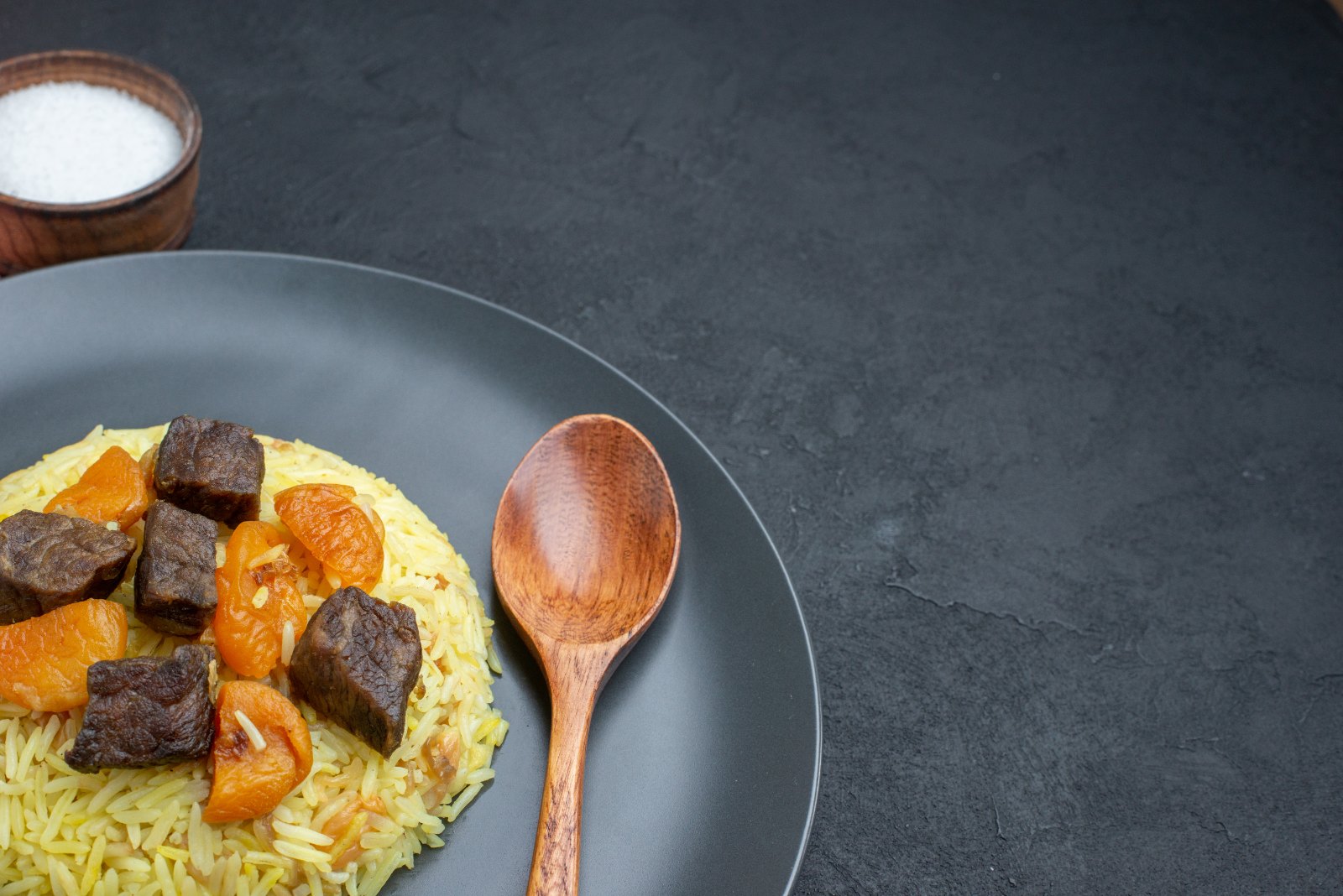
- a "yes" day protein cooked ahead — lamb boiled then seared in smen, or roasted pigeon (green);
- in the fridge, what needs no cooking: kashkaval (green), roumi cheese (green), dates (green, 1 to 6 a day according to the system), fruit from the palette.
Running things in parallel
Long cooking first. The lamb boils in salted water, skimmed, at a simmer, for an hour. Meanwhile the squash in wedges and the whole potatoes cook together in the oven; the rice cooks covered on a second ring; the tomato sauce simmers on a third with salt, cumin (green) and black pepper (green), without onion (red) or garlic (red), which the system leaves out, cooked as well as raw. The cooked lamb is seared in smen with a pinch of cinnamon (yellow, in small quantity) and ginger (green). In about two hours the week's base is ready.
Do not taste while cooking
Biting into a date while the rice cooks, or tasting the sauce, counts as an eating occasion and restarts the two-hour countdown. The simplest answer is to place the session right after a meal, when hunger is not there.
The essential components of Moroccan batch cooking
White rice and potatoes: the starch base
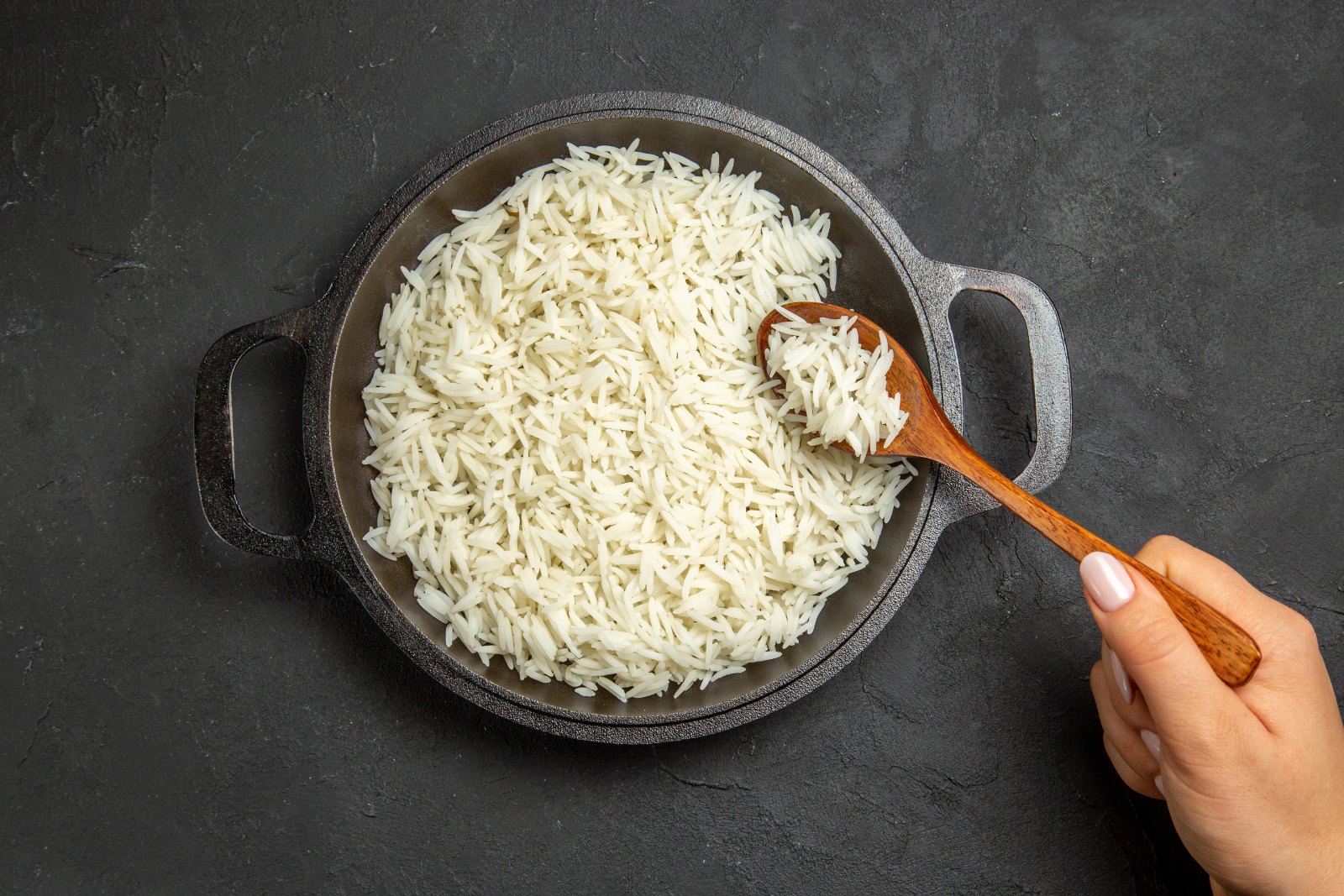
These are two of the system's five daily pillars, admitted "without restriction" according to its sources, and the heart of the guide's starch base. Rice cooked in salted water serves the lunch of a "yes" day as well as the buttered breakfast rice of a "no" day. Whole boiled potatoes then become potatoes sautéed in smen and cumin, mash with butter, or oven potatoes. Sweet potato (green) and freekeh (green), roasted green wheat, complete the base.
Cooked vegetables: roasted squash, courgettes, carrots
Squash roasted in butter is the most versatile component: a side dish, a soup blended with a potato, a purée. Courgettes, boiled or stewed in the tomato sauce, are made in quantity; stuffed with rice, they make a "no" day lunch. Carrots, always cooked, go with oven-baked fish.
Home-made tomato sauce
The site's database excludes industrial tomato paste (red) but tolerates the home-made sauce: ripe tomatoes peeled, crushed, simmered with salt and cumin. It is the sauce for stuffed courgettes and for okra (orange, cooked in tomato sauce with the meat, without garlic).
The "yes" day protein
In classic Moroccan batch cooking, chermoula chicken plays this part. The system rules it out twice over: chicken is red zone, and chermoula rests on garlic, fresh lemon (red) and raw herbs (red), all excluded. In its place, the database offers pigeon, rabbit (green), quail (green) and sea fish (green, grilled for preference). Pigeon and lamb are prepared ahead; fish and fresh sardine (yellow, fresh, on protein days) are grilled on the day itself, with salt and cumin, without flour.
What the system leaves out, and what it puts in place
Lentils and chickpeas are excluded along with all legumes; the database offers potato, rice and freekeh in their place. Couscous is excluded with refined wheat semolina; rice, freekeh and bulgur (green) replace it. Barley is not documented by the sources and falls under the whitelist rule: excluded by default. Conventional nutrition, on the contrary, holds legumes to be one of its pillars and wholemeal couscous to be a recommendable grain; these exclusions are among the system's most disputed.
The week's assemblies
These assemblies come from the first-week menus of the site's programme; everything is green or yellow zone, except the two orange foods flagged.
| Day | Type | Lunch | Dinner |
|---|---|---|---|
| Monday | yes | white rice, salt-grilled sardines, roasted squash | oven potatoes with smen, kashkaval |
| Tuesday | no | potatoes sautéed in smen and cumin, cooked courgettes; grapes | squash soup, bran toast (green), roumi cheese |
| Wednesday | yes | saffron rice, oven-baked sea fish, cooked carrots (orange) | mashed potato with butter; strawberries |
| Thursday | no | white rice, sautéed mushrooms, roasted sweet potato | steamed potatoes, grilled mozzarella (green); banana |
| Friday | yes | white rice, lamb boiled then seared in smen (orange, first of the two meals of the allowance), stewed squash | bran toast, butter, processed cheese (green) |
| Saturday | no | courgettes stuffed with rice, cooked tomato sauce | home-made chips in sunflower oil (yellow, for frying), kashkaval |
| Sunday | yes | white rice, pigeon roasted in butter, potatoes | squash soup, bran toast, roumi cheese |
The session supplies the rice, the potatoes, the squash, the courgettes, the tomato sauce and the lamb; the rest is cooked during the week.
Storage and food safety
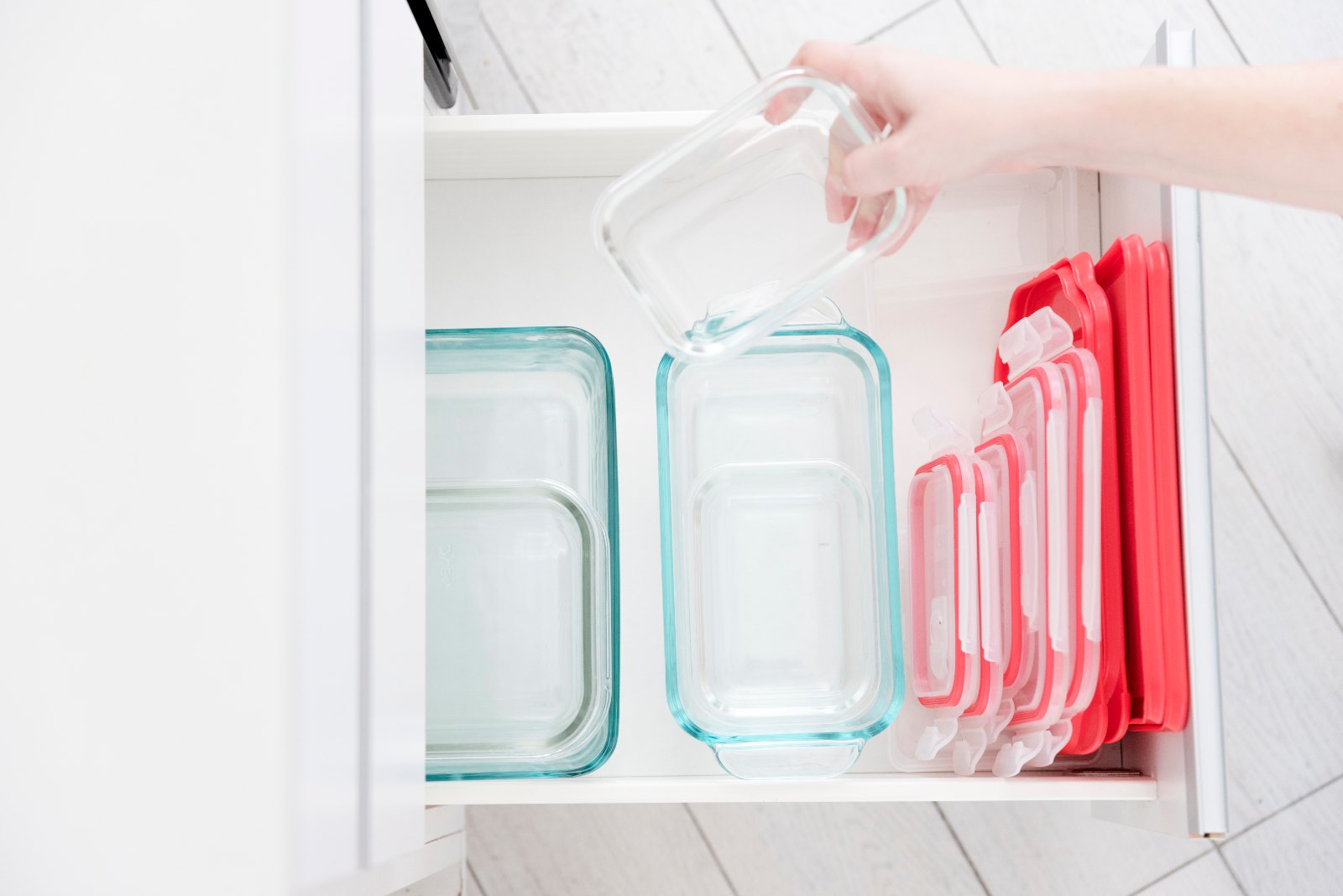
The system's sources say nothing about keeping prepared dishes; what follows is ordinary household hygiene, not the method.
- Cool fast, store closed. Components are left to cool, then go into the fridge in closed boxes, without waiting for the end of the evening; cooked rice and boiled potatoes in particular do not stay at room temperature. Each box carries its contents and the date.
- Reheat once, right through. What has been reheated does not go back in the fridge.
- Freeze on the day whatever will not be eaten in the first few days: squash, tomato sauce, cooked lamb and rice take it well, whole boiled potatoes less so.
- Use glass boxes with lids; fish and cooked meat are stored apart from vegetables and starches.
The most common mistakes
- Keeping the usual components of Moroccan batch cooking. Lentils, chickpeas, couscous, chicken, raw tomatoes and cucumber: all red zone according to the site's database.
- Forgetting to count the allowances. A lamb dish served three days running goes past the two meals of the weekly allowance.
- Confusing fresh cheese with aged cheese. Quark (red) and yoghurt (red) are excluded; kashkaval, cheddar and roumi are admitted.
- Changing your meal organisation while on treatment, without advice. The meal rhythm of a person with diabetes or on treatment is a matter for the doctor.
Frequently asked questions
What is the difference between batch cooking and meal prep?
Batch cooking prepares separate components — rice, cooked vegetables, meat — that you assemble differently each day; meal prep prepares complete portioned meals. To follow the system, batch cooking is handier: the same starch base serves both "yes" and "no" days.
How long does a session take within the palette?
About two hours for the base described here, the lamb boiled then seared being the longest cooking. Fish, sardines and pigeon are cooked later in the week.
Which Moroccan vegetables suit batch cooking best under the system?
The ones the palette admits cooked: squash and pumpkin, courgettes, carrots, aubergines, mushrooms, tomatoes in sauce. Salads, peppers, cucumber, onion and garlic are red zone.
What replaces chicken in a Tayyibat batch-cooking session?
Pigeon roasted in butter, rabbit stewed, or quail, and sea fish grilled on the day. Chicken is excluded by the system in every form, a position conventional nutrition disputes: for it, chicken is a reference lean meat.
Further reading
The guide on organising the week's meals and the meal-prep guide for beginners detail the general organisation of shopping and sessions. The article on the "one day yes, one day no" rule explains the weekly meat allowances to count before the session, and the one on the two-hour rule why tasting while cooking is a problem. Every entry in the food database gives the zone, the condition and the view of conventional nutrition.
Disclaimer
This article describes an eating system for information. It does not replace medical advice. In case of illness, ongoing treatment, pregnancy or diabetes, talk to your doctor before any change of diet.