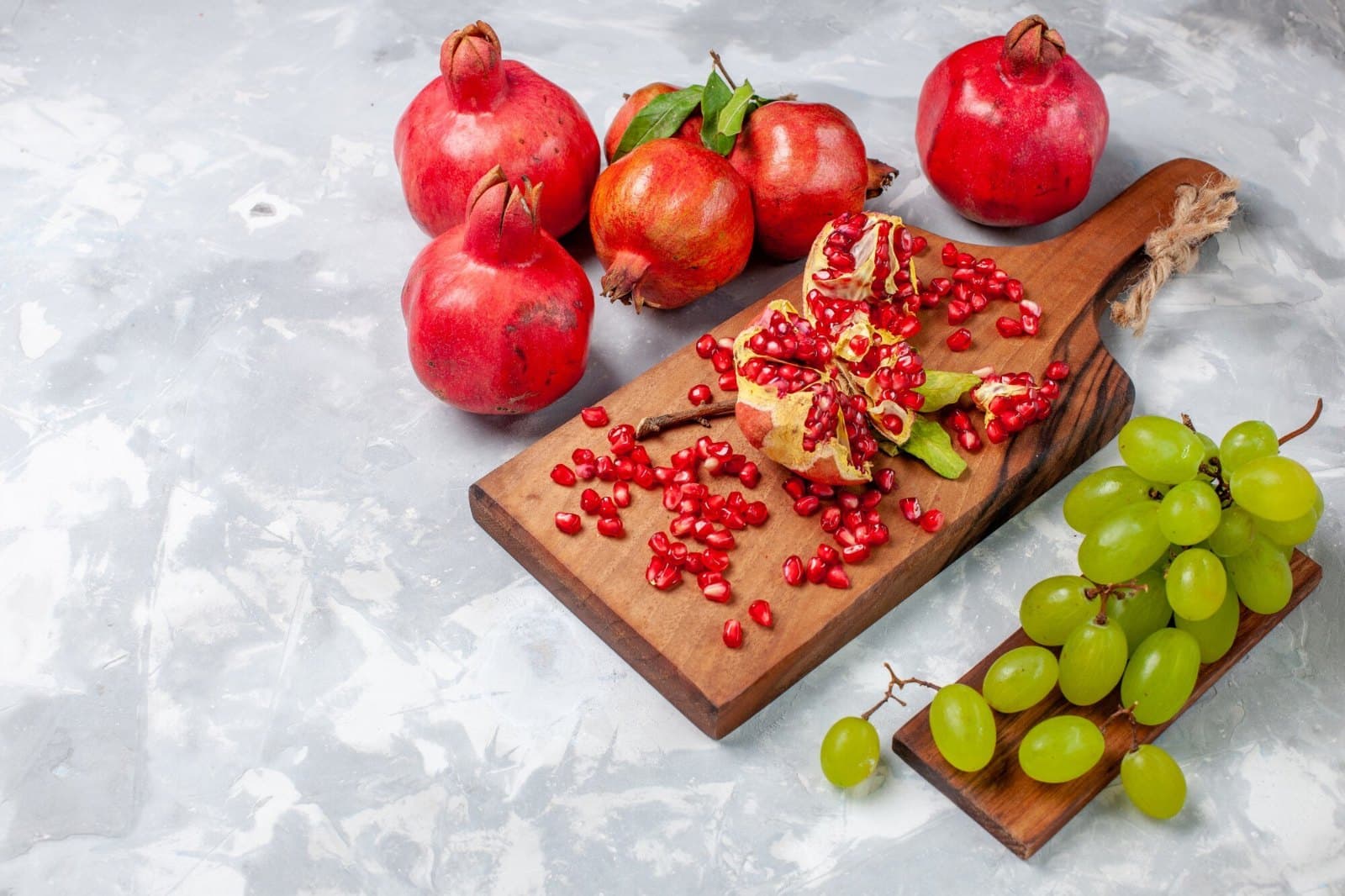
What does balanced eating mean in Morocco? Conventional nutrition answers: vegetables at every meal, legumes, whole grains, dairy, olive oil, little sugar. The Nidam al-Tayyibat, the food system described by Dr Diaa Al-Awadi, gives a very different answer, and it says so openly: rice, potato, grilled fish, cooked vegetables, aged cheeses, and neither raw vegetables nor legumes.
This guide sets out the system's plate as it applies to the Moroccan table, as the guide and the site's food database document it, and each time places the conventional reading beside it, so the reader has both views in front of them.
Two definitions of balance
The system does not present itself as a diet but as a "philosophy of the body". It rests on a palette of foods sorted into five frequency zones, the two-hour rule between intakes, and eleven daily rules. It works as a whitelist: only foods explicitly admitted are allowed.
The site's guide sums up what is striking about the system's meals: the absence of what is considered elsewhere to be a balanced plate — no raw vegetables, no legumes, no fresh dairy.
Conventional nutrition recognises none of the principles behind those exclusions, and it disputes in particular the daily place of white sugar (green, 5 to 15 tablespoons a day according to a single source), white rice (green) and dates (green, 1 to 6 a day). Anyone who is diabetic, pregnant, under treatment, a child or an older person should not apply this system without their doctor.
The balanced plate: the visual method that changes everything
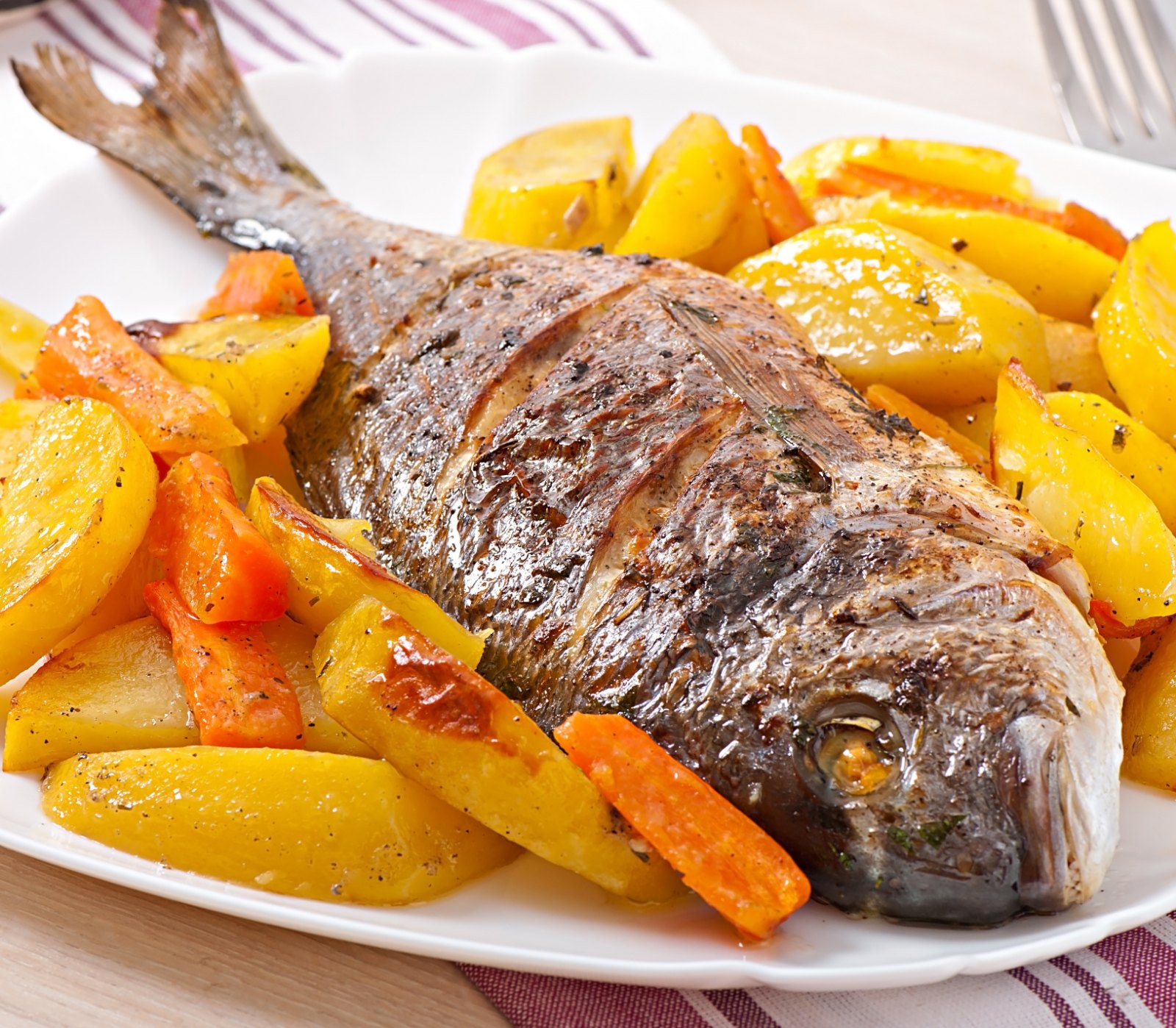
The fifth of the eleven rules gives the formula for a meal, with no scale and no arithmetic: a base starch, an admitted protein if it is a protein day, a cooked vegetable, a natural fat. Two or three elements, no industrial sauces, no dozens of mixed ingredients.
The plate photographed above — half cooked vegetables, a quarter grilled fish, a quarter rice — is exactly a "yes"-day lunch from the site's programme.
The four elements
- The starch. Rice (green) or potato (green), two of the five daily pillars, admitted without restriction and cooked without onion or garlic. Sweet potato (green), frik (green) and bulgur (green) complete the list.
- The protein, every other day. According to the system, days with and without animal protein alternate. On "yes" days: sea fish (green, grilled for preference), sardine (yellow, fresh), pigeon (green), rabbit (green), and the rationed red meats — lamb (orange, two meals a week, the quota shared with goat and camel) and beef (orange, one meal a week, shared quota). "No" days rest on aged cheeses — kashkaval (green), cheddar (green), roumi cheese (green) — and on tahini (green).
- The vegetable, always cooked. Squash (green, cooked), courgette (yellow, never raw), carrot (orange, cooked only), aubergine (orange, cooked only), mushrooms (green, cooked), tomato sauce (orange, cooked for preference).
- The fat. Butter (green), smen (green) for cooking, olive oil (green) mostly uncooked.
What conventional nutrition says
Olive oil, fish, cooked vegetables: conventional nutrition approves. White rice and potato have a high glycaemic index, worth watching above all with no fibre alongside; butter and smen are saturated fats to limit; aged cheeses are salty and fatty.
Above all, the system's plate has neither raw vegetables nor legumes, and its "no" days struggle to reach the conventional benchmark of roughly 0.8 g of protein per kilo per day — a point dietitians flag.
The Moroccan table within the palette
The system sets aside several pillars of Moroccan cooking and keeps others. The table gives, for each common dish or food, its position in the palette and, when it is excluded, what the site's database lists as a replacement; the site's guide specifies that these substitutions are the system's own and do not carry the nutritional value of the food replaced.
| Moroccan dish or food | The system's position | What the palette offers instead |
|---|---|---|
| Khobz, msemen, batbout (white bread) | red, excluded | bran toast (green), the only bakery exception; rice, potato |
| Couscous and semolina | red, excluded | rice (green), frik (green), bulgur (green) |
| Harira, foul, loubia (legumes) | red, excluded; a pillar of conventional nutrition | potato, rice, frik |
| Salads and raw vegetables (raw greens) | red, excluded | cooked vegetables: aubergine (orange, cooked only), squash (green, cooked) |
| Lben | red, excluded | qechta (green) |
| Chicken with olives (chicken), eggs | red, excluded | pigeon (green), rabbit (green), sea fish |
| Fish tagine, grilled sardines | compliant: sea fish (green), sardine (yellow, fresh) | without onion, garlic or fresh lemon |
| Lamb tagine with dried apricots | lamb (orange, two meals a week) | within the weekly red-meat quota |
What remains is still a great deal, and the site's guide lists it: grilled fish, slow-cooked lamb, stuffed vegetables, mint tea, dates, halva.
A compliant tagine brings together sea fish or lamb boiled then seared in smen, cooked courgettes and carrots, a tomato sauce, cumin (green), preserved lemon (orange, in small quantity) and a few olives (orange, in small quantity). Sardines grilled with salt and cumin, served with steamed potatoes, are the other great compatible classic.
Fibre and hydration: the two quiet heroes
This is where the two readings diverge most. By setting aside legumes, raw vegetables, oats (red) and brown rice (red), the system sharply reduces the everyday sources of fibre; the site's guide notes that conventional nutrition would read the first-week discomfort reported by the sources as the effect of that change in intake.
The fibre left in the palette comes from cooked vegetables — squash, courgette and carrot — from sweet potato, frik, bulgur, corn (green, on the cob), bran toast and fruit. On fruit, the system asks that the apple (green), the pear (green) and the peach (green) be peeled for preference; the apple's own entry recalls that the skin holds a good share of the fibre and that peeling it is not necessary.
On water, the two readings almost meet. Still water (green) is the system's base drink, without restriction, and the reference drink of every official recommendation.
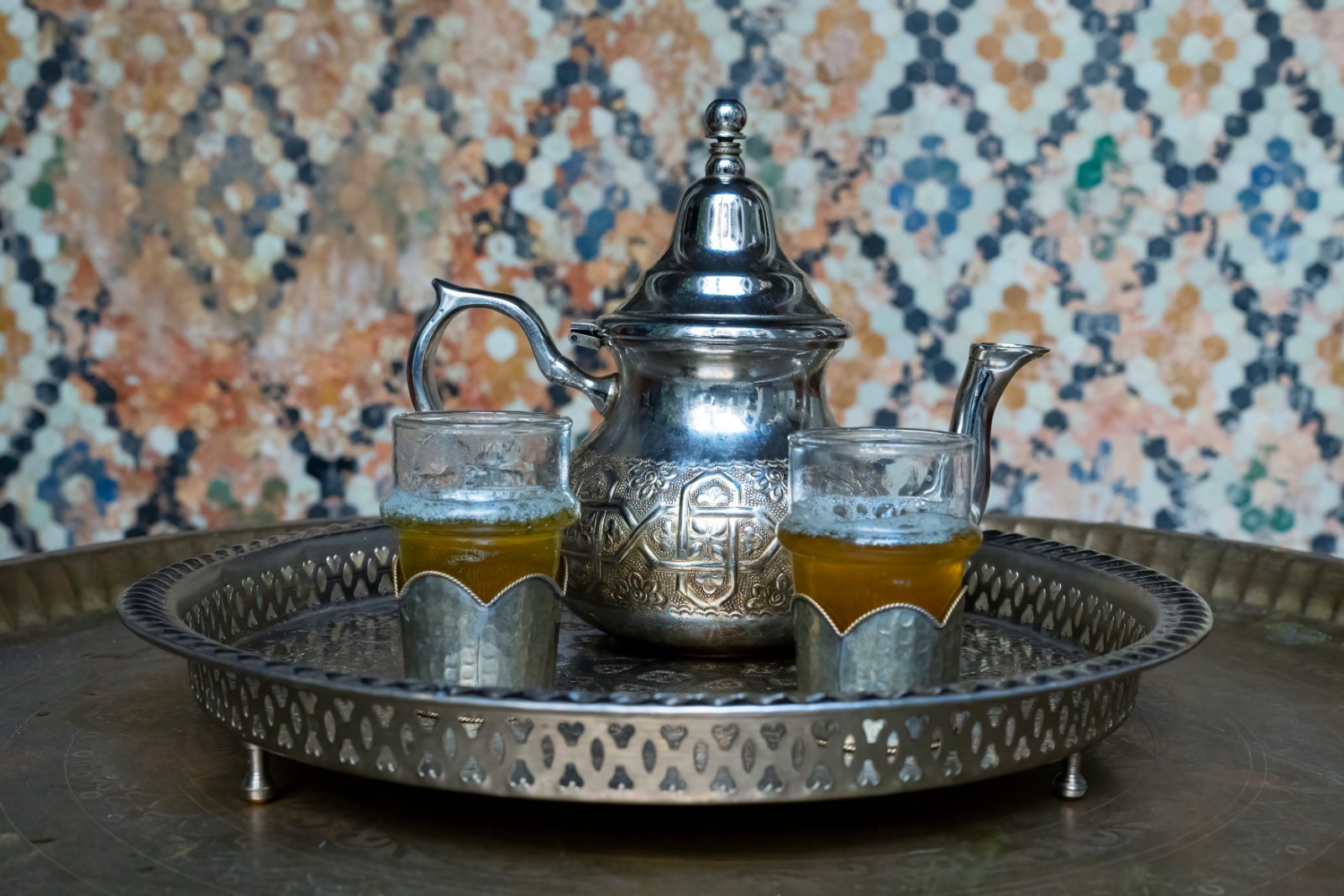
The system's eighth rule sets out its way of doing things: drink to thirst rather than to a quota, lukewarm for preference, in small sips, and between meals rather than during them. Green tea (green, without milk), mint tea (green) and hot infusions (green, without milk) are admitted; sodas (red) and industrial juices (red) are set aside. The mint tea entry recalls that it is the usual amount of sugar that deserves attention.
Building balanced meals through the day
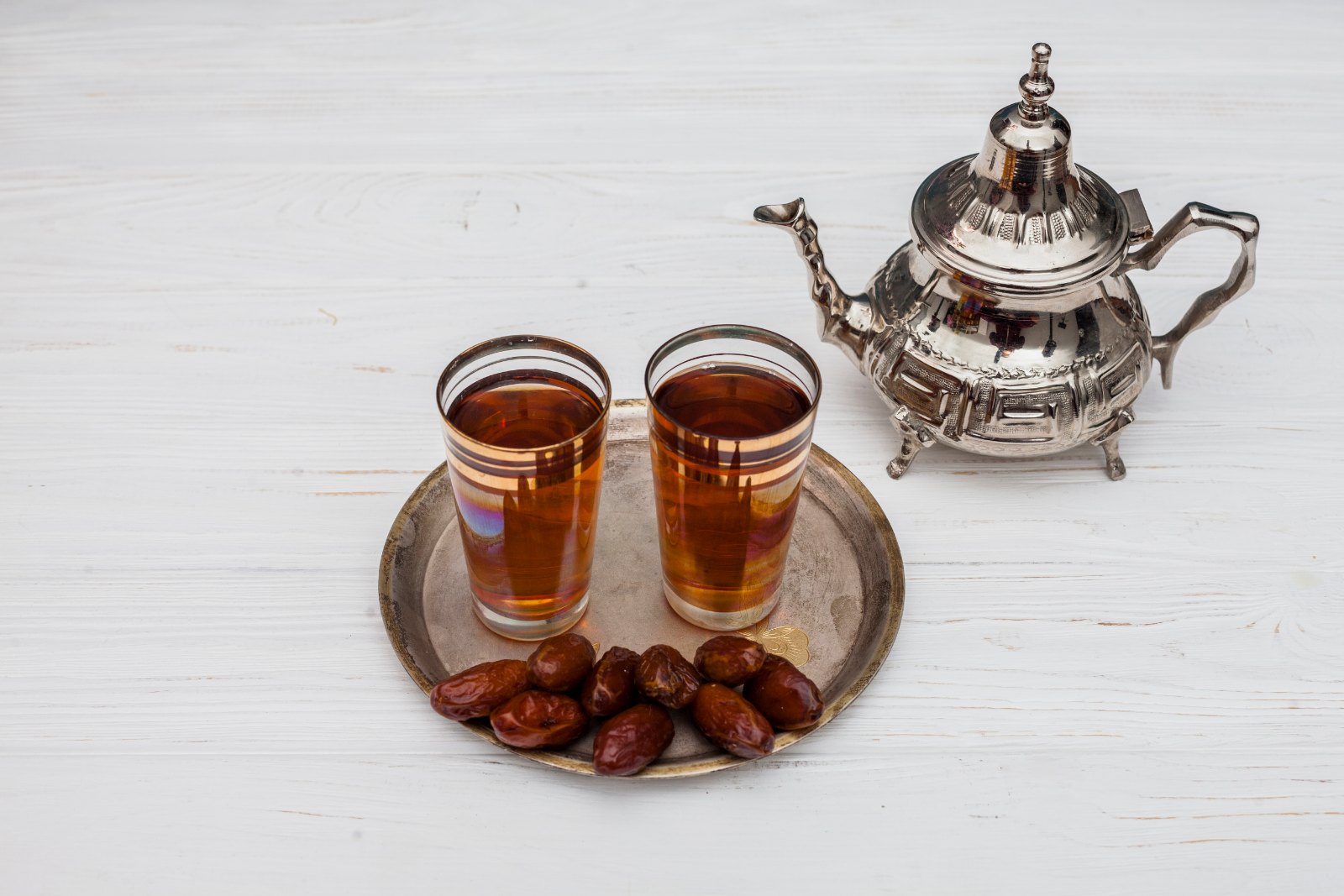
The system sets no meal times. Under the method, you eat when hunger is real, you stop before full satiety — "a quarter of the plate" left — and you leave at least two hours between the end of one intake and the start of the next. Within that frame, the site's guide describes sample days built only from foods in the palette. Here is the Moroccan "yes" day, with animal protein.
- Morning. Qechta (green) and honey (green) on bran toast; mint tea.
- Midday. Saffron rice; lamb boiled then seared in smen, simmered with dried apricots (green); cooked carrots.
- Afternoon snack, at least two hours later. Sesame halva (green), green tea.
- Evening. Sardines grilled with salt; steamed potatoes with butter; a few olives.
On a "no" day, midday becomes, for example, courgettes stuffed with rice in tomato sauce with a baked sweet potato and some grapes (green), and the evening a squash soup with butter, bran toast and roumi cheese. Dessert and tea are taken straight after the meal.
Conventional nutrition reads these days with the reservations already stated: qechta is very fatty, halva and honey are sugars, and lamb counts within an envelope of two meals a week.
Eating in balance on a controlled budget
The system does not address price, and this article quotes no figures. Two observations can still be drawn from the palette. First, excluding eggs, chicken and legumes removes the cheapest proteins on the Moroccan market from the table; conventional nutrition sees that as a nutritional loss as much as an economic one. Second, the system's base is made of seasonal, widely sold produce, found on any stall:
- Starches: rice and potatoes, the two pillars; from the first week the site's programme advises cooking a "base" of them in advance.
- Fish: fresh sardines from the stall, on "yes" days only; the red meats, rationed by the week, in practice weigh little in the basket.
- Vegetables to cook: squash, courgette, carrot, according to the season.
- Fruit from the palette: banana (green), grapes, strawberry (green), apricot (green), with the seasons.
And the family?
The system offers nothing for children: all its sources, including those that defend it, refer children, pregnant women and breastfeeding mothers to a specialist consultation, and the site's guide does the same.
Conventional nutrition, by contrast, insists on dairy, eggs, legumes and raw vegetables in children's diets — precisely the families of food the palette sets aside. An adult following the system in a household that does not will find a few markers in the guide for shared meals: choose at the table what comes closest to the palette — rice, cooked vegetables, grilled meat, fruit.
Frequently asked questions
Is the Nidam al-Tayyibat a balanced diet in the medical sense?
No, not in the sense of official recommendations, which rest on raw and cooked vegetables, legumes, whole grains and little added sugar. The system sets aside the first three and makes sugar a daily pillar. It claims that difference; medical institutions dispute it.
Can Moroccan cooking be kept while following the system?
In part. Bread, couscous, harira, salads, chicken and eggs go; grilled fish, slow-cooked lamb within its weekly quota, stuffed vegetables, tagines without onion or garlic, mint tea, dates and halva stay.
How many meals a day under the system?
The system sets no number. It asks that you eat when hunger is real, stop before satiety and leave at least two hours between intakes. Three meals and one or two spaced snacks respect the rule; so do two meals.
Are raw vegetables really forbidden?
Yes, according to the system: salads, fresh raw herbs, cucumber and raw tomato are in the red zone, and the admitted vegetables are "cooked only". Conventional nutrition holds raw vegetables to be among the best sources of fibre and vitamins.
Should I consult a doctor before starting?
Yes in the case of diabetes, pregnancy, breastfeeding, chronic illness or current treatment, and for children and older people. A treatment is never changed or stopped because of a dietary method.
Further reading
The article on the five food zones of the Nidam al-Tayyibat explains how to read the dots and conditions. The "one day yes, one day no" rule details the weekly meat quotas, the two-hour rule the rhythm of intakes, and the article on the cheeses the system admits the foods of "no" days. Each entry in the food database gives the zone, the condition and the conventional reading.
Disclaimer
This article describes a food system for information. It does not replace medical advice. In case of illness, current treatment, pregnancy or diabetes, speak to your doctor before any change of diet.