
Building a balanced weekly menu with Nidam al-Tayyibat, the eating system described by Dr Diaa Al-Awadi, is not a matter of copying a ready-made plan: the system reasons in a food palette, in days with or without animal protein and in the two-hour rule, not in calories. This article offers a method in five steps, founded only on the site's food database, the guide and the menus of the four-week programme.
Why a method beats a ready-made menu
A printed menu is followed for a week, then life takes over. A method adapts, and the system lends itself to one because its rules are few: a whitelist of admitted foods, each with a zone and a condition; the two-hour rule; the "one day yes, one day no" alternation; simple meals.
What the system calls a "complete" meal is not what medical institutions call a balanced meal. The palette sets aside raw vegetables, legumes (red), eggs (red), chicken (red) and fresh dairy, and places white sugar (green, a daily amount according to the system) among its five pillars. Conventional nutrition holds the first group useful and the last a risk factor.
Step 1 — Set your plate model
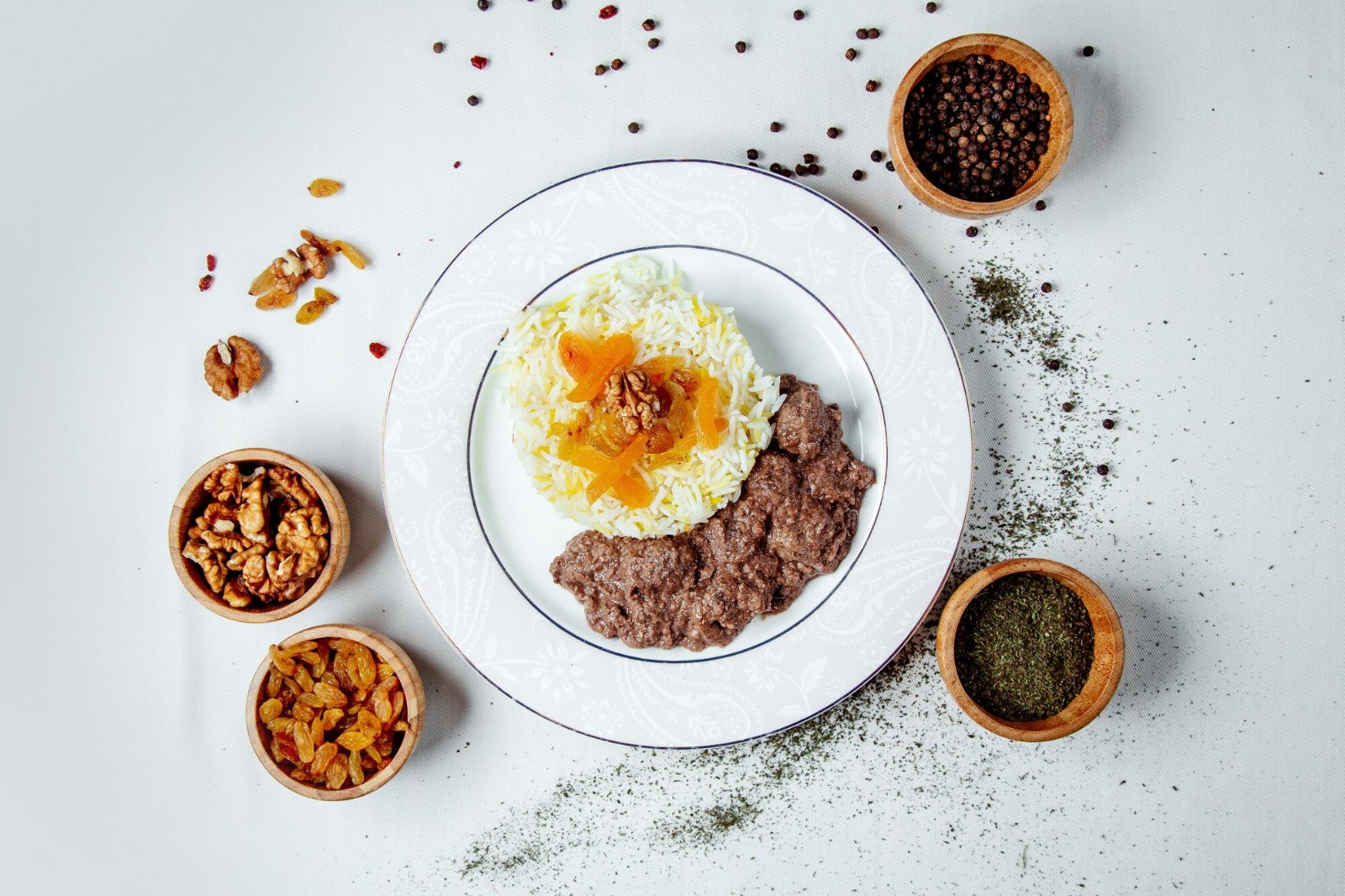
According to the method, a meal is built from two or three elements: a starch, an admitted protein if it is a "yes" day, a cooked vegetable, a natural fat. It is the model behind every menu in the site's programme.
- The starch. White rice (green) or potato (green), the two pillars admitted "without restriction", plus sweet potato (green) and freekeh (green) for variety. Bread appears only at breakfast, in one form: bran toast (green). White bread (red), couscous (red) and pasta (red) are set aside.
- The protein, on "yes" days only. Sea fish (green, grilled for preference), fresh sardine (yellow), pigeon (green), quail (green), rabbit (green), and the red meats within their weekly allowances: lamb (orange, two meals a week, shared with goat and camel) and beef (orange, one meal a week, shared with buffalo).
- The vegetable, always cooked. Squash (green, cooked), courgette (yellow, cooked), mushrooms (green, cooked), carrot (orange, cooked only), aubergine (orange, cooked only) and tomato (orange, cooked in sauce).
- The fat. Butter (green), smen (green) or olive oil (green), above all uncooked.
Adapt the model to your situation
The model sets no quantity: the system relies on real hunger and asks you to stop before full satiety. Dessert is taken right after the meal: an apple (green, peeled for preference) or two dates (green, one to six a day according to the system). For a person with diabetes, a model built on white rice, potato and dates is not put in place without the doctor's advice.
Step 2 — Build your "meal library"

The meal library is a list of ten to fifteen dishes you can cook without thinking and that respect the model. Here is a starting set, taken from the menus of the site's programme.
| Day | Palette-compliant dishes |
|---|---|
| "yes" | white rice and salt-grilled sardines; oven-baked sea fish and squash roasted in butter; pigeon stuffed with rice; rabbit stewed in smen with cooked carrots (orange); lamb boiled then seared in smen, rice and dried apricots (the lamb allowance) |
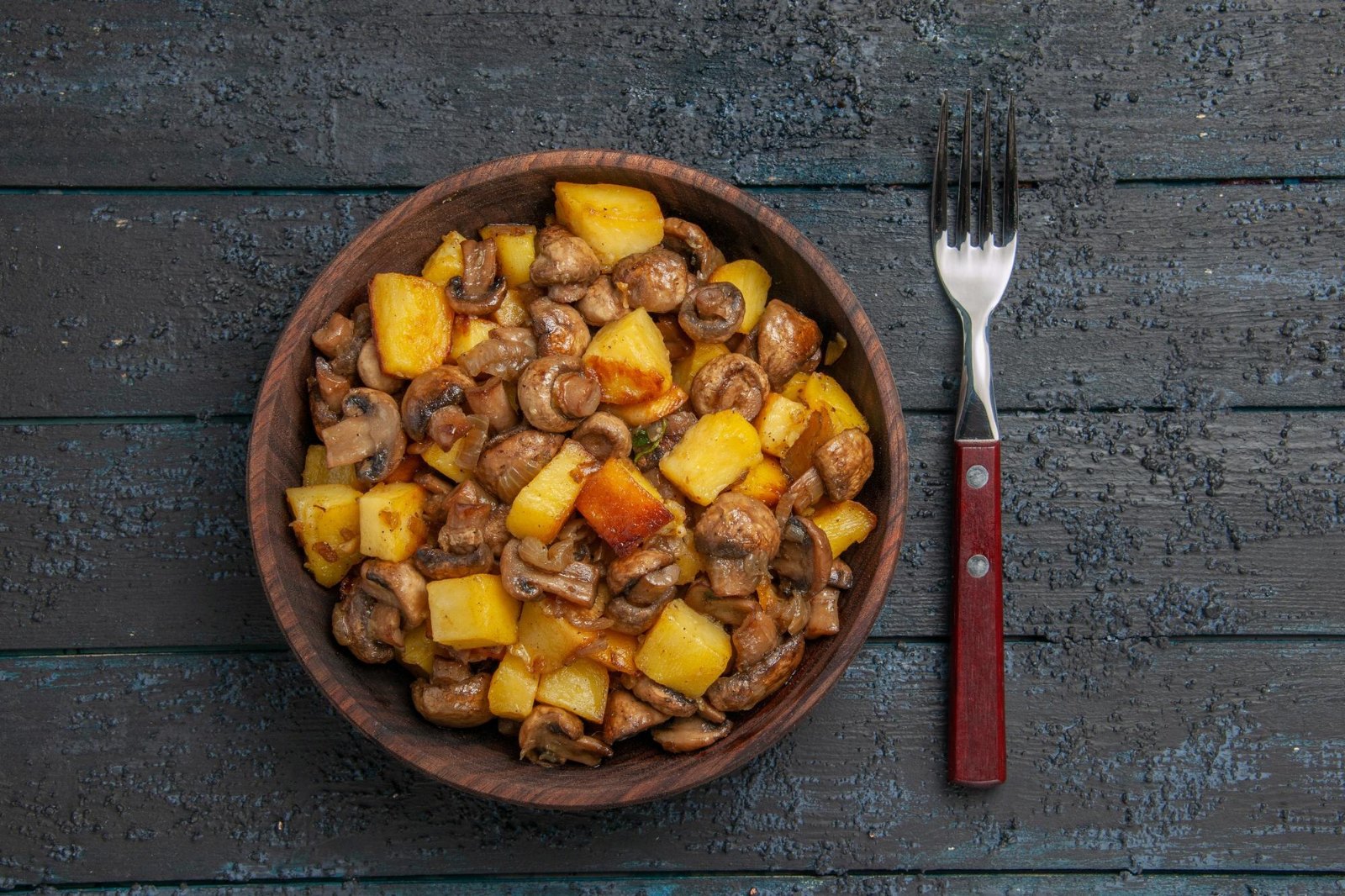
| "no" | potatoes sautéed in smen and cumin with cooked courgettes; courgettes stuffed with rice in cooked tomato sauce (orange); potato gratin with parmesan (green) and crème fraîche (yellow, small quantity); squash soup with butter, bran toast and roumi cheese (green); rice with butter and sautéed mushrooms |
| morning | bran toast, butter and honey (green); qechta (green) and honey on bran toast; halva (green) and kashkaval (green) |
"No" days rest on the pillars, the aged cheeses, tahini (green), cooked vegetables and fruit. Without legumes or eggs, set aside by the system, the protein intake of those days is lower than conventional nutrition recommends; it is the point dietitians raise most.
Step 3 — Apply the rotation logic

Rotation, in this system, follows from precise rules, not from the variety of colours on the plate.
The rotation rules to know
- The "one day yes, one day no" alternation. Animal protein is not eaten every day: every other day, or three to four "yes" days a week. The programme menus keep four "yes" days and three "no" days.
- The weekly red-meat allowances. Two meals for lamb, goat and camel together; one meal for beef, buffalo and veal together. Minced meat (orange, within the allowance of the meat it comes from) counts. Sea fish, pigeon, quail and rabbit are not rationed by the week.
- No two animal proteins on the same plate, according to one source of the system.
- Orange-zone vegetables (carrot, aubergine, tomato) come back less often than green-zone ones.
A rotation skeleton
Monday "yes" fish; Tuesday "no"; Wednesday "yes" lamb (first meal of the allowance); Thursday "no"; Friday "yes" pigeon or rabbit; Saturday "no"; Sunday "yes" fish or beef (the single meal of its allowance). The dinners of "yes" days stay without animal protein if lunch already carried one.
Step 4 — Hold your 30-minute planning session

The site's programme advises mapping the week "on a sheet of paper" before shopping, above all from the third week of the transition, the one with protein days. Thirty minutes is enough, in four stages:
- Ten minutes: the constraints. Meals eaten out, invitations, evenings with no cooking time. In a restaurant, the guide suggests grilled fish with rice or potatoes, without lemon (red), onion (red) or garlic (red), all three set aside by the system.
- Ten minutes: the skeleton. The "yes" and "no" days, then the red-meat allowances, then the dishes from the library.
- Five minutes: breakfasts and snacks. They repeat without trouble; the system sees simplicity in that, not monotony.
- Five minutes: the shopping list, aisle by aisle, from the menu.
Step 5 — Equip yourself (without complicating things)

Three tools are enough, and none of them is an app.
- A printed grid of seven columns and four rows (morning, midday, snack, evening), on the fridge, with the "yes" days marked.
- The guide's basic shopping list, aisle by aisle: starches, fats, aged cheeses, "yes" day proteins, vegetables to cook, fruit, nuts, drinks without milk such as green tea (green) or coffee (green, without milk).
- A two-hour alarm on the phone, set at the last bite, until the rule becomes natural.
Markers from Dr Diaa Al-Awadi
Dr Diaa Al-Awadi (1979–2026) left no planning method as such; the public compilations of his teaching, as reported by the site's guide, do yield a few markers.
- Eat when hunger is real, not "because it is time": the system sets no timetable, only a minimum two-hour spacing.
- Simple meals: two or three elements, no industrial sauces.
- The five pillars every day: white rice, potato, dates, natural butter and, for those who follow the system on that point, white sugar.
- Simple cooking, without onion or garlic; red meat boiled then seared in smen.
- A daily walk.
These markers are the method's own. Medical institutions dispute several of them, first of all the daily place of sugar, white rice and dates; the site reports them without endorsing them.
Common mistakes to avoid
- Planning "balanced plates" in the classical sense. A cucumber (red) salad, a yoghurt (red) at snack time or a lentil soup fall outside the system, even though conventional nutrition recommends them.
- Forgetting to count the allowances. A lamb tagine on Tuesday and lamb kefta on Saturday use up the week's allowance.
- Putting two proteins in the same dish, fish rice topped with minced meat, for example.
- Serving the vegetable raw. Grated carrot or tomato in a salad fall outside the palette; cooked, they come back in.
- Applying the menu to the whole household. For a child, a pregnant woman or someone on treatment, nothing is put in place without medical advice.
Frequently asked questions
How long does it take to build a balanced weekly menu under the system?
About thirty minutes, once the meal library exists: the constraints, the skeleton of "yes" and "no" days, then breakfasts and the shopping list. The first week takes longer, because you have to learn the palette.
Do foods have to be weighed?
No. The system counts neither calories nor portions; it relies on real hunger and asks you to stop before full satiety. Only a few entries give a range, such as dates (one to six a day). Conventional nutrition, by contrast, reasons readily in quantities.
Does a weekly menu under the system suit someone with diabetes?
Medical institutions consider the system risky for people with diabetes, because of the place of white rice, dates and white sugar. The system itself refers to the doctor and forbids stopping a treatment. A person with diabetes or prediabetes, or on treatment, must not apply this menu without their doctor.
What is the difference with a ready-made menu?
The site's programme supplies four weeks of ready menus, with shopping lists and recipes. The method in this article takes over afterwards: it lets you continue on your own, with the system's rules, once the four weeks are done.
Further reading
The article on the five food zones of Nidam al-Tayyibat explains the palette this menu uses. The two-hour rule governs the rhythm of eating occasions, and the rule "one day yes, one day no" details the meat allowances. The guide on organising the week's meals takes over for the logistics. Every entry in the food database gives the zone, the condition and the position of conventional nutrition.
Disclaimer
This article describes an eating system for information. It does not replace medical advice. In case of illness, ongoing treatment, pregnancy or diabetes, talk to your doctor before any change of diet.