Everyday Mediterranean eating and Nidam al-Tayyibat, the eating system described by Dr Diaa Al-Awadi, share olive oil, sea fish, cooked vegetables and fruit; but the system sets aside legumes, whole grains, bread, raw vegetables, yoghurt and citrus. It is therefore not a variant of the Mediterranean diet, and this article does not present it as one.
Mediterranean eating remains the model conventional nutrition recommends most readily: olive oil, fish, vegetables, fruit, legumes, whole grains, little red meat and few processed products. This article compares the two day to day, from the site's food database: what a Mediterranean table can keep while following the palette, what it must give up, how to organise the week and what a day looks like.
Why the daily application is the real difficulty
In both approaches, the difficulty is not knowing the principles but holding to them on an ordinary Tuesday evening. For Mediterranean eating, the day to day plays out in reflexes: olive oil rather than butter, fruit rather than pastry, fish twice a week. For Nidam al-Tayyibat, it plays out in organisation, and the system's sources say so themselves: the week that introduces the one day yes, one day no alternation for animal protein is the one that demands the most organisation, and they advise planning the week on a sheet of paper, with the "yes" and "no" days, before shopping.
Three habits make the week liveable, according to the site's guide. Prepare a "starch base" from day one — a pot of white rice (green) and boiled potatoes (green) — so you never fall back on bread. Group the dessert and the tea with the meal, to respect the two-hour rule between eating occasions. And shop once a week from a fixed list, the one in the next section. Without a plan, both approaches come apart the same way.
What Mediterranean eating and the palette have in common
This is the part of the system conventional nutrition looks at without reservation, because it matches its own markers.
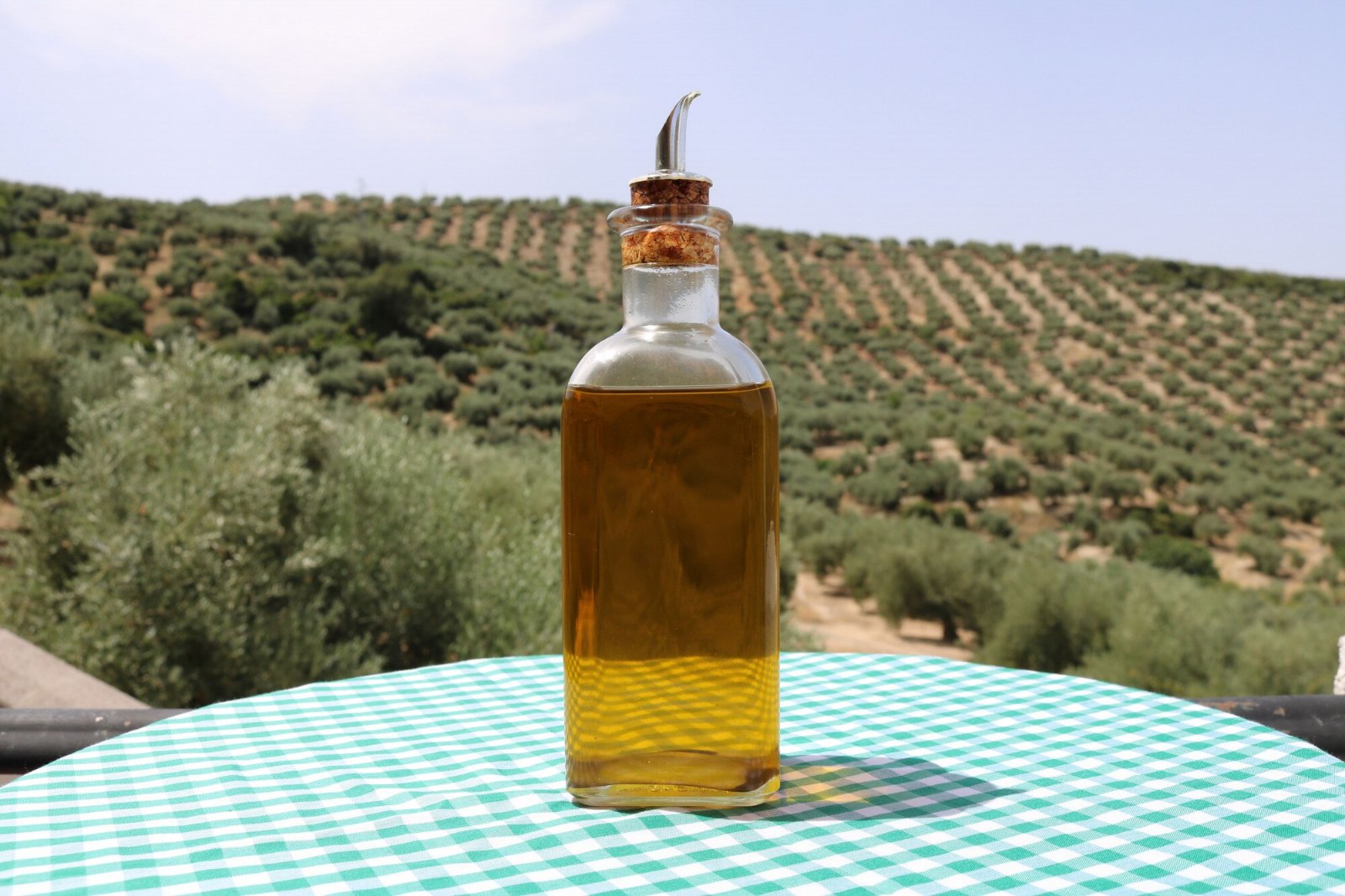
- Olive oil (green). The site's database describes it as the fat conventional nutrition recommends most, at the heart of the Mediterranean diet. According to the system, it is used above all uncooked: on olives, as a marinade for grilled fish and meat.
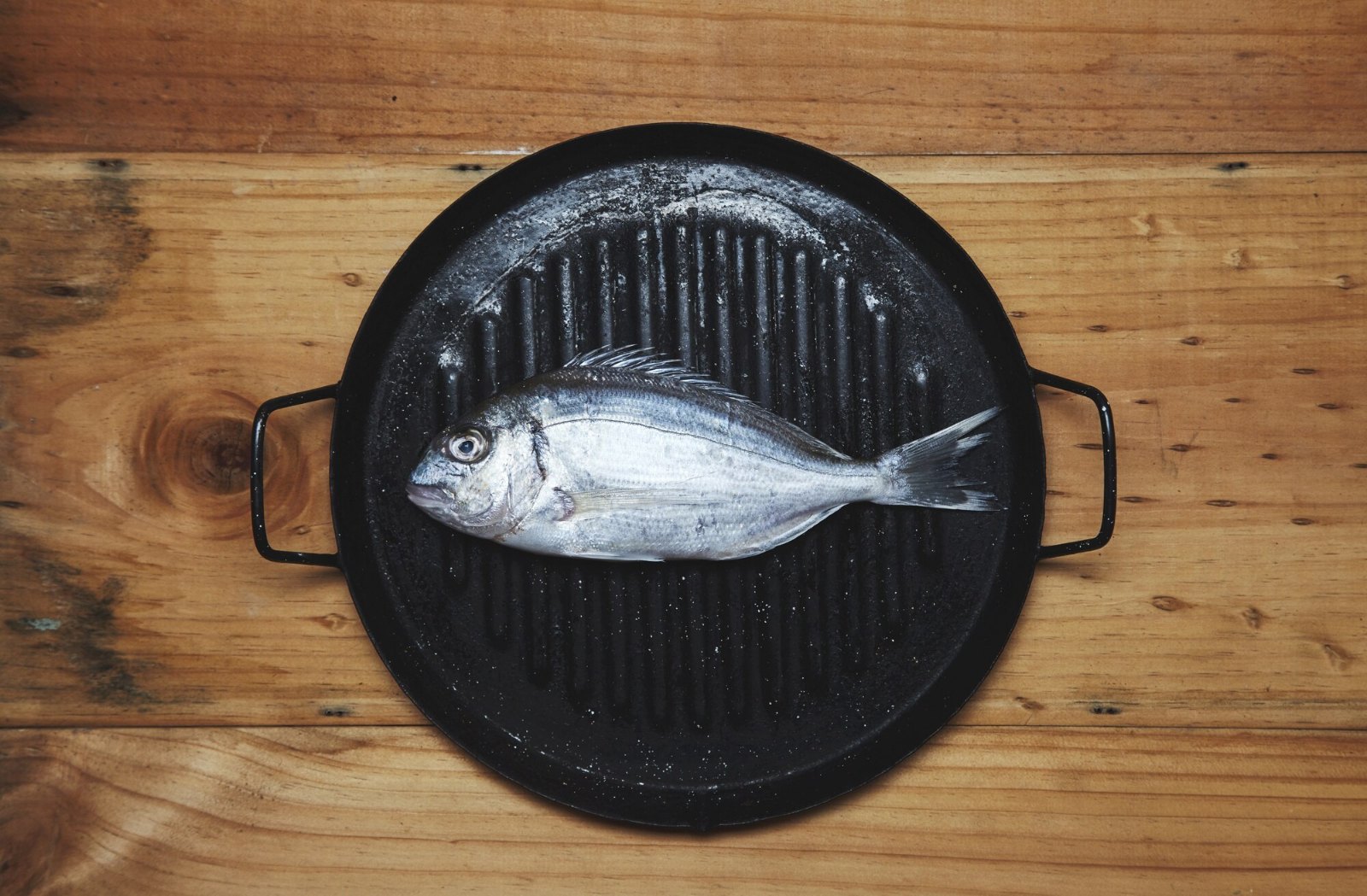
- Sea fish. Sea fish (green, grilled for preference, fried without flour) and fresh sardine (yellow, fresh, on protein days) are the least constrained proteins of the palette; conventional nutrition recommends fish twice a week, one of them oily.
- Cooked vegetables. Courgette (yellow, always cooked), squash (green, cooked), aubergine (orange, cooked only), tomato (orange, cooked in sauce for preference), mushrooms (green, cooked): the ratatouilles and stuffed vegetables of Mediterranean cooking enter the palette, provided they are cooked without onion or garlic.
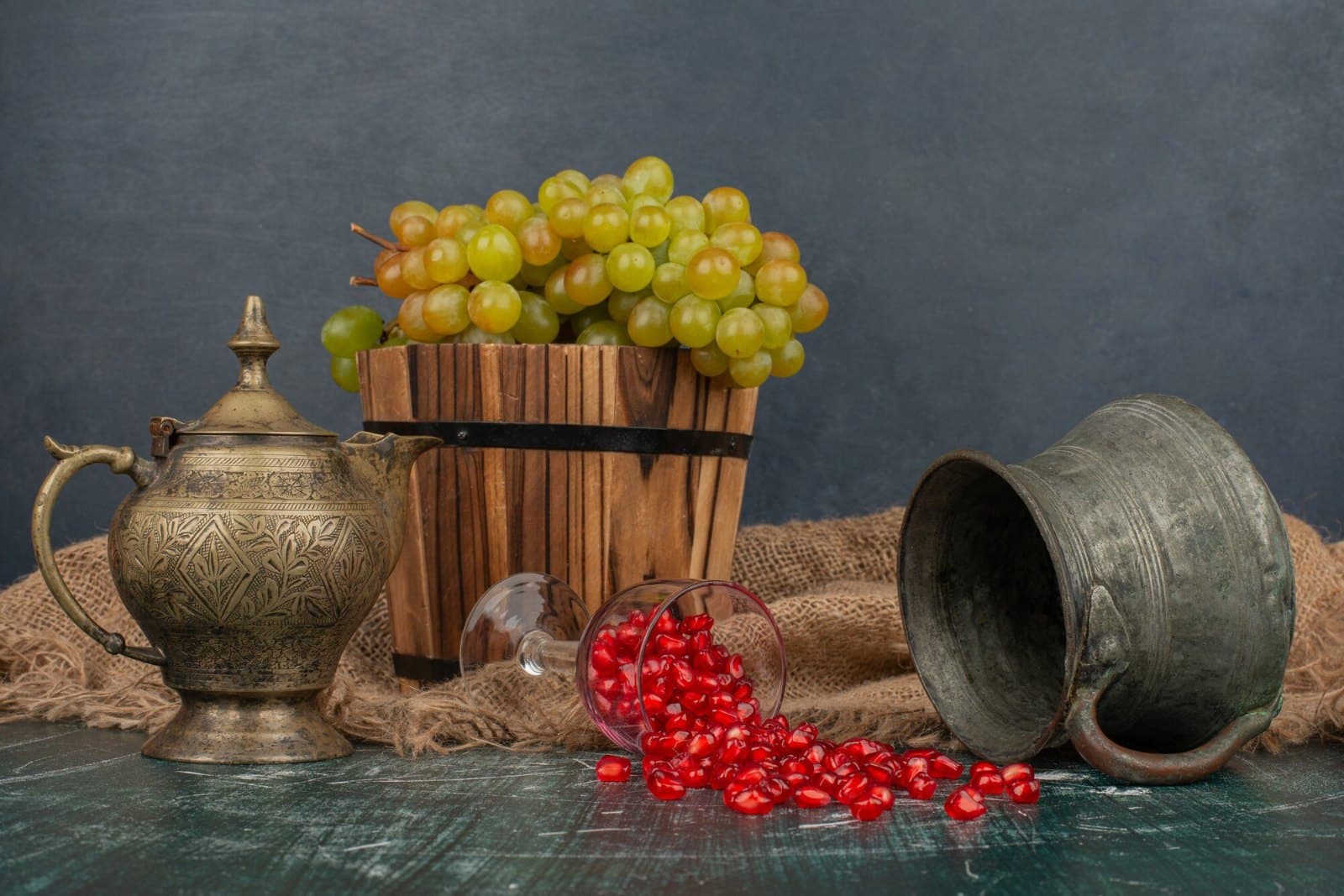
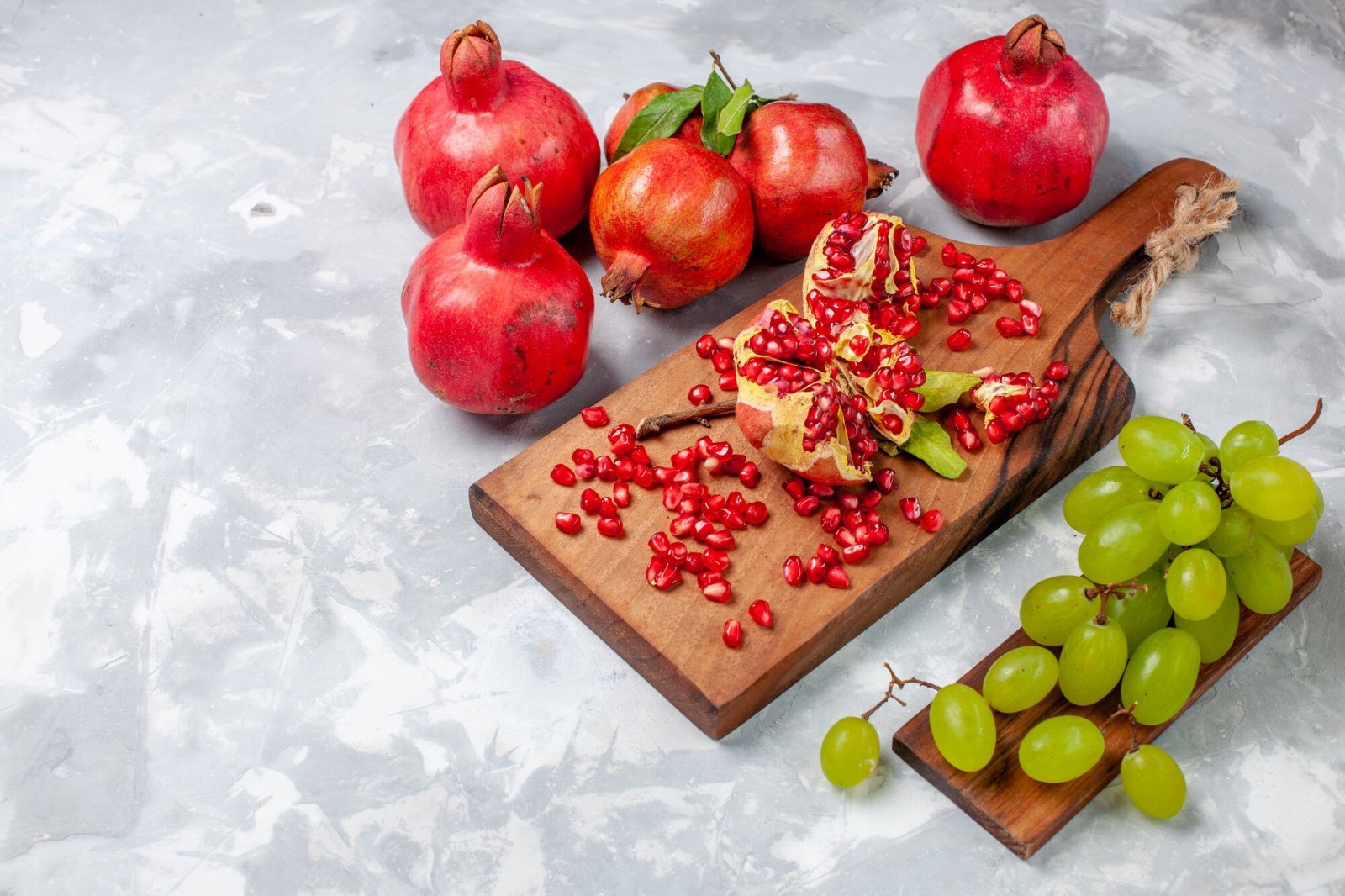
- Fruit as dessert. Grapes, peach, apricot, strawberry, pomegranate as filtered juice (all green); almonds, walnuts and pistachios (yellow, in measure) and pine nuts (green) alongside.
- Little red meat. Lamb (orange, two meals a week, shared with goat and camel) and beef (orange, one meal a week, shared with buffalo) are rationed by the week, which meets the Mediterranean marker of a few weekly portions.
- Few processed products. Charcuterie, sodas, industrial pastries and margarine are red zone for the system; conventional nutrition limits them too.
What separates them, and what the palette puts in place
Here the break is clear. What the Mediterranean diet holds as its pillars, the system often files in the red zone, and conventional nutrition recognises none of the reasons it gives.
| Mediterranean pillar | The system's position | What the palette offers instead |
|---|---|---|
| Legumes (lentils, chickpeas, broad beans) | red | potato, rice, freekeh (green) |
| Bread and whole grains, pasta, couscous | red | white rice, bran toast (green, the only bakery exception), freekeh, bulgur (green) |
| Salads, raw greens, fresh herbs | red | cooked vegetables, olives (orange, in small quantity) |
| Yoghurt, milk, fresh cheeses | red | qechta (green), aged cheeses: parmesan, mozzarella, kashkaval (green) |
| Lemon and citrus | red | preserved lemon (orange, in small quantity) |
| Garlic, onion | red | salt, cumin, black pepper, ginger (green) |
| Eggs, chicken | red | pigeon, rabbit, quail (green), sea fish |
The site's guide is explicit about these substitutions: they are the system's own, and they do not carry the nutritional value of the food replaced. Legumes are, for conventional nutrition, a pillar in their own right — plant protein, fibre, iron and a low glycaemic index; wholemeal or sourdough bread has its place; plain yoghurt is recommended; lemon is a source of vitamin C with no drawback. The break runs the other way too: the system places among its daily pillars butter (green) and white sugar (green according to the system, in amounts contrary to official recommendations), two foods the Mediterranean diet never had at its centre and that conventional nutrition limits.
The Mediterranean shopping list: the essentials
The list someone following the palette can hold while keeping the Mediterranean spirit, based on the basic shopping list in the site's guide.
- At the market: whole sea fish (bream, whiting), fresh sardines; courgettes, squash, aubergines, ripe tomatoes for the sauce, mushrooms, carrots (orange, cooked only); apples, pears, grapes, peaches, apricots, strawberries, pomegranates in season.
- Starches: white rice, potatoes, sweet potato (green), freekeh, bulgur, bran toast.
- Fats: olive oil first, butter and smen (green) for cooking, according to the system; conventional nutrition prefers olive oil for both.
- Cheeses: parmesan, mozzarella, kashkaval, roumi cheese (green), qechta in small quantity.
- Nuts and dried fruit: almonds, walnuts, pistachios, pine nuts, plain and unsalted; dates (green, 1 to 6 a day according to the system) and dried fruit (green).
- Store cupboard: olives, preserved lemon, salt, cumin, black pepper, ginger, cinnamon (yellow, small quantity), cane vinegar (yellow, small quantity), honey (green).
- Drinks: still water, green tea, mint tea, karkadeh (all green, without milk).
What appears on an ordinary Mediterranean list and not on this one: legumes, wholemeal bread, yoghurt, lemons, garlic, onion, parsley and coriander. Someone following the Mediterranean diet keeps them; someone following the palette leaves them. The market stall is the same, the basket is not.
A typical Mediterranean day
A "yes" day built only from foods in the site's database, in the Mediterranean spirit, and compliant with the two-hour rule. The times mark the end of each eating occasion.
7.30 a.m. – Breakfast. Bran toast, roumi cheese, a few olives dressed with olive oil (orange, in small quantity); green tea without milk. Ends at 7.50.
1 p.m. – Lunch. Grilled sea fish, marinated in olive oil, cumin and ginger; courgettes and aubergine stewed in a cooked tomato sauce; white rice. Grapes for dessert, taken right away. No fresh lemon, which is red zone: a little preserved lemon replaces it if you want an acid note. Ends at 1.40.
4.30 p.m. – Snack. A peeled pear, a small handful of plain almonds, a green tea. Ends at 4.45.
8 p.m. – Dinner. Squash soup with butter, oven potatoes, mozzarella; a few strawberries. An infusion without milk. Ends at 8.30.
A Mediterranean reader will notice what is missing: no bread on the table, no tomato salad, no yoghurt in the evening, no lentils the next day. That is exactly the gap between the two approaches.
Common mistakes
- Believing the system is a Mediterranean diet. It shares the olive oil, the fish and the cooked vegetables; it rejects the legumes, the whole grains, the raw vegetables, the fresh dairy and the citrus.
- Squeezing a lemon over the fish. Fresh lemon is red zone for the system; conventional nutrition sees no drawback in it. Preserved lemon, in small quantity, is the palette's alternative.
- Buying farmed salmon or tinned tuna to "eat Mediterranean": both are red zone; the system wants fresh sea fish or fresh sardine.
- Replacing legumes with more rice without thinking. The site's guide recalls that days without animal protein reach protein needs less easily; dietitians flag this point.
- Cooking everything in butter. The system admits it; conventional nutrition prefers olive oil, and that is the Mediterranean reflex par excellence.
Frequently asked questions
Is Nidam al-Tayyibat a Mediterranean diet?
No. It shares the olive oil, the sea fish, the cooked vegetables, the fruit and the scarcity of red meat, but it sets aside legumes, whole grains, bread, raw vegetables, yoghurt and citrus, and it places white rice, butter and sugar among its pillars. Conventional nutrition recommends the Mediterranean model, not the palette.
Can olive oil be used freely in the system?
Yes, it is green zone, above all uncooked: on olives and preserved lemon, or as a marinade for grilled fish and meat. For cooking, the system uses butter and smen instead; conventional nutrition prefers olive oil in both cases.
Why does the system exclude legumes, so central around the Mediterranean?
According to the system, in the name of reservations about their fibre that belong to it alone. Conventional nutrition considers them, on the contrary, one of its pillars: plant protein, fibre, iron and a low glycaemic index. The site's database gives both readings on the legumes entry.
What is left of Mediterranean cooking within the palette?
Grilled fish, ratatouilles without onion or garlic, vegetables stuffed with rice, lamb stewed within its weekly allowance, olives, aged cheeses, fruit and nuts. Bread, salads, lentils and yoghurt are not.
Can someone with diabetes follow this typical day?
Not without their doctor. The day is still built around white rice, potatoes and fruit, and the system also provides for a "sugar" pillar that medical institutions judge risky for people with diabetes. No treatment is modified or stopped on the strength of an article.
Further reading
The complete guide to the Mediterranean diet in Morocco presents the Mediterranean model as conventional nutrition describes it. The article on the five food zones of Nidam al-Tayyibat explains the colours in the table above, the rule one day yes, one day no details the place of fish and meats in the week, and the guide on organising the week's meals helps hold the plan. Every entry in the food database gives the zone, the condition and the position of conventional nutrition on that food.
Disclaimer
This article describes an eating system for information. It does not replace medical advice. In case of illness, ongoing treatment, pregnancy or diabetes, talk to your doctor before any change of diet.