The best foods for blood-sugar control are, for medicine, vegetables, legumes, whole grains and plain dairy. Nidam al-Tayyibat, the eating system described by Dr Diaa Al-Awadi, leaves out a good part of those foods and places white rice, dates and sugar among its daily pillars. This article compares the two readings from the site's food database, without offering a programme to people with diabetes.
What the system says, and does not say, about blood sugar
Nidam al-Tayyibat does not present itself as a method for controlling blood sugar and claims no effect on diabetes. It sorts foods into five frequency zones by its own criteria, which have nothing to do with the glycaemic index: industrial processing, intensive farming, what it judges "inflammatory". Three of its five daily pillars are precisely the foods medicine watches most closely in a person with diabetes: white rice (green), dates (green, one to six a day according to the system) and white sugar (green, five to fifteen tablespoons a day according to a single source of the system).
Every source consulted, including those that defend the system, repeats the same instruction: never stop a diabetes treatment without a doctor's agreement, and consult before any change of diet. Medical institutions go further and judge the system risky for people with diabetes, because of the place of white rice, dates and sugar. A person with diabetes or prediabetes, or on treatment, must not apply what follows without their doctor; nothing here is a treatment.
Vegetables: the base of any blood-sugar-friendly plate

This is where the system and conventional nutrition agree most, with one condition: in the system, every vegetable is eaten cooked.
The vegetables the palette admits fall into three groups:
- in the green zone, always cooked: squash (green, cooked), mushrooms (green, cooked) and taro (green, cooked);
- in the yellow zone: courgette (yellow, always cooked), the vegetable the system mentions most often;
- in the orange zone, with their condition: carrot (orange, cooked only), aubergine (orange, cooked only), tomato (orange, cooked for preference, in sauce) and okra (orange, cooked in tomato sauce, without garlic).
The database entries recall that conventional nutrition recommends all of them: low in calories, rich in fibre, potassium or beta-carotene.
The difference lies in what the system leaves out. Raw greens (red), lettuce (red), spinach (red), broccoli (red), cabbage (red) and peppers (red) are excluded by the method, which considers them inflammatory; conventional nutrition counts them, on the contrary, among the foods most favourable to stable blood sugar. Where they go out, the palette offers squash, aubergine or taro, cooked.
Starches: the real disagreement
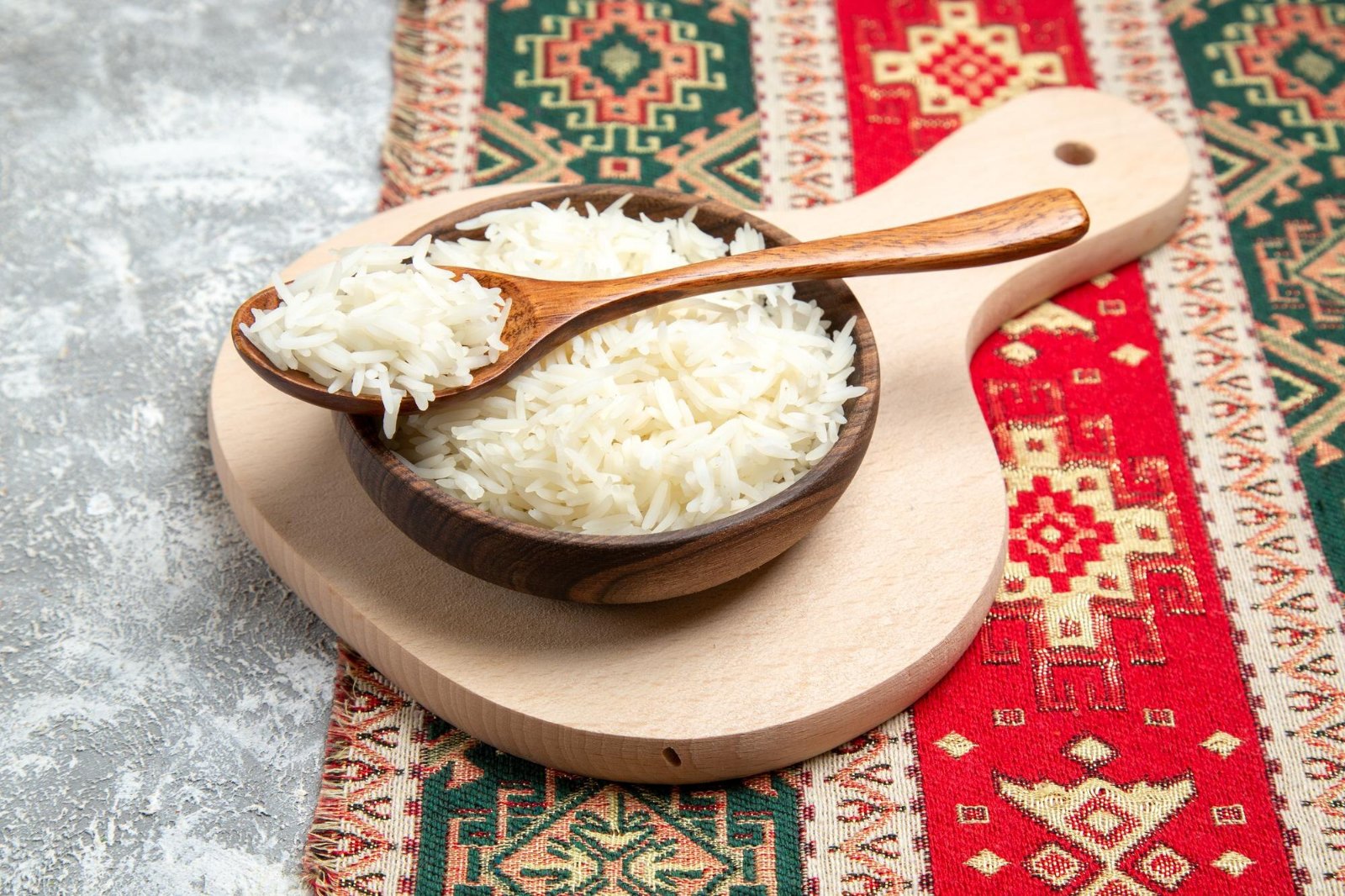
This is where the system departs furthest from medical recommendations. Its two daily starches, eaten "without restriction", are white rice and potato (green). The rice entry notes that conventional nutrition prefers basmati or brown rice, whose glycaemic index is more favourable than round white rice; yet the system admits basmati while placing brown rice in the red zone. Likewise, the potato is, for medicine, a starch to be served in measured portions and cooked without frying.
Within the palette, the starches conventional nutrition views most favourably are freekeh (green), green wheat roasted whole, bulgur (green), whose entry gives it a moderate glycaemic index, sweet potato (green) for its fibre, and bran toast (green), the only bread admitted, whose entry specifies that it remains a processed product.
What the system leaves out is, for medicine, the heart of a blood-sugar-friendly diet: oats (red), wholemeal bread — absent from the system's lists and therefore excluded by its whitelist rule — quinoa (red) and above all legumes (red): lentils, chickpeas, broad beans and dried beans, which the entry describes as a pillar of conventional nutrition for their plant protein, their fibre and their low glycaemic index. The system offers rice, potato or freekeh in their place, whose nutritional value is not the same; that is what dietitians hold against it.
Quality protein: support for satiety and stability
Conventional nutrition pairs a protein source with every meal, for satiety and to slow the absorption of carbohydrates. The system, for its part, does not eat animal protein every day: its "one day yes, one day no" rule alternates days with and without.
On "yes" days, the palette admits sea fish (green, grilled for preference, fried without flour), fresh sardine (yellow, fresh, on protein days), pigeon (green), quail (green) and rabbit (green), as well as lamb (orange, two meals a week, an allowance shared with goat and camel) and beef (orange, one meal a week, shared with buffalo). The entries recall that medicine recommends fish twice a week and counts rabbit and pigeon as lean meats without restriction.
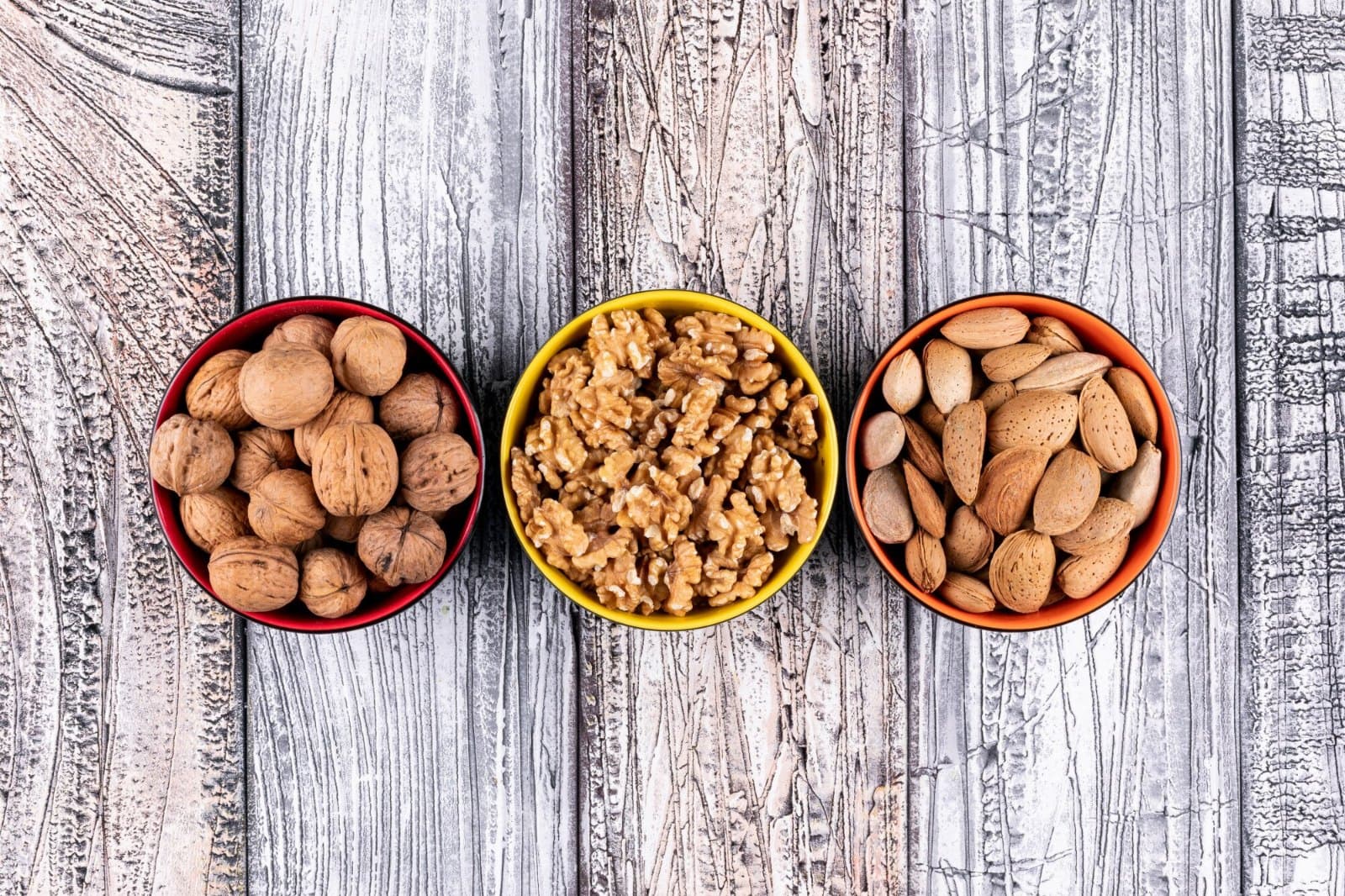
On "no" days, protein comes from aged cheeses such as cheddar (green), kashkaval (green) and parmesan (green), from tahini (green) and from nuts such as almonds (yellow, in measure, plain) and walnuts (yellow, in measure, plain). The site's guide recalls that those days reach the conventional marker of 0.8 g of protein per kilo per day less easily; dietitians raise a flag on this point.
Three of the system's exclusions weigh particularly heavily here, because conventional nutrition treats them as reference proteins:
- eggs (red), which the method sets aside judging the white hard to digest; their entry specifies that this exclusion rests on no conventional evidence;
- chicken (red), left out in the name of intensive farming, although for medicine it is a reference lean meat;
- plain yoghurt (red), excluded along with all fresh dairy, although medicine recommends it for its protein, its calcium and its cultures.
Fats
Olive oil (green), admitted by the system above all uncooked, is the fat medicine recommends most; almonds, walnuts and pine nuts (green) are another point of agreement between the two readings. On the other hand, butter (green) and smen (green) are pillars of the system while conventional nutrition limits saturated fats, and avocado (red) is left out by the system where medicine recommends it.
Fruit: yes, but whole and with judgement
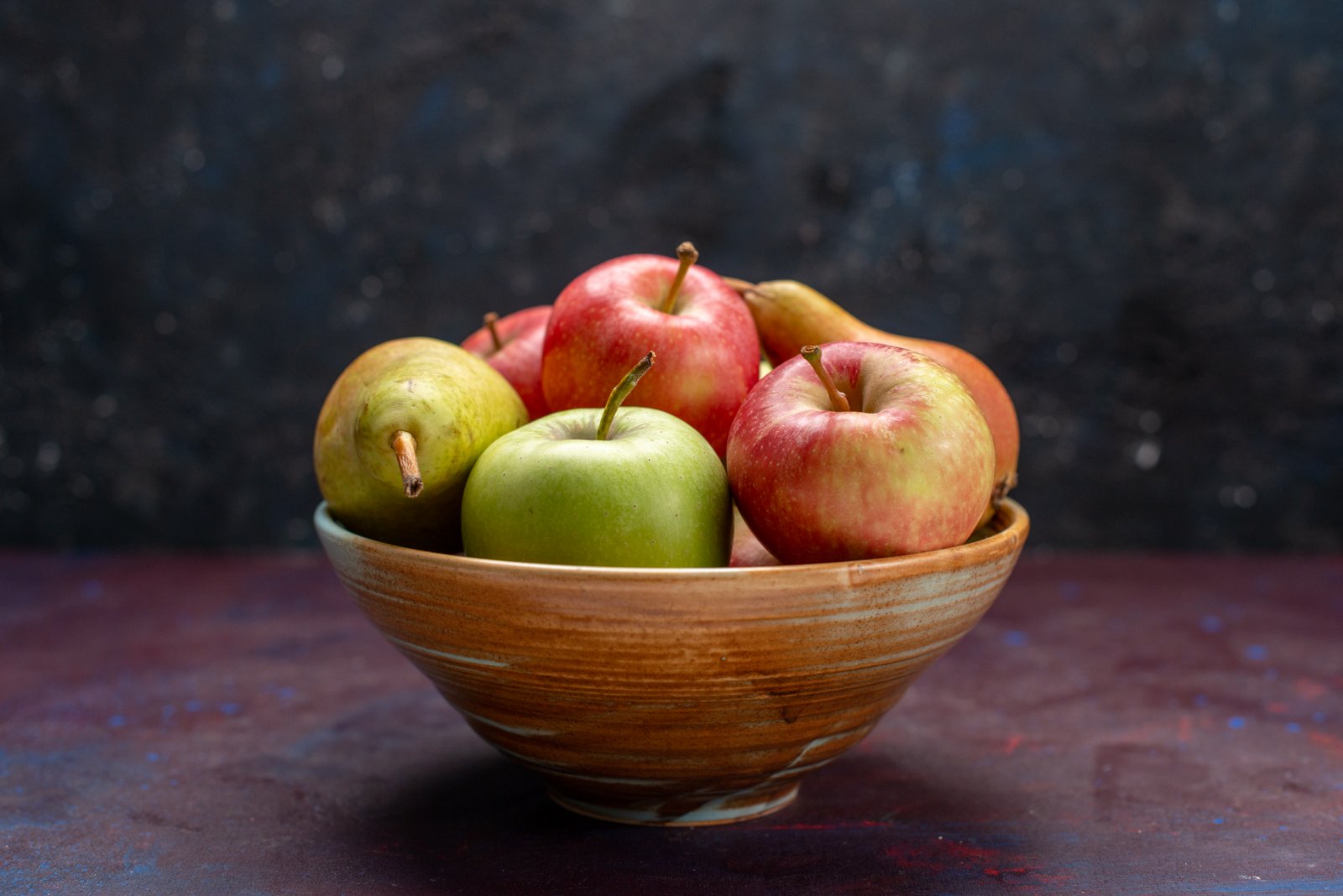
The fruits of the palette that conventional nutrition views most favourably for blood sugar are:
- strawberry (green), described in its entry as low in sugar;
- apple (green, peeled for preference) and pear (green, peeled for preference), rich in fibre;
- apricot (green), peach (green, peeled for preference) and cherries (green), seasonal fruit.
On the skin, the two readings diverge: the system prefers peeled fruit, medicine recalls that the skin of the apple and the pear carries a good part of the fibre.
The word "whole" marks another difference. Medicine prefers whole fruit to juice, which concentrates the sugars and loses the fibre; the system admits fruit juices (yellow) and even prefers pomegranate (green) or mango (yellow) as filtered juice. For someone watching their blood sugar, whole fruit remains the more prudent reading.
Finally, dates, a pillar of the system, are for medicine a very sweet fruit that "counts" for a person with diabetes; the system, for its part, leaves out orange (red), watermelon (red) and kiwi (red).
Drinks: an often underestimated factor

On drinks, the two readings largely agree. Still water (green) is the system's base drink, taken by thirst, lukewarm for preference, between meals. Green tea (green, without milk), black coffee (green, without milk or creamer), herbal infusions (green, without milk) and karkadeh (green) are admitted; their entries attribute no effect on blood sugar to them and recall that karkadeh is not to be mistaken for a treatment.
Sodas (red), industrial juices (red) and energy drinks (red) are set aside by both. The difference bears on added sugar: mint tea (green) is admitted sweetened by the system, while its entry notes that it is precisely the usual amount of sugar that deserves attention; sugar-cane juice (green) is admitted by the system and filed by medicine among sugary drinks.
Summary table
| Food | Zone in the system | The conventional-nutrition view |
|---|---|---|
| Squash, courgette, mushrooms (cooked) | green / yellow | recommended |
| Sea fish, fresh sardine | green / yellow | recommended, twice a week |
| Strawberry, apple, pear | green | recommended, preferably with the skin |
| Water, green tea, black coffee | green | reference drinks |
| White rice, potato | green, daily pillars | high glycaemic index, portions to watch |
| Dates | green, 1 to 6 a day | very sweet fruit, to be counted in case of diabetes |
| White sugar, honey | green, daily pillar | to be limited sharply; a real risk in case of diabetes |
| Legumes, oats, eggs, yoghurt, raw vegetables | red, left out | pillars of a blood-sugar-friendly diet |
Frequently asked questions
Does Nidam al-Tayyibat help control blood sugar?
Nothing allows that to be stated, and the system does not claim it. Three of its daily pillars — white rice, dates and sugar — are the foods medicine watches most closely in a person with diabetes. Medical institutions judge the system risky for people with diabetes.
Which foods of the palette are the most favourable, medically speaking?
Cooked vegetables (squash, courgette, mushrooms, aubergine, carrot), sea fish and sardine, aged cheeses in measure, almonds and walnuts, olive oil, whole low-sugar fruit such as strawberries, and water or unsweetened green tea. All are in the green or yellow zone, or orange with their condition.
Why does the system leave out legumes and oats?
It files them among the foods it judges inflammatory or belonging to "cattle feed", according to its own principles. Conventional nutrition does not recognise those principles and considers legumes and oats, on the contrary, reference foods for blood sugar, for their fibre and their low glycaemic index.
Can a person with diabetes follow the system while replacing the sugar?
That decision is not taken alone. The site's programme states, for its sweetened-rice recipe, that people with diabetes replace the sugar with a chopped date "after medical advice", but white rice and dates are themselves foods to watch. The doctor or the diabetes specialist remains the person to talk to, and a treatment is never modified without them.
Further reading
The article on the five food zones of Nidam al-Tayyibat explains the logic of the green, yellow, orange, purple and red zones. The 7-day diabetic menu shows what a week of the system contains and why it does not suit a person with diabetes as it stands. The rule one day yes, one day no details how protein is spread out, and the article on the diabetic ftour covers Ramadan. Every entry in the food database gives the zone, the condition and the position of conventional nutrition.
Disclaimer
This article describes an eating system for information. It does not replace medical advice. In case of illness, ongoing treatment, pregnancy or diabetes, talk to your doctor before any change of diet.